Master Web3 Loyalty Programs With Practical Strategies
Web3 loyalty taps into tokens and NFTs to give customers true ownership. Brands can set up perks users hold and swap as they like, boosting trust and keeping them coming back.

Understanding Web3 Loyalty
This flips the script on old-school point systems by putting tokens on-chain where users really own their rewards. Every transaction sits on an open ledger, so there are no surprises hiding in the fine print.
Why Brands Embrace Web3 Loyalty
More brands are jumping in because they see real engagement lifts and stronger customer bonds. Programmable tokens let you reward actions instantly—and gather data you never got with legacy schemes.
- Transparent Rewards: Every token move shows up on public ledgers for full accountability
- Custom Perks: Tailor incentives based on user behavior as it happens
- Cross-Platform Wallets: Let customers use MetaMask, Trust Wallet, or your own wallet seamlessly
- Actionable Analytics: On-chain data feeds trends and opens up deeper insights
Key Takeaway: Customers gain true ownership and clear visibility into every reward.
In one pilot program, participants minted NFTs and shared content on-chain to unlock token rewards. The global Web3 loyalty wallet and platform market hit USD 1.1–1.2 billion in 2024 and is projected to grow to USD 9.7 billion by 2033, underscoring the growing appetite for token-based rewards.
For a deeper dive, check out the Web3 Loyalty Wallets Market Report.
Core Components Of Web3 Loyalty Programs
Before you sketch out your own loyalty system, it helps to know what parts you’re working with. Here’s a quick breakdown.
| Element | Purpose | Example Scenario |
|---|---|---|
| Token Rewards | Encourage Repeat Actions | Customer stakes tokens to grab a discount |
| NFT Badges | Showcase Loyalty Status | User collects a badge to unlock VIP chat |
| Wallet Integration | Smooth User Onboarding | Members log in with MetaMask or Rainbow |
| Staking Mechanics | Drive Long-Term Holding | Hold tokens for early access to drops |
These components lay the foundation for a seamless and engaging loyalty journey. Next, we’ll see how each piece fits into your overall strategy.
Comparison To Web2 Loyalty
Old points systems are locked away in private databases, and rewards never truly belong to the user. Web3 turns those perks into real assets and even creates secondary market opportunities.
Pilot Case Study
A consumer-goods brand tested an on-chain review and share quest—and saw a 15% increase in repeat visits. It’s a solid proof that token rewards can move the needle.
What’s Coming Next
- Defining Goals & KPIs for clear measurement
- Picking Reward Mechanics that fit your audience
- Crafting Quests and Verification Flows
- Plugging Into Your Marketing Stack
Setting Goals And KPIs For Web3 Loyalty
Before diving into quests and tokens, nail down what “success” looks like. When I kicked off my first loyalty program, having clear metrics saved us from chasing every shiny new idea. You’ll know if people are connecting wallets, staking tokens, or tackling NFT challenges—and that clarity becomes your guiding star.
I always keep an eye on these numbers:
- On-Chain Transaction Frequency: How often members move tokens or interact on-chain.
- Average Token Holdings: The typical balance users keep, showing their commitment level.
- Wallet Activation Rate: The percentage of visitors who actually connect a wallet.
- Retention Lift (%): How many members return compared to the previous period.
Every goal should feed into real business outcomes—whether that’s driving revenue, boosting community growth, or both. Otherwise, you’re collecting data for its own sake.
Defining Smart Goals
Vague aims lead nowhere. I like targets such as a 30% boost in staking volume or a 20% jump in quest participation. Time bounds make us accountable—no one drifts off into endless brainstorming.
For example, a travel brand I partnered with set out to lift NFT quest completions by 30% within 90 days. That deadline kept budgets on track and the whole team hustling.
| Metric | Definition | Target | Data Source |
|---|---|---|---|
| Wallet Activations | New wallet connections per week | 500/week | Dashboard logs |
| On-Chain Txn Frequency | Average transactions per user per month | 4 txns/user | Blockchain explorer |
| Avg Token Holdings | Mean token balance of active users | 150 tokens | On-chain analytics |
| Retention Lift (%) | Increase in repeat engagements versus last period | 20% | CRM integration |
A live dashboard like this turns raw data into stories. Spot a spike or a dip, and you know exactly where to tweak.
"Adding NFT quests delivered a 25% rise in repeat bookings for our travel brand."
— Growth Lead, WanderTrips
Monitoring And Adjusting Performance
Consistency is key. Every Monday morning, I pull fresh numbers and compare them to our targets. We’ll tweak quest tiers, simplify verification flows, or adjust reward thresholds based on what the data shows. Sometimes a quick A/B test reveals a surprisingly better path.
Once a month, we dig deeper. I gather community feedback from Discord or Telegram and layer it on top of on-chain stats. That mix of hard data and real user voices highlights what’s working—and what’s falling flat.
- Weekly data reviews keep us agile.
- Monthly strategy sessions bring marketing, product, and community teams together.
- Quick polls uncover confusion or reward fatigue before it spirals.
Setting up automated alerts is a game-changer. If staking volume plummets at 2 a.m., you’ll know immediately instead of finding out next week. Tools like Domino make it simple to hook APIs into your dashboards and get pinged the moment something changes.
Visualizing KPI Progress
A well-designed dashboard is your best friend. Charts give everyone a clear snapshot: who’s connecting wallets, where token balances land, and if retention is climbing. I usually set up:
- Line charts for weekly trends and fluctuations.
- Bar graphs to compare reward mechanics side by side.
- Heatmaps highlighting engagement hotspots across different quest channels.
When you can point to a graph and say, “This quest performs best on Telegram,” you’re making confident, data-backed decisions.
Choosing Reward Mechanics For Web3 Loyalty
Loyalty programs in Web3 only work when the incentives hit home. Think about what drives your audience—whether it’s bragging rights from a rare drop or the steady pull of accumulating points.
Some tasks live on-chain, like minting NFTs or transferring tokens, which builds trust through transparency. Others happen off-chain—posting a tweet, joining a live event, or referring a friend—to broaden your reach without extra blockchain fees.
You’ve got three core formats to play with:
- NFT Drops for that exclusivity factor and secondary-market chatter
- Points Schemes which feel familiar and keep setup costs low
- Staking Yields that lock in long-term users by rewarding patience
Comparing Reward Options
Below is a quick look at how these reward styles stack up. Pick what best matches your budget and community vibe.
| Reward Type | Key Advantage | Considerations |
|---|---|---|
| NFT Airdrops | Scarcity and shareability | High gas costs, design complexity |
| Points System | Low fees and easy tracking | Centralized ledger, limited liquidity |
| Staking Rewards | Yield generation potential | Locked funds, contract maintenance |
Choosing the right approach boils down to balancing cost against impact and technical overhead.
Case Study Of D2C Brand
A skincare startup mixed micropoint rewards with a time-limited NFT airdrop. They watched engagement soar across Telegram, Discord, and email channels.
- Daily active users climbed by 30% in week one
- The NFT batch sold out in 48 hours
- Points redemption hit 65% within fourteen days
“Pairing a micro-points system with a small, exclusive NFT drop was the perfect one-two punch for our community,” the founder shared.
Deployment Tips For Loyalty Rewards
- Run tests on a layer-2 chain to slash gas fees by up to 90%
- Modularize your smart contracts so you can swap or tweak features without a full rewrite
- Automate task verification to avoid manual bottlenecks—keeping your team focused on growth
Don’t forget to sketch out wallet UX flows and craft user guides beforehand. Clear instructions shave off confusion and speed up onboarding.
You might be interested in our in-depth guide on crypto points program for more details on points mechanics and ROI.
Strategic Takeaways
Break your program into bite-sized campaigns. Early adopters chase NFTs, while more casual users love points they can redeem instantly.
Keep an eye on cost per engagement. Tweak thresholds, run A/B tests, and adjust rewards until you find the sweet spot.
Set regular check-ins to review redemption trends—then pivot fast if a reward stops hitting the mark.
Building Engagement Workflows
Keeping members active is the heart of any web3 loyalty loop. A crisp flow translates simple missions into instant hits of dopamine. When it runs without friction, your community stays energized.
I once partnered with a mid-tier game developer who rolled out daily challenges. In just a month, they logged a 40% jump in monthly active users. By combining automatic airdrops with bite-sized tasks, they held participation above 70% week after week.
Key ingredients in their playbook:
- Quest creation via Zealy for multi-tier challenges
- Wallet checks through Discord and Telegram bots
- Immediate NFT mints as soon as missions wrap up
For instance, you might build a quest on Zealy that rewards people for sharing a tweet and staking tokens. Then add a verification bot to confirm on-chain transactions before unlocking the next tier. This setup blocks fraud and keeps the experience seamless.
Quest Design On Zealy
Zealy’s built-in templates let you blend on-chain moves with off-chain actions. You can tie in Twitter, GitHub, even custom API calls to gate token drops. As a result, you shave days off your setup and jump straight into testing.
That’s a huge win for teams strapped for dev resources. Consistency across quests becomes second nature, and you can tweak mechanics on the fly based on real-time metrics.
The infographic below breaks down a typical loyalty funnel—from task completion to staking rewards:
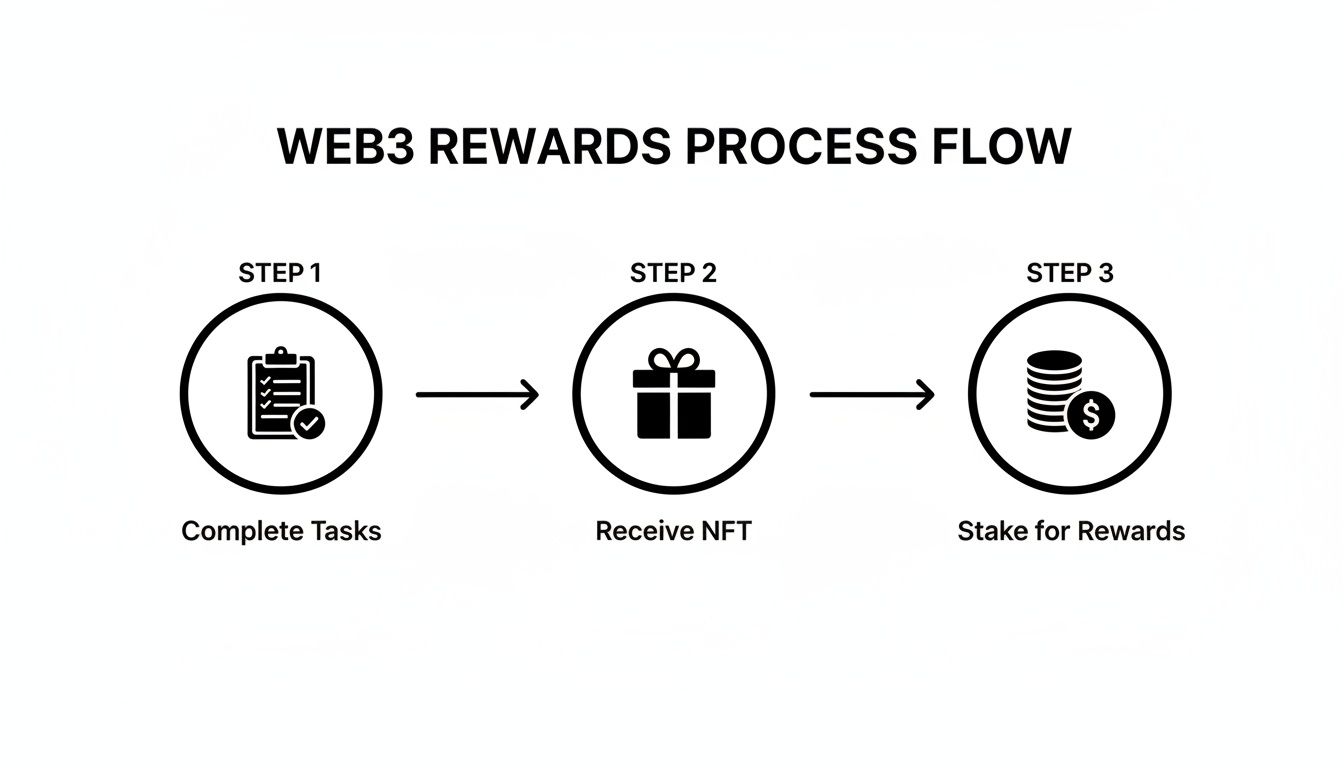
It maps out how finishing simple actions triggers NFT drops, then guides users toward staking for deeper engagement.
Automating NFT Drops
Once you’ve set up a trustworthy verification layer, Domino can mint NFTs on demand. No more manual minting sprints—just surprises sent out at scale.
I’ve seen this hands-off style boost excitement instantly. Your team frees up hours to brainstorm creative experiences rather than wrangling drops.
Explore integrations like:
- Discord bots that auto-assign roles when an NFT lands
- Telegram webhooks that ping users the moment minting succeeds
Every notification tightens your web3 loyalty loop.
- Batch transactions on Layer 2 to slash gas fees by 90%
- Deploy AI checks in Domino for faster fraud prevention
- Layer tiered reward thresholds so members always know their next milestone
You might be interested in community gamification tactics for deeper engagement in our guide on community gamification.
Key Insight Users who see instant, on-chain rewards like auto-minted NFTs tend to complete quests at a 25% higher rate.
Scaling Engagement
Once your core workflows hum along, dial up layered campaigns. Mix surprise drops at key milestones, run A/B tests for mission formats, and loop feedback into your next iteration. Track metrics in real time and let the data drive your roadmap.
Integrating Web3 Loyalty Into Your Marketing Stack
A Web3 loyalty program really comes alive when it plugs into the campaigns you’re already running. By marrying on-chain triggers with familiar channels, every wallet interaction nudges your audience toward the next step.
Imagine a token mint sparking a welcome email, or a staking milestone flipping on a retargeting ad. Suddenly, each blockchain event sets off a chain reaction in your existing funnels.
API Connections And Secure Authentication
Connecting your loyalty engine to email platforms and ad networks is all about APIs. Pair a wallet SDK for smooth MetaMask or social login flows with secure authentication.
Then hook in analytics endpoints to watch engagement in real time. Webhooks can push token events straight into your CRM, so you’re free to tweak sequences instantly.
- Link token mints to drip email journeys
- Trigger Facebook or Google ads based on staking activity
- Use analytics hooks to monitor A/B test performance
- Automate SMS alerts when users hit loyalty milestones
These feedback loops pull folks back into quests and drops without extra effort.
Key Insight: A fashion label saw a 20% lift in checkout conversions by tying token rewards to email reminders.
Segmenting Audiences By On Chain Behavior
Slice your audience by on-chain actions and your messages land with laser focus. You can build segments for active stakers, frequent traders or NFT collectors.
- Query on-chain data to identify wallet activity thresholds
- Export those segments to your email service or ad platform
- Craft messages that speak to each group’s unique interests
For instance, stakers might get a deep-dive on yield strategies, while collectors get sneak peeks of new drops.
A brand I teamed up with linked drip emails to personalized token perks, and cart abandonments dropped by 15% after just one week. Check out our guide on white-label solutions to see more options with Domino’s platform: white-label Web3 loyalty solutions
When you run retargeting campaigns, A/B testing becomes your secret weapon. Try subject lines that call out token milestones or exclusive perks. Then track opens, clicks and on-chain conversions to hone in on what works best.
“Aligning on-chain events with off-chain messaging turned passive visitors into repeat buyers.”
— Marketing Lead at StyleChain
By mixing webhooks, SDKs and analytics, you’ll get a single view of loyalty performance. When everything talks to each other, scaling your campaigns feels like a seamless extension of your everyday marketing.
Give your integrations a regular checkup and don’t be afraid to experiment with new channels. Over time, this hands-on approach strengthens connections, boosts retention and keeps your Web3 loyalty program on its toes.
Measuring Retention And Growth
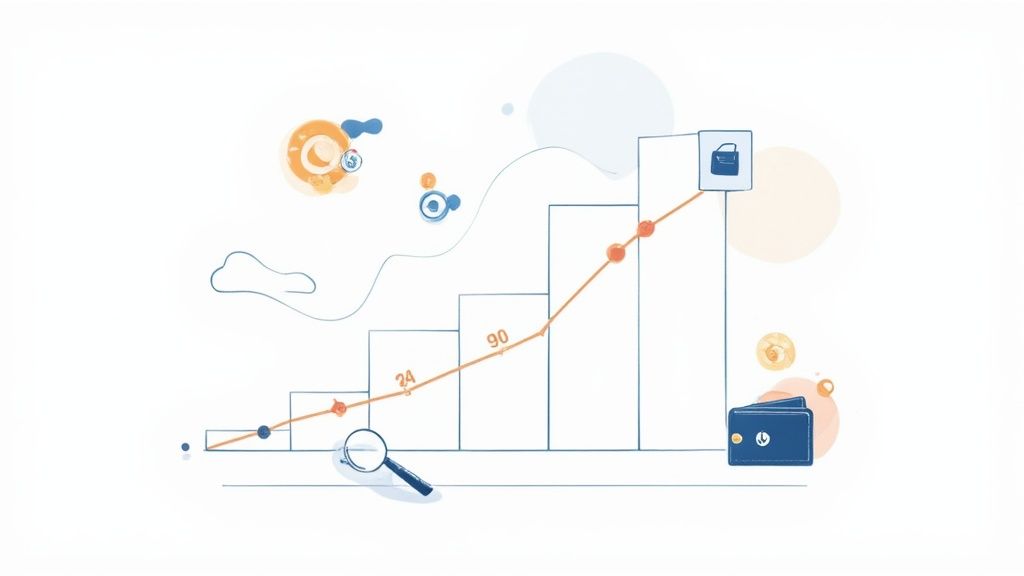
Numbers are the heartbeat of any Web3 loyalty program. Tracking wallet churn, token velocity and cohort retention at 30-day, 60-day and 90-day marks quickly highlights where members stay active or drop off.
Armed with that data, you can tweak quests and reward levels to keep the experience fresh and relevant.
Tracking Key Metrics
Here’s what to watch and why it matters:
- Wallet Churn Rate – Who stops engaging over time
- Token Velocity – Average token movement per user, a sign of activity
- Cohort Retention – Percentage of members who return at set intervals
- Redemption Rate – How often users spend their earned rewards
- Wallet Activation Rate – New wallet sign-ups each week
All these numbers feed straight into live dashboards. Spot any weird dips or sudden spikes, and you’ll know exactly where to dig in.
In an early pilot, token incentives and on-chain loyalty mechanics bumped retention by 31% and drove 1.5 million wallet interactions. Learn more about these findings
Building Dashboards That Matter
A good dashboard highlights hotspots and drop-off points before they become a problem.
| Period | Retention Rate |
|---|---|
| 30-day | 55% |
| 60-day | 45% |
| 90-day | 31% |
Visual cues—like color-coded alerts—help you catch retention cliffs early so you can jump in with fixes.
Key Takeaway
Dashboards give you a real-time view of where your program shines and where it needs a push.
Scaling Your Program With Insights
Turn pilot wins into a full-scale rollout by relying on data-driven moves:
- Map pilot results to your core metrics
- Fine-tune reward levels and quest difficulty based on member feedback
- Automate A/B tests for message timing and reward structures
Once you’ve nailed the formula, copy winning flows across channels and gradually expand your reward budget. Use cohort analysis to tailor campaigns and showcase ROI gains to stakeholders. That way, you prove Web3 loyalty’s impact and lock in support for the next phase.
Continual Optimization
Small tweaks pay big dividends when you combine metrics with real user feedback.
Integrate surveys in Discord or quick in-app polls to gather qualitative insights alongside your dashboards.
- Tip: Reference actual user quotes to validate any odd data points
- Tip: Schedule quarterly reviews to refresh KPIs and refine growth forecasts
By blending quantitative dashboards with community input, you’ll keep your loyalty program sharp, sustainable and squarely focused on what your users want.
- Monitor competitor programs for fresh ideas and benchmark your performance fairly
Frequently Asked Questions
Web3 loyalty programs can feel like uncharted territory. Here are some down-to-earth answers on budget, fees, integration, and compliance to help you hit the ground running.
What Budget Do I Need To Launch A Web3 Loyalty Program?
Factor in platform subscriptions, development hours, gas expenses, and community rewards. Most early-stage projects land between $20K–$50K, though costs vary based on feature depth and user scale.
How Can I Reduce On-Chain Gas Fees For Micro-Tasks?
Pick a layer-2 network or rollup that’s known for low fees. Bundle several actions into a single transaction, lean on gas sponsorship with meta-transactions, and schedule your batches during off-peak periods to squeeze out extra savings.
Budget And Fees
- Monitor gas price trends on your chosen chain
- Run test transactions with minimal amounts before full rollout
- Offer stablecoin sponsorships for a smoother user experience
Once you’ve locked in your budget and fee strategy, it’s time to weave everything into your existing systems.
Can I Connect My Existing CRM To Blockchain Wallets?
Absolutely. Middleware solutions bridge on-chain events to customer profiles. You’ll get real-time insight into transactions, quest completions, and user journeys without rebuilding your entire marketing stack.
How Do I Stay Compliant When Offering Token Rewards?
Work with legal advisors to implement solid KYC/AML workflows. Craft crystal-clear token terms and disclosure policies so everyone knows the rules upfront—this safeguards your brand and keeps regulators happy.
Key Takeaway
Building trust with transparent policies pays off. It keeps users engaged and protects your program from compliance hiccups later on.
Quick Tips
- Keep this FAQ handy when sketching out timelines
- Revisit your budget estimates each quarter as gas markets fluctuate
- Always pilot your token drops or NFT campaigns at a small scale first
These FAQs are your cheat sheet for the most common questions. Bookmark them and refer back as you design, launch, and scale your Web3 loyalty initiative.
Start your quest with Domino, the no-code Web3 toolkit for building reward-based quests in minutes. Get started at Domino