Your Ultimate Guide to Building a Thriving Web3 Community
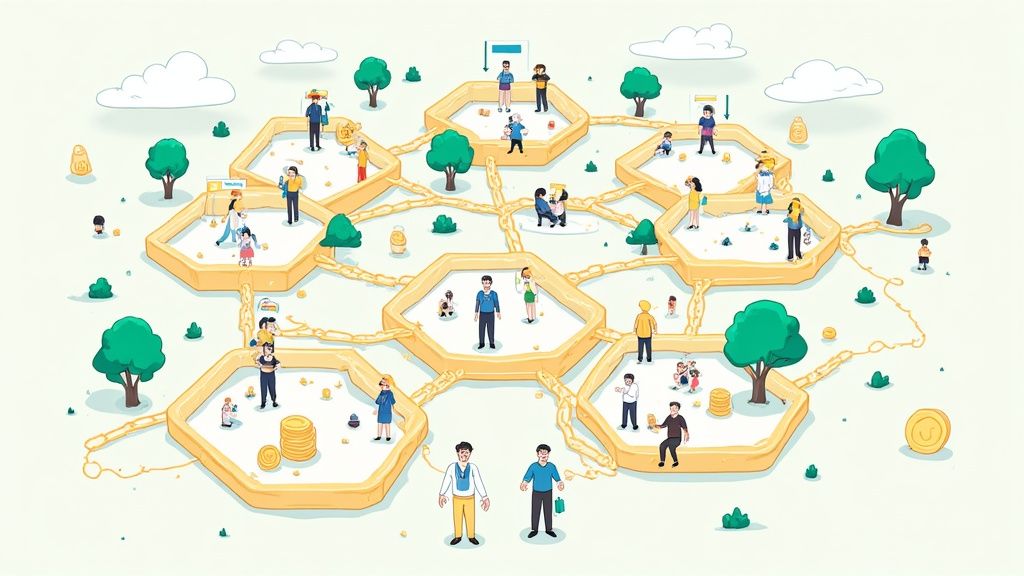
Let's get one thing straight: a Web3 community isn't just a Discord server or a souped-up forum. It’s the living, breathing heart of a decentralized project. The core difference? Members aren't just users or customers—they're owners and builders. This simple but profound shift from passive consumption to active co-creation changes everything. It turns a crowd into a collaborative powerhouse.
What Makes a Web3 Community Different
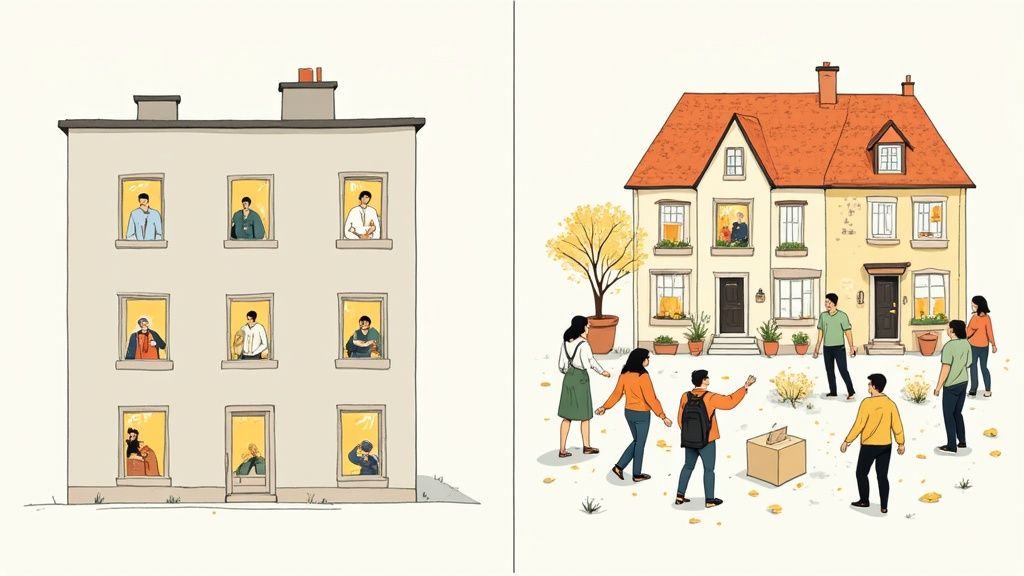
Think about a typical Web2 audience, like your Instagram followers or newsletter subscribers. They're basically digital tenants. They live in a space owned and operated by a big company, and while they can use the facilities, they don't get a say in the rules, a cut of the profits they help generate, or any real sense of ownership.
Web3 completely flips that model on its head. It’s much more like a neighborhood co-op. Every member owns a piece of the action, whether that's through a token, an NFT, or their direct contributions. This stake isn't just for show; it gives them real influence. They can pitch new ideas, vote on critical decisions, and have a tangible impact on where the project goes next.
This is all made possible by blockchain technology, which allows for ownership that is transparent, verifiable, and shared. Instead of all the value funneling up to founders and VCs, it’s distributed back to the people who are actually creating it.
The Power of True Ownership
This feeling of genuine ownership is the secret sauce. It’s the rocket fuel for any thriving Web3 community.
When your members are co-owners, their goals are naturally aligned with the project's success. They’re not just hanging around; they’re invested. They willingly become your biggest evangelists, your most creative content makers, and your most dedicated moderators because they have skin in the game.
“Most crypto communities struggle with the same issues – how do you know who's actually adding value versus who's just making noise? We're creating systems that make this transparent and rewarding in ways that actually matter."
We've seen this model work wonders across the space:
- NFT Projects: Think of communities built around a shared identity or culture, where holding an NFT grants you exclusive perks and a vote in the project's future.
- DAOs (Decentralized Autonomous Organizations): These are basically digital co-ops where members manage a shared treasury and make decisions together.
- DeFi Protocols: Here, users band together to share strategies, suggest protocol improvements, and help onboard new folks.
From Audience to Active Participants
The difference between Web2 and Web3 isn't just technical; it's a fundamental shift in the relationship between a project and its people. The table below breaks down this evolution from a passive audience to an active, empowered community.
Web2 Audience vs Web3 Community A Quick Comparison
| Characteristic | Web2 Audience (e.g., Social Media Followers) | Web3 Community (e.g., DAO Members) |
|---|---|---|
| Relationship | Transactional & one-way (company-to-user) | Collaborative & multi-directional (peer-to-peer) |
| Ownership | Platform is centrally owned; users have no equity | Ownership is distributed via tokens or NFTs |
| Influence | Limited to likes, comments, and consumption | Direct influence through on-chain voting & proposals |
| Value Creation | Value is captured primarily by the platform/company | Value is shared among community contributors |
| Incentives | Driven by content consumption or service utility | Driven by shared success, financial stake, and reputation |
| Governance | Top-down, dictated by the company | Bottom-up and community-driven |
Ultimately, in Web2, the dynamic is transactional: a company offers a service, and you use it. In Web3, the relationship is collaborative. The founding team might spark the initial idea, but the community is the engine that drives it forward.
This new way of organizing is powering some explosive growth. The global Web3 market was valued at US$4.62 billion and is on track to hit US$99.75 billion. You can read more about the Web3 market's growth and what's fueling it. This boom isn't just about cool tech; it's about a revolutionary way of bringing people together around a common goal, turning passive spectators into powerful, self-governing networks.
The Three Flavors of Web3 Communities
While that idea of shared ownership is the glue holding every Web3 community together, they aren't all cut from the same cloth. The space has cooked up a few distinct models, each with its own vibe, goals, and reason to exist. Figuring out these differences is the first step to finding—or building—a community that actually clicks with what you're trying to do.
Let's get into the three main archetypes you'll bump into out there. Each one serves a totally different purpose, from creating digital identities around art to managing massive treasuries or building the future of finance.
NFT Project Communities
NFT communities are probably the ones you've seen the most. They usually pop up around a collection of digital art, collectibles, or maybe assets for a game. In these circles, the NFT is way more than just a JPEG; it's your membership card, a status symbol, and the key that unlocks a shared culture. Owning one gets you into the club.
These communities are a mix of art, culture, and real-world perks. People first get drawn in because they love the art or believe in the project's mission, but they stick around for the benefits of being a holder.
- Exclusive Access: This is the big one. Holders might get into private Discord channels, get first dibs on future drops, or even score invites to IRL events.
- Brand Identity: Rocking a well-known PFP (profile picture) is like wearing a brand. It tells the world which tribe you belong to.
- Shared Storytelling: The best projects let the community shape the narrative. Holders get to vote on lore, help design characters, and build the brand's story together.
Think about a project that lets its NFT holders vote on the next character in their webcomic. Suddenly, you're not just a fan; you're part of the creative team.
Decentralized Autonomous Organizations (DAOs)
If an NFT community is like a social club, a Decentralized Autonomous Organization (DAO) is more like a digital co-op or a startup owned by its members. DAOs are all about managing shared resources—usually a big pot of crypto in a treasury—and making decisions as a group.
A DAO is basically an internet-native organization run from the bottom up. Members vote on everything, and code (smart contracts) makes it happen. There's no CEO calling all the shots.
How do you participate? You usually need to hold the DAO's governance token. The more tokens you have, the more weight your vote carries. This structure is being used for everything from running massive DeFi protocols and funding public goods to buying a copy of the U.S. Constitution. It's all about transparent, democratic control over a shared goal.
DeFi Communities
DeFi (Decentralized Finance) communities gather around specific financial protocols—think decentralized exchanges, lending platforms, or tools for managing your assets. While a lot of these protocols are run by DAOs, the communities themselves are laser-focused on strategy, education, and making the protocol better.
These groups are the protocol's brain trust. They're full of hardcore users, developers, and researchers who are all-in on its success and security.
Here’s what they’re usually up to:
- Governance Debates: This is where the magic happens. Members argue over and vote on huge decisions, like changing interest rates, adding new assets, or spending treasury funds on a new feature.
- Strategy Sharing: You’ll find "power users" and total newbies swapping tips, alpha, and strategies for getting the most out of the protocol, whether that's maximizing yield or playing it safe.
- User Support and Education: The community is often the best customer support team. They help new folks figure out the platform's quirks and create guides and tutorials for everyone else.
In a DeFi community, you're not just a user—you're a stakeholder. You have a real responsibility to help maintain and grow the protocol, keeping it safe and competitive for everyone.
A Practical Framework for Building Your Community from Scratch
Let’s be honest: building a killer Web3 community doesn't just happen. It’s not about a hyped-up launch and hoping for the best. It's a deliberate process, like building a house brick by brick. You need a solid blueprint and a strong foundation before you can even think about throwing a party.
This framework breaks it all down into three simple phases to help you build something that actually lasts.
And the timing couldn't be better. According to one industry survey, 41% of digital agencies are now cooking up Web3 strategies, and 59% of brands are already planning their own moves. People are hungry for real, authentic communities.
This whole process often follows a natural evolution. A project might start with a core asset and then blossom into something much bigger and more community-run.
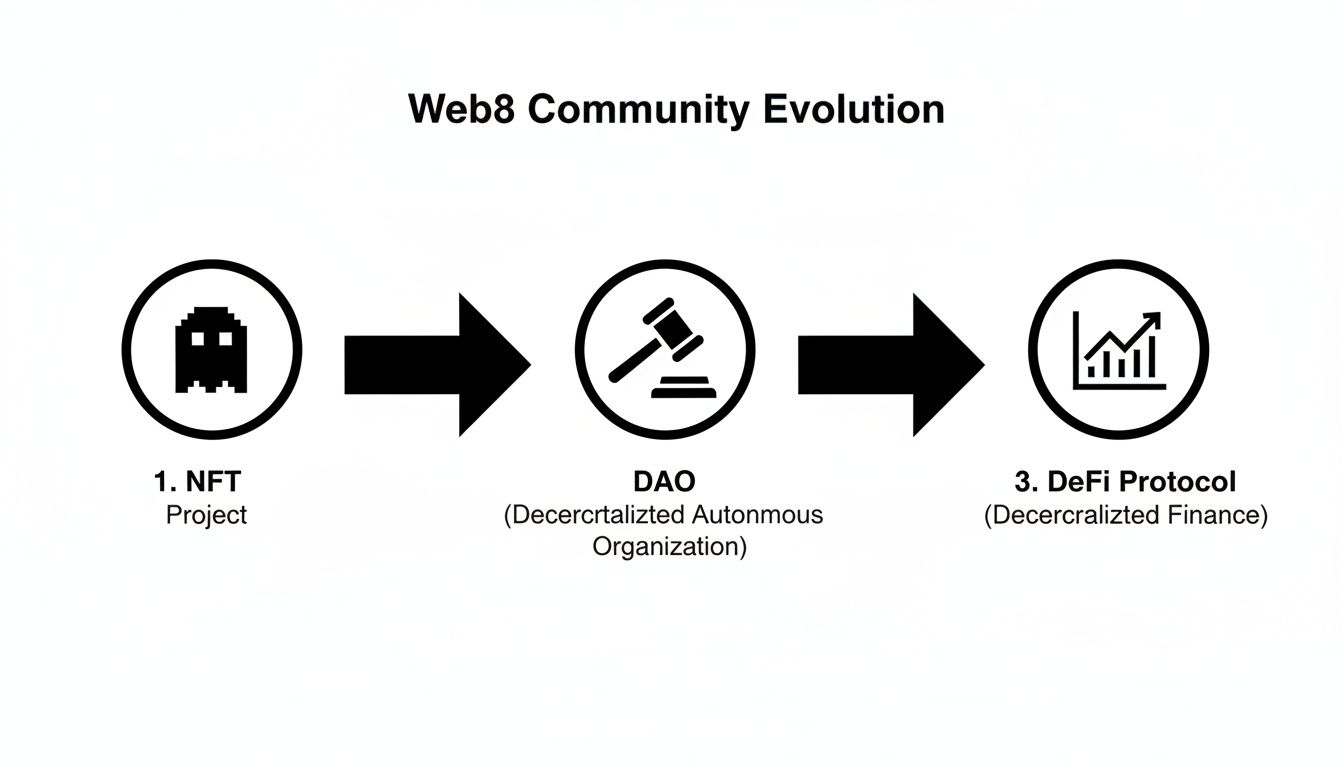
As you can see, it's a common path: an NFT project creates an identity, that identity needs a DAO to make decisions, and that engaged DAO can then power a whole DeFi protocol.
Phase 1: Laying the Foundation
Before you even think about sending your first Discord invite, you have to figure out why your community needs to exist. Seriously, skipping this part is the fastest way to build a digital ghost town. This is where you define the soul of your project.
Start by getting crystal clear on these questions:
- What's our mission? What problem are you actually solving? Keep it simple, clear, and inspiring.
- Who is this for? Paint a picture of your ideal member. Are they die-hard developers, visionary artists, or degen DeFi traders? Get specific.
- What are our core values? What's the code of conduct? Values like radical transparency, relentless collaboration, or member-led education are great places to start.
This isn’t just some corporate-speak exercise. It's the bedrock of your entire culture. A powerful mission gives people a reason to show up, and clear values tell them how to act when they get there.
Phase 2: Igniting the Spark
Okay, foundation's poured. Now it’s time to find your first true believers. Forget about vanity metrics and chasing huge numbers for now. The goal isn't 10,000 lukewarm followers; it's 100 deeply committed fans. These are the people who will become your first moderators, your loudest champions, and your core contributors down the line.
The name of the game in the beginning is authentic connection, not slick marketing. Go to the places where your ideal members already hang out and just add value.
Find them by jumping into real conversations on X, Farcaster, or niche subreddits. Share your mission, listen to feedback, and invite people personally. It's a manual, hands-on approach, but it builds a tight-knit core that sets the tone for everyone else who joins. If you want to dive deeper into getting these early initiatives off the ground, check out our guide on how to build an effective community program.
Phase 3: Structuring for Growth
Once you’ve got that core group fired up, you need to give them a proper home and the right tools to help the community grow. This phase is all about building the infrastructure that lets you scale without losing that initial magic.
Here are your key tasks:
- Choose Your Platform: Discord and Telegram are the usual suspects, but they serve different vibes. Discord is fantastic for organized, threaded conversations, while Telegram is all about fast-paced announcements and a more casual chatroom feel. Pick the one that fits your culture.
- Design a Smooth Onboarding Flow: Don't just throw new members into a chaotic
#generalchat and wish them luck. Create a clear path that verifies them, introduces the mission, and points them toward exactly how they can get involved. - Establish a Rhythm: Create a predictable schedule for things like announcements, AMAs, and community calls. Consistency builds trust and keeps people from tuning out.
To really hit its stride, a community needs a way to organize its shared knowledge. When you do this early, you realize the benefits of a knowledge management system and empower your members to take ownership and build alongside you.
How to Design Engagement That Drives Real Participation

An active community is the lifeblood of any Web3 project, but let's be honest—a wall of "gm" messages isn't real engagement. To build something that lasts, you have to move past the superficial chatter and create experiences that make people genuinely want to participate. A dead Discord is a red flag that members either don't know how to get involved or don't feel like their contributions even matter.
The secret is to cook up a balanced diet of activities. You need to mix on-chain actions, which directly involve your protocol, with off-chain activities that build culture and human connection. Go too hard on one, and you end up with a lopsided community that’s either all business and no soul, or all fun and no purpose.
The Power of a Balanced Engagement Strategy
Think about it like a workout plan. Your off-chain activities are the cardio and stretching—they keep the community limber, build social bonds, and improve overall health. On-chain activities are the weightlifting—they build real protocol muscle and directly contribute to its core strength. You can't just do one; you need both to be in top shape.
Off-chain engagement is all about weaving the social fabric of your community. These tasks should be fun, accessible, and an easy on-ramp for newcomers to feel like they belong.
Here are a few off-chain ideas that just work:
- Weekly Community Calls: Jump on Discord Stages or X Spaces for regular, themed calls. You can share project updates, host AMAs with the team, or just create a space for people to connect.
- Creative Contests: Let your community's talent shine. Run contests for the best memes, articles, or videos about your project. It's a fantastic way to get user-generated content and give creative members their moment.
- Educational Workshops: Host sessions that actually teach people something useful. It could be a "DeFi 101" for total beginners or a deep-dive workshop for the devs in your community.
On the other hand, on-chain actions are what guide your members toward meaningful product interaction. These are the tasks that move the needle on your key metrics and turn lurkers into power users. This is where a no-code tool like Domino becomes your best friend, letting you create quests that trigger specific, verifiable on-chain behaviors without needing a developer.
A few examples to get you started:
- Product-Focused Quests: Create a quest that asks members to stake tokens, mint an NFT, or cast a vote on a governance proposal.
- Liquidity Challenges: Motivate users to add liquidity to a specific pool on a decentralized exchange, boosting your project's health.
- Beta Testing Missions: Reward the pioneers in your community for testing new features and giving you priceless on-chain feedback.
Designing Rewards That Actually Motivate
The single biggest mistake projects make? Throwing tokens at every single problem. Sure, airdrops can create a quick burst of hype, but they mostly attract mercenaries who will dump your token and vanish. The smarter play is to design a tiered reward system that recognizes and incentivizes sustained, meaningful contribution.
A truly effective reward system moves beyond basic token incentives. It’s an intelligent, adaptive, and community-first approach that identifies who is adding real value versus who is just making noise.
Think bigger than just token drops. People are driven by all sorts of things—status, access, and influence, not just cash.
To give you a clearer picture, here is a sample weekly plan that balances different types of activities to keep things fresh and engaging.
Sample Weekly Community Engagement Plan
| Day | Activity Type | Example Task | Platform | Potential Reward |
|---|---|---|---|---|
| Monday | Off-Chain (Social) | "Meme Monday" - Post the best project-related meme. | X/Discord | Discord Role ("Meme Lord") + 50 USDC for the winner. |
| Tuesday | On-Chain (Product) | "Testnet Tuesday" - Complete 3 transactions on the new testnet. | Project DApp | Exclusive "Testnet Pioneer" NFT Badge. |
| Wednesday | Off-Chain (Education) | Community call with a guest speaker on DeFi security. | Discord/X | POAP (Proof of Attendance Protocol) NFT for attendees. |
| Thursday | On-Chain (Governance) | "Governance Day" - Vote on the latest community proposal. | DAO Voting Portal | Small governance token bonus for all voters. |
| Friday | Off-Chain (Creative) | "Feedback Friday" - Submit a detailed feedback doc on a new feature. | Zealy | Entry into a raffle for a larger token prize; top 3 get special access. |
| Weekend | On-Chain (DeFi) | "LP Weekend" - Stake at least $100 in the main liquidity pool. | DEX | Increased APY boost for the following week. |
This kind of schedule ensures there’s always something for everyone, whether they’re a degen, a creative, or a newcomer just finding their footing.
By layering different reward types, you create a much stickier and more sustainable incentive system. Someone might show up for a token reward but stick around for the status and influence they earn along the way. This is the heart of what we call community gamification—turning a checklist of tasks into a compelling, long-term journey.
No-code questing platforms are built for this. With Domino, you can easily connect an off-chain task (like winning a meme contest on X) to an on-chain reward (like automatically receiving a special NFT badge), handling all the verification and distribution for you. That leaves you free to focus on what really matters: creating incredible experiences for your community.
Measuring What Actually Matters: Is Your Community Thriving or Just... Large?
Let's be real for a second. A huge member count in Discord is the ultimate vanity metric. It looks great on a slide deck, but it tells you almost nothing about the real health of your community. A server with 100,000 members but only a handful of people talking is a digital ghost town, not a vibrant ecosystem.
To really get a feel for your community's pulse, you have to look beyond the surface. It’s about shifting from guesswork to a data-backed strategy. We can break this down into three core areas: Growth, Engagement, and Governance. Each one has its own set of clues that show you what’s working and what’s falling flat.
Gauging Authentic Growth
Forget about how many bots you can cram into a server during a hype cycle. Authentic growth is about the organic increase of real people who actually have skin in the game.
Instead of just staring at the total member count, start tracking metrics that have a bit more substance:
- Unique Wallet Holders: This is your actual user base. Tools like Dune Analytics can show you exactly how many unique wallets are holding your token or NFT. A steady climb here is a fantastic sign of genuine adoption.
- On-Chain User Activity: Okay, so they hold the token. But are they doing anything? Keep an eye on the number of unique addresses that are actively using your protocol each month—staking, voting, minting, you name it. This separates the passive spectators from the active players.
The Web3 space is absolutely buzzing with activity. For example, stablecoins account for 41% of daily active addresses, and a whopping 1.5 million wallets have engaged with Web3 ad campaigns. People are clearly ready to participate.
Tracking Meaningful Engagement
Engagement is the heartbeat of your community. It’s the difference between someone just holding a token and someone who’s genuinely invested in seeing the project succeed. This is where you see the payoff from all your community-building efforts.
We often see projects get fixated on survey scores. But true community health is reflected in what people do, not just what they say. This means moving beyond vanity metrics like NPS and tracking actual, tangible actions.
Here are a few engagement KPIs that really matter:
- Active Contributors: Who are the real ones? Go beyond simple message counts and start identifying the members who consistently submit valuable content, jump into support channels to help others, or even organize their own small events.
- Quest and Campaign Completion Rates: If you're running quests, what percentage of people who start actually finish? A high completion rate is a great indicator that your tasks are interesting and your incentives are hitting the mark.
- Proposal Submissions: How many new ideas are bubbling up from the community itself and making their way to your governance forum? A steady stream of proposals is a powerful sign that your community is engaged and thinking about the future.
If you want to get better at crafting incentives that really drive these numbers up, we've got a whole guide on designing effective community rewards.
Analyzing Decentralized Governance
Finally, governance metrics are your window into how decentralized and resilient your community really is. If a few whales are calling all the shots, you’ve got a centralized project wearing a community costume. Healthy governance is all about widespread, active participation.
To get a sense of this, focus on:
- Voter Turnout: What percentage of token holders are actually showing up to vote on key proposals? Low turnout can mean people are apathetic, or maybe the voting process is just too clunky.
- Diversity of Proposal Creators: Are new ideas coming from all corners of the community, or is it always the same few voices? A diverse group of creators is a sign of a healthy, bottom-up culture.
- Delegation Distribution: If you use a delegation model, how is that voting power spread out? Is it all concentrated with a handful of delegates, or is it distributed across many different community reps?
By keeping a close eye on these KPIs across growth, engagement, and governance, you get a complete picture of your community’s health. It lets you spot trends early, fix what's broken, and build a Web3 community that isn't just big, but strong, active, and truly built to last.
Common Questions About Building a Web3 Community
Diving into Web3 community building can feel a little like you've been dropped into a new country with a different language and culture. The core ideas of creating connection are the same, but the tools, the vibe, and the potential traps are totally unique. To help you find your footing, I've rounded up some of the most common questions I hear from builders, along with some no-nonsense, practical advice.
Think of this as your field guide for those critical early days. We'll cover the real-world stuff that can make or break a project, from getting your first few people in the door to keeping them safe from the scammers that inevitably show up.
How Do I Attract the First Members to My New Web3 Community?
Getting your first members is all about being authentic, not about loud marketing. Forget spending a ton on ads or trying to rack up a massive follower count. Your first mission is to find your 100 true fans—the core group who genuinely believe in what you're doing, not just what they might get from an airdrop.
The best way to do this? Build in public. Share your journey—the wins, the struggles, the late-night epiphanies—on places like X or Farcaster where your kind of people are already hanging out.
Here are a few things that actually work:
- Add value, don't just shill. Jump into conversations in other relevant communities. Answer questions, be helpful, and share what you know without just dropping links to your own project. People notice when you're there to contribute, not just to take.
- Have a mission people can get behind. Be crystal clear about the problem you're solving or the future you're trying to create. A strong vision is a magnet for the right kind of people.
- Invite people one by one. When you find someone who gets it, who really vibes with your mission, send them a personal invite. It takes more time, but this hands-on approach builds a rock-solid, tight-knit foundation.
What Are the Biggest Mistakes to Avoid When Managing a Community?
Even when you've got a passionate early group, it's surprisingly easy to mess things up. The most common—and deadly—mistake is inconsistent communication. If you disappear for weeks at a time (what we call "ghosting"), you'll kill all your momentum and destroy the trust you worked so hard to build. Keep a steady beat of updates going, even if there's not much to report.
Another big one is talking a big game about decentralization while keeping all the control. If you tell your community they have ownership, you have to give them real, accessible ways to contribute and make a difference. A super complicated governance system that no one uses just feels like a gimmick.
The best communities are built on genuine connection and a shared purpose. If the only thing holding your group together is the promise of an airdrop, it’s not a community—it’s a waiting list. It will dissolve the second the money runs out.
And please, avoid chasing vanity metrics. A huge server full of silent lurkers is way less valuable than a small, fired-up group of people who are actually contributing.
How Can I Keep My Community Safe from Scams and FUD?
In Web3, security isn't just a nice-to-have; it's your absolute responsibility. Your members are trusting you with their time and, often, their assets. Protecting them is non-negotiable.
First things first, get your basic security in order. This means setting up clear rules and using mod bots in Discord and Telegram to automatically zap malicious links and spam. Make it a golden rule that team members will never DM you first to ask for information or offer support. Shout this from the rooftops.
Your best weapon against scammers is education. Be relentless. Constantly remind your community about common tricks, like phishing links disguised as a "surprise mint," fake support accounts, or team member impersonators.
To fight FUD (Fear, Uncertainty, and Doubt), your best defense is to be radically transparent. When things get tough or rumors start flying, get out in front of it. Address the issues head-on, in public. An open and honest team empowers its true believers to become its fiercest defenders, shutting down bad information with actual facts. A safe, transparent space is the bedrock of a community that lasts.
Ready to build an engagement engine that gets people involved without burning you out? With Domino, you can spin up on-chain and off-chain quests in minutes, automate your reward payouts, and get the data you need to grow a real community. See how it works at https://domino.run.