Unlocking Web3 Loyalty Programme Management

Let's be honest, the old loyalty programs—the flimsy punch cards and the 'buy 10, get one free' deals—just don't cut it anymore. When we talk about loyalty programme management in Web3, we're talking about building an entire, living economy around your community. It’s a total shift in thinking, moving from rewarding simple transactions to celebrating meaningful contributions. This is how you turn passive followers into die-hard advocates.
Why Web3 Loyalty Is Your New Growth Engine
Picture traditional loyalty as a one-way street where a brand just broadcasts messages to its customers. Web3 loyalty is the complete opposite; it's a lively, two-way conversation where every single interaction has value. Reacting to a Discord announcement, staking an NFT, voting on a proposal—all of these actions are recognized and rewarded. It builds a community that doesn't just stick around; it actively participates and helps you grow.
The numbers back this up, big time. The global loyalty industry is booming, jumping from US$80.92 billion to a forecasted US$93.79 billion. That's a massive 15.9% annual jump. And with program owners seeing an average 4.8x return on their investment, it's pretty clear this isn't just a fleeting trend.
Beyond Points and Purchases
In the Web3 world, genuine engagement is the real currency. A community member's worth isn't just about how much money they spend; it's about how they make the entire ecosystem better for everyone.
Think about all the ways people contribute:
- Social Amplification: Getting rewarded for sharing a big announcement on Twitter or jumping into a Telegram raid.
- On-Chain Activity: Earning perks for staking tokens, holding a specific collection of NFTs, or adding liquidity to a pool.
- Community Contribution: Recognizing people for their helpful answers in Discord, their votes on governance proposals, or the awesome content they create.
When you start rewarding this full spectrum of activity, you create a powerful cycle. People feel seen and valued, which motivates them to contribute even more. To really get a handle on what makes these programs tick, it's worth exploring the core benefits of loyalty programs and how they drive retention.
The Power of No-Code Platforms
Not too long ago, launching a slick loyalty program meant hiring a team of developers and spending a small fortune. It was a huge barrier for most projects. But now, no-code platforms like Domino have completely changed the game. They give teams the power to build incredible engagement engines without having to write a single line of code.
Just look at how simple it can be to set up automated, reward-based quests that pull in both on-chain and off-chain actions. Tools like this handle all the heavy lifting, so projects—whether they're in DeFi, gaming, or NFTs—can design, launch, and manage campaigns that actually move the needle. You get to focus on the fun stuff: your strategy and your community, not the technical headaches.
How to Design Your Web3 Loyalty Strategy
Let's be real—a successful Web3 loyalty program doesn't just happen. It's the result of a deliberate strategy, one that’s built on crystal-clear goals, a deep understanding of your community’s journey, and rewards that people actually want.
Think of it like planning an epic adventure. You need a treasure to chase, a map to follow, and some exciting challenges along the way. Without that solid plan, you're just creating busy work with no real impact.
It all starts by asking one simple question: What are we trying to achieve? Are you trying to pull in new users, get people to engage more on-chain, or turn your current members into a powerful social media army? Nailing down your primary goal is the first and most critical step. It becomes the North Star for every quest you design and every reward you offer.
Define Your Core Objectives
Before you even dream about what rewards to give out, you have to define what success actually looks like. Vague goals like "increase engagement" are useless. You need to get specific. Are you trying to boost the number of token holders by 15%? Or maybe your goal is to pump up the daily active users on your dApp.
Here are a few common, actionable goals for Web3 projects:
- User Acquisition: Your main focus is growing the community. Quests will be designed to bring new people into your ecosystem, often through social sharing and referrals. For a deeper dive, our guide on building a Web3 referral program is packed with great ideas.
- Deepen Engagement: You want the people who are already here to do more. Quests should nudge them toward specific on-chain actions like staking, providing liquidity, or trying out a new feature.
- Amplify Social Voice: Your goal is to own the conversation online. Quests will revolve around things like Twitter raids, creating content, and spreading your project’s message far and wide.
The shift from the old punch-card style of loyalty to this new, community-driven approach is fundamental to Web3. It’s a completely different ballgame.
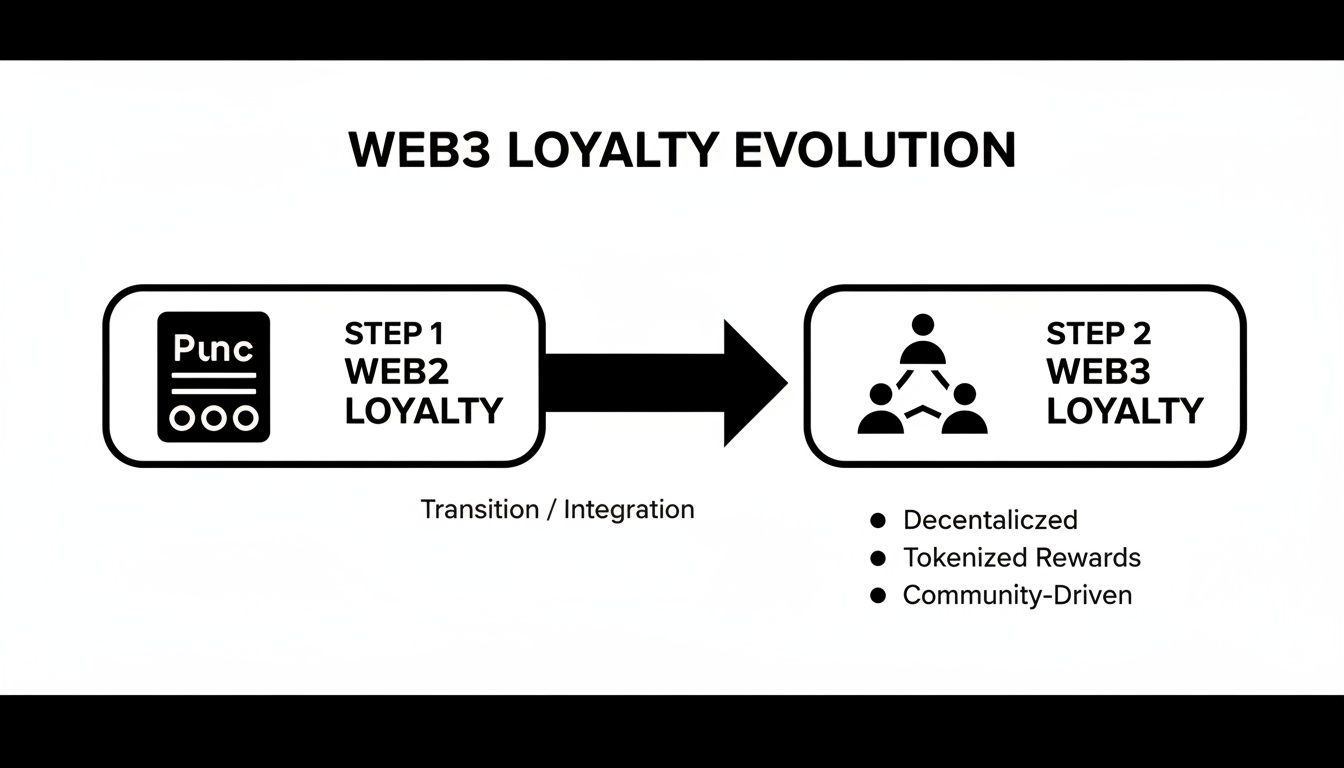
This evolution really shows how Web3 loyalty is all about building interconnected, participatory communities, not just rewarding someone for buying something.
Map the User Journey and Identify Key Actions
Once you have your goal, it's time to map out the typical journey a user takes with your project. From the second they first hear about you to the moment they become a die-hard fan, there are key touchpoints where a loyalty quest can make a huge difference. Your job is to pinpoint the high-value actions you want users to take at each stage.
For someone brand new, a valuable action might be as simple as joining your Discord and verifying their wallet. For a more seasoned member, it could be staking a certain amount of tokens or participating in a governance vote.
When you identify these key actions, you can strategically place quests and rewards at the perfect moments to guide users deeper into your ecosystem.
Key Takeaway: A well-designed loyalty program doesn't just reward random clicks. It strategically guides users along a journey, incentivizing the specific behaviors that drive your project's most important goals.
This table gives you a practical look at how you can tie specific quests directly to your project's goals.
Matching Your Goals to the Right Quests
| Project Goal | On-Chain Quests | Off-Chain Quests |
|---|---|---|
| New User Acquisition | • Verify wallet ownership • Make a first swap or trade |
• Join Discord/Telegram • Follow on X (Twitter) • Refer a friend |
| Increase Liquidity | • Add liquidity to a specific pool • Stake LP tokens for a set duration |
• Share liquidity pool details on social media • Write a short guide on how to add liquidity |
| Boost Social Presence | • Vote on a Snapshot proposal • Mint a community-themed NFT |
• Participate in a X (Twitter) raid • Create a meme or short video • Write a review |
| Drive dApp Usage | • Use a new dApp feature • Complete 5 transactions in a week |
• Provide feedback on the dApp experience • Join a user testing session |
| Build a Core Community | • Hold a specific token for 30+ days • Delegate governance votes |
• Achieve a specific role in Discord • Welcome 10 new members |
Think of these as starting points. The real magic happens when you tailor quests to the unique DNA of your community and what excites them.
Brainstorm Rewards That Resonate
Finally, the fun part: designing rewards that your community actually cares about. The best rewards feel exclusive and valuable, offering something that money can't always buy. A great loyalty program finds that sweet spot between the perceived value of the reward and the effort required to earn it.
It's a good idea to mix things up to keep your program fresh and exciting:
- Digital Assets: These are the bread and butter of Web3. Think exclusive NFTs, token airdrops, or special in-game items that have both real and perceived value.
- Exclusive Access: This is huge. Offer things like whitelist spots for an upcoming mint, early access to new features, or entry into a private, token-gated Discord channel.
- Community Status: Never, ever underestimate the power of social capital. Unique Discord roles, special profile badges, or a spot on a community council can be incredibly powerful motivators for your most dedicated members.
When you align your goals, the user journey, and your rewards, you create a cohesive and powerful loyalty strategy. It’s a system that not only engages your community but also directly fuels your project's long-term success.
The Core Components of an Engaging Program
A great Web3 loyalty program is like a finely tuned engine. It’s not just one thing, but a bunch of moving parts all working in sync to push your community forward. Truly effective loyalty programme management boils down to combining the right rewards, a dead-simple user experience, and a little bit of psychological fun.
At the very minimum, your program needs to offer clear incentives that people actually want. This is where you decide the basic rules: how do people earn, and what do they get for their effort? A simple points system is a classic for a reason, but the most addictive programs layer a few different structures to keep things from getting stale.
Crafting a Compelling Reward Structure
Think of your reward system as a toolbox. You wouldn’t use a hammer for every single job, right? Same idea here. Don't rely on just one type of reward. The best move is to create a hybrid model that speaks to different kinds of users and what motivates them.
Here are the key structures you’ll want to mix and match:
- Points Systems: This is your bread and butter. Users do stuff—we call them quests, like sharing a post or staking a token—and earn points. They can then cash in those points for real rewards. It’s a simple "earn-and-burn" loop that everyone immediately gets.
- Tiered Levels: This is where you bring in a sense of status and progression. As people rack up points, they level up through tiers—think Bronze, Silver, Gold. Each new level unlocks better perks, like cooler rewards, exclusive access, or even earning points faster. It taps right into that natural human drive to climb the ladder.
- Achievement Badges: These are your digital trophies. They aren't for spending, but for showing off major milestones or special contributions. Getting a "Day One Supporter" or "Top Referrer" badge gives people serious bragging rights and makes them feel seen for what they bring to the table.
When you blend these together, you give your community both instant wins (points) and long-term goals (tiers and badges). It’s a powerful combo that keeps people hooked, no matter where they are in their journey with you.
Blending On-Chain and Off-Chain Activities
The real magic of a Web3 loyalty program happens when you connect a user's on-chain identity with everything else they do online. If you only reward on-chain actions, you're missing half the picture. A smart program rewards the full spectrum of a user’s contributions.
For instance, you could create a single quest that requires a user to retweet a big announcement on X (formerly Twitter) and stake at least 0.1 ETH of your project’s token. This kind of blended task does two crucial things at once: it juices your social media reach while also deepening on-chain investment. It all comes down to understanding how to build customer loyalty by recognizing the total value someone brings to your world.
Key Insight: The best quests don’t make users choose between on-chain and off-chain life. They weave them together, creating a single experience that reflects a member’s total impact on the project's success.
This strategy makes sure your most valuable community members—the ones who are active on social media and also have skin in the game financially—get the recognition they deserve.
Meeting Users Where They Are
Let's be honest: a brilliant loyalty program is completely useless if it's a pain to use. Friction is the absolute killer of engagement. To get as many people involved as possible, you have to bring the program to the platforms they already live on, like Discord and Telegram.
Don't make them open a separate website just to check their points. Let them chat with a bot, see the leaderboards, and claim rewards right inside the app they have open all day. This frictionless approach makes joining in feel like a natural part of their daily routine, not another chore to add to the list. By embedding the program into their existing habits, you slash the barrier to entry and see participation skyrocket.
The Psychology of Gamification
Finally, sprinkling in a few elements of gamification can spark some friendly competition and just make the whole thing more fun. We're not talking about building a full-blown video game here. It's about using simple game-like mechanics to motivate people.
Here are a few powerhouse gamification tools:
- Leaderboards: Showing a public ranking of the top contributors fires up people's competitive spirit and gives everyone a clear goal to shoot for.
- Progress Bars: Seeing a bar fill up as you get closer to the next tier or reward gives a powerful feeling of momentum and accomplishment.
- Surprise Rewards: Randomly dropping a bonus on an active member creates those "wow" moments that get people talking and keep everyone on their toes.
These little tricks tap into our built-in desire for status, achievement, and a little bit of luck. To dive deeper into these ideas, check out our guide on Web3 gamification and see how it can transform a community. By thoughtfully weaving these core pieces together, you'll build a loyalty program that doesn't just hand out rewards—it creates genuine, lasting engagement.
Automating Verification to Scale Effortlessly
Picture this: you've just launched a new quest, and ten thousand people retweeted your post. Now imagine having to manually check every single one. Or what about confirming that thousands of crypto wallets are holding a specific token? It's a logistical nightmare, and honestly, it's the biggest bottleneck holding back most loyalty programs.
This kind of manual grind doesn't just eat up your time; it makes running a program at any real scale completely impossible.
This is where the right platform completely changes the game. Instead of getting buried in endless spreadsheets and user-submitted screenshots, you can let automation do all the heavy lifting. This isn't just about saving a few hours here and there. It's about unlocking the ability to engage with thousands—or even hundreds of thousands—of your community members at the same time, without missing a beat.
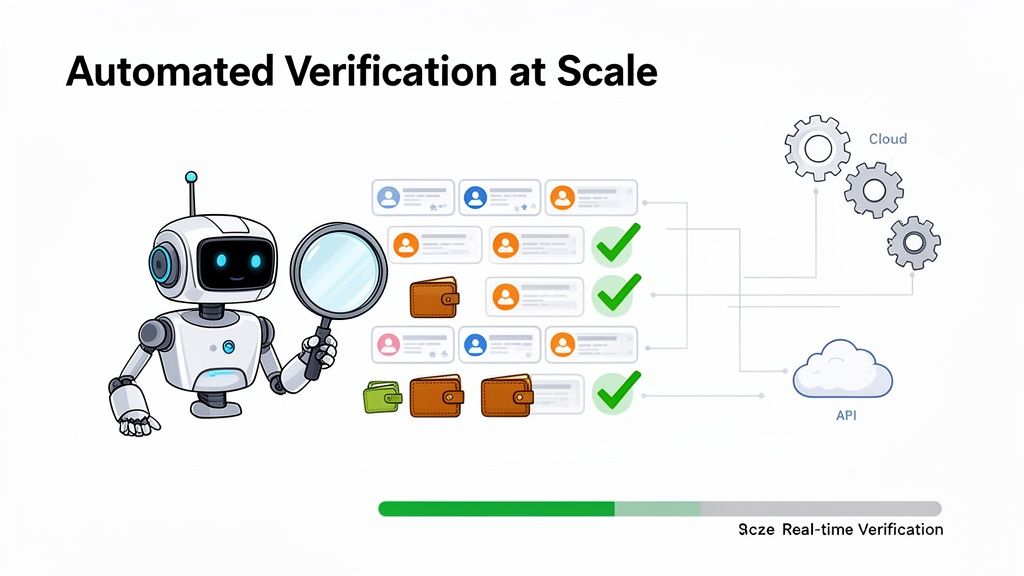
From Manual Nightmare to Seamless Workflow
Let's be real, the biggest issue with manual verification is the delay and the inevitable human error. When someone completes a task, they want their reward now, not in a few days after you've had a chance to check their work. That wait kills all the momentum and just leaves people feeling frustrated. Automation flips that script entirely.
Using direct API integrations and smart tools, verification happens instantly and accurately. A user connects their wallet or social account, and the system confirms everything in seconds.
Here’s what that actually looks like:
- On-Chain Actions: The system can ping the blockchain to see if a user has staked the right amount of tokens, holds a specific NFT, or voted in a governance proposal. No guesswork needed.
- Off-Chain Actions: Modern tools can instantly see if someone followed your account on X (formerly Twitter), joined your Discord server, or used the right hashtag in a post.
- Content Submissions: For quests that need a creative touch, like submitting memes or articles, AI can do the first pass, checking for relevance and flagging only the odd ones out for a human to look at.
This is a massive shift. You get to spend your time on what really matters—strategy and building your community—instead of being stuck doing mind-numbing admin work.
The Power of Instant Gratification
In a world where attention spans are measured in seconds, speed is your secret weapon. Giving someone their reward the moment they complete a quest delivers that instant gratification that keeps them coming back for more. It creates a simple, powerful feedback loop: they take action, they get rewarded, and they’re eager to do it again.
People are less patient than ever. A recent study found that a staggering 77% of consumers ditch brands faster than they did just three years ago, with 61% switching to a competitor in the last year. This just goes to show how critical it is to have a program that feels alive and delivers value right away. You can dig into more of these loyalty statistics to see why so many companies are racing to modernize their approach.
This is exactly why automated verification is no longer a "nice-to-have." It’s the engine that powers a modern, effective loyalty program. It ensures your community feels seen and rewarded in real-time. Without it, you're always one step behind, and your members will just lose interest and find something else to do.
Making Your Loyalty Program a Core Part of Your Marketing
A loyalty program that isn't connected to anything else is basically a very expensive, very shiny paperweight. It might look impressive, but it’s not actually doing anything. To get real traction, you need to plug it directly into your marketing stack, making it the central hub that connects all your community efforts.
Think of it like building a data superhighway. Information from your loyalty program needs to flow out to your other tools, and data from those tools needs to flow right back in. This creates a feedback loop that makes every part of your marketing smarter.
Getting All Your Tools to Talk to Each Other
The magic happens when your loyalty platform is seamlessly integrated with everything else. When it can communicate with your other essential tools, you can automate things that would be a nightmare to handle manually. This turns your program from a simple points system into a genuine growth engine.
Let me paint a picture for you:
- From Your Website to a Quest: Someone lands on your blog and reads an article about your new NFT mint. Your analytics tool picks this up and instantly pings your loyalty platform, which then automatically invites that user to a quest specifically about that mint.
- Supercharging Your CRM: A community member grinds their way to the top of the leaderboard and earns a legendary badge. That achievement is instantly sent to their profile in your CRM, flagging them for a personal thank you message or an exclusive invite to a beta test.
This constant, automated chatter between your tools means your marketing is always in sync with what your community is actually doing. You're no longer guessing—you're reacting to their behavior in real time.
The Bottom Line: An integrated loyalty program doesn't just reward what people have done in the past. It actively influences what they do next by feeding engagement data into your other systems, which then create more personalized campaigns.
This way, every tool in your marketing shed is working together, creating something much more powerful than any single piece.
Using Loyalty Data to Run Smarter Campaigns
Once your systems are talking, the real fun starts. The incredibly detailed data from your loyalty program becomes a goldmine for optimizing everything else you do. You finally have a clear, unfiltered view of who your most dedicated community members are.
One of the best ways to use this is to build smarter user segments. Forget generic lists like "all Twitter followers." You can now create ultra-specific audiences based on their loyalty activity, which lets you send messages that actually land.
Here are a few ways you could slice it:
- Segment by Engagement: Group your members into "Power Users" (the top 5% on your leaderboard), "Rising Stars" (anyone who's completed their first 5 quests), and "Needs a Nudge" (no activity in 30 days). Each group gets a different message tailored to their specific journey.
- Segment by Interest: Group people based on the quests they complete. If someone is always doing your DeFi and staking-related quests, you know exactly who to ping when you launch a new liquidity pool. You’re talking to a pre-qualified, highly interested audience.
- Segment by On-Chain Activity: Pull a list of every member who holds a specific NFT from your collection or has staked your token. This lets you run exclusive campaigns for your biggest believers, making them feel seen and valued.
This kind of precision changes the game entirely. You stop broadcasting to everyone and start having meaningful conversations with the right people at the right moment. If you're looking to build this kind of integrated system, a white label loyalty solution for Web3 can give you the brandable and flexible foundation you need. At the end of the day, great loyalty management is about turning raw engagement data into real intelligence that drives growth everywhere.
So, how can you tell if your loyalty program is actually doing its job? A program that feels good is one thing, but you need one that's fueling real, measurable growth. The secret is in the data. Smart loyalty programme management is all about tracking the right numbers and using what you find to make better decisions.
It’s way too easy to get caught up in vanity metrics like "total quests completed." Sure, it's a number, but it doesn't tell you if you're actually moving the needle on your core business goals. You have to draw a straight line from your loyalty activities to the outcomes that keep your project healthy and growing.
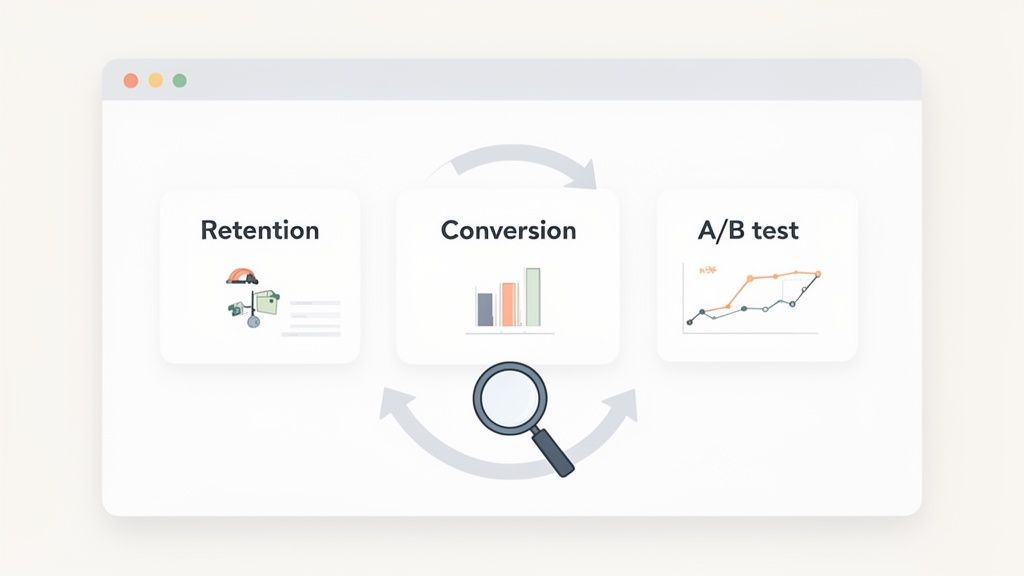
Key Performance Indicators That Actually Matter
To get past the feel-good stats, you need to focus on KPIs that paint a real picture of your community’s health and your project's momentum. These are the numbers that show you what’s working and help prove the program's worth.
Start by tracking these essentials:
- Member Retention Rate: What percentage of your members are sticking around month after month? A high retention rate is a clear sign that you're consistently delivering value.
- On-Chain Transaction Growth: Are your loyalty members making more swaps, staking more tokens, or using your dApp more often than everyone else? This is a direct measure of real economic activity.
- Conversion to Token Holder: How good is your program at turning a casual Discord member into someone who actually holds your token? This tracks the critical journey from fan to stakeholder.
- Social Engagement Lift: Look at the difference in social buzz (likes, shares, comments) between your loyalty members and your general audience. This quantifies their power as genuine brand advocates.
When you focus on these metrics, you build a dashboard that tells a story of real growth, not just empty activity.
A Framework for Continuous Optimization
Your loyalty program isn't something you can just set up and walk away from. Treat it like a living, breathing system that needs constant fine-tuning. The best way to do this is with a simple feedback loop: launch, measure, learn, and repeat.
Experimentation is what fuels this cycle. You can't truly know what fires up your community until you start testing different ideas.
Pro Tip: A/B testing is your best friend here. Don't guess which rewards will hit the mark—test them. Give one group an NFT for finishing a quest and another group a token bonus. The data will show you exactly which incentive drives more action.
This process of constant iteration is the heart of great loyalty programme management. Maybe you find out that quests involving on-chain actions have fewer completions but create users who are way more valuable in the long run. That's a golden insight. It lets you double down on what works and ditch what doesn't, making your program stronger over time.
Use this data to pinpoint your biggest champions—the top 5% of your community who might be driving 50% of all social engagement. These are your power users. Once you understand what makes them tick, you can build strategies to not only keep them happy but also attract more people just like them. This is how analytics turns your program from a simple expense into a predictable engine for growth.
Got Questions About Web3 Loyalty Programs?
Jumping into the world of Web3 loyalty can feel like navigating a new city—exciting, but you're bound to have some questions. Let's clear up a few of the most common ones so you can move forward with confidence.
What’s This Going to Cost Me?
Budget is always a top concern, but the good news is that launching a Web3 loyalty program often costs a lot less than you might think.
The biggest expense for most projects is usually developer time. By using a no-code platform, you slash that cost right out of the gate. Your main expenses then become the platform subscription and, of course, the rewards you're giving out.
The beauty is you can start small. You don't need a massive budget from day one. Kick things off with low-cost, high-value perks like exclusive Discord roles or whitelist spots for an upcoming drop. Once you see the ROI and your community starts buzzing, you can scale up to bigger rewards like token drops or NFTs.
Isn't This Just a Fancy Airdrop?
This question pops up all the time, and it's a great one because the difference is huge.
Think of an airdrop as a one-and-done marketing blast. It’s about dropping tokens into a wide net of wallets to grab attention, often with little to no real engagement required from the people receiving them.
A loyalty program is the complete opposite. It’s a long-term strategy designed to build a real relationship. It’s about rewarding specific, continuous actions that bring genuine value to your project—day in and day out.
An airdrop might be one of the rewards in your loyalty program, but the program itself is the entire engine for sustained community engagement.
How Do I Keep Bots from Wrecking Everything?
Keeping your program fair and bot-free is absolutely critical. In Web3, this is a massive challenge, and there's no single silver bullet. The best defense is always a layered one.
Forget relying on just one trick. Modern platforms tackle this by combining several different verification methods to make life difficult for bots.
- Human Verification: Integrating with identity solutions like Gitcoin Passport or Galxe Passport adds a strong "proof of personhood" layer.
- Social Proof: Requiring users to link social accounts with a certain history or follower count weeds out freshly made bot accounts.
- AI Detection: Smart systems can analyze behavior patterns on the backend, flagging suspicious activity that looks more like a script than a person.
When you mix these off-chain checks with on-chain requirements (like holding a specific NFT), you crank up the cost and effort so high that it's just not profitable for bots to cheat your system at scale.
Ready to build a powerful, bot-resistant loyalty program without touching a single line of code? Domino gives you all the tools to design, launch, and automate quests that drive real growth. Explore Domino's features and start building your community today.