A Modern Guide to Web3 Loyalty Program Management
Loyalty programs aren't just about punch cards and collecting points anymore. When we talk about loyalty in Web3, we're really talking about building a dynamic ecosystem that keeps your community fired up and coming back for more. It's a total shift from those old-school, static reward systems. Instead of just tracking purchases, you're rewarding meaningful actions both on-chain and off-chain, turning your loyalty program into a powerful engine for growth.
Rethinking Loyalty in Web3
Let's cut to the chase. Building a die-hard community in Web3 used to mean wrestling with code-heavy platforms and clunky tools. Not anymore. We're in an era where smart, automated loyalty programs are the secret weapon for marketers and founders. This isn't just about tossing out points for random clicks. It's about building a living, breathing ecosystem where every single contribution—from a simple tweet to a complex DeFi transaction—gets noticed and rewarded.
This guide is all about showing you how to pull this off without the technical headaches. You'll see how a no-code approach can turn loyalty management from a developer's nightmare into a marketer's dream. We'll get into the nitty-gritty of why this is so critical for survival and growth in the hyper-competitive Web3 space, and I’ll walk you through the exact frameworks you need to design, launch, and scale a program that actually works.
The Soaring Value of Smart Loyalty
The numbers don't lie. The global loyalty market is exploding, projected to hit $18.2 billion USD by 2026, up from $8.6 billion USD just a few years ago. For anyone in Web3, this is a massive opportunity. Imagine tapping into that growth by running on-chain quests and using AI to verify off-chain tasks, all without writing a single line of code.
These programs aren't just feel-good initiatives; they're serious revenue drivers. For example, customers who actually redeem their rewards spend up to 164% more than those who don't, and their purchase frequency jumps by 73%. The data is clear: modern loyalty drives real business.
The big idea behind Web3 loyalty is simple: reward people for creating genuine value. Whether someone is providing liquidity, voting on a governance proposal, or just creating great content for the community, their contribution makes the ecosystem stronger. It deserves to be recognized.
This really forces you to think differently about engagement. You're no longer just counting sales. True loyalty management in Web3 means you’re watching a whole spectrum of activities that build a more resilient, active, and invested community.
Traditional vs Web3 Loyalty Programs
The jump from old-school loyalty to Web3 isn't just an upgrade; it's a complete reimagining. Old programs were rigid and controlled by the company, while Web3 programs are flexible, automated, and often driven by the community itself.
Here's a quick breakdown of how things have changed:
| Feature | Traditional Loyalty | Web3 Loyalty |
|---|---|---|
| Control | Centralized, company-owned | Decentralized, community-owned |
| Rewards | Transaction-based (e.g., spend money) | Participation-based (e.g., vote, create) |
| Verification | Manual checks, often slow | Automated, on-chain & AI-powered |
| Data | Siloed, owned by the company | Transparent, verifiable on-chain |
| Integration | Limited, clunky APIs | Composable, open ecosystem |
Ultimately, Web3 loyalty is about creating a symbiotic relationship. The company provides the framework, but the community breathes life into it, sharing in both the journey and the rewards.
Key Shifts in Loyalty Program Management
Making the leap from traditional to Web3 loyalty changes how you design and run your program from the ground up. Getting a handle on these differences is the first real step to building something your audience will actually care about.
From Centralized Control to Community Ownership: Traditional programs are a one-way street—the company makes the rules. In Web3, you’re often building with your community, incorporating things like governance and transparent, on-chain reward distribution that everyone can see and verify.
From Transactional to Participatory Rewards: The old model was all about rewarding people for spending money. The new model is way smarter. It rewards people for getting involved—voting in a DAO, completing an educational quiz, or even just hyping the project on social media.
From Manual Oversight to Automated Verification: This is a game-changer. Smart contracts and AI can now instantly verify an incredible range of actions, both on-chain and off. This frees your team from the soul-crushing work of manual checks so you can focus on the big picture. You can see just how powerful this is in our guide to Web3 gamification.
Designing Your Loyalty Program Framework
Before you even think about launching a single quest, you need a solid game plan. A successful loyalty program isn't born from a frantic launch; it's the result of careful, architectural design. This is your strategic blueprint—the foundation for every quest, reward, and user interaction you'll build. Without it, you’re just throwing rewards into the void and hoping something sticks.
The first, most crucial step is to get brutally honest about your goals. What are you really trying to achieve here? Vague ideas like "increase engagement" are useless. You need specific, measurable targets that tie directly into your project's biggest needs. This is where effective loyalty program management truly begins.
Defining Your Core Objectives
Your goals will dictate every single decision that follows, from the quests you dream up to the rewards you offer. It's simple: a DeFi protocol trying to deepen liquidity has completely different objectives than a new NFT collection trying to build hype. Your loyalty programs should reflect that.
Think about what you're trying to accomplish. Most Web3 goals fall into a few key buckets:
- Driving User Acquisition: Is your main focus getting new eyeballs and wallets? If so, your program should be all about incentivizing referrals, social sharing, and any action that gets your name out there beyond your current bubble.
- Deepening Community Engagement: Maybe you want to turn lurkers into die-hard fans. Focus on quests that pull people into your governance forums, get them creating content, or spark conversations in your Discord and Telegram.
- Increasing On-Chain Activity: For any protocol, this is the lifeblood. You'll want to design quests that reward users for very specific on-chain actions—staking, providing liquidity, minting, or trying out that new feature you just shipped. This not only juices your core metrics but also teaches people how to actually use your product.
This process isn't a one-and-done deal. It's a cycle.
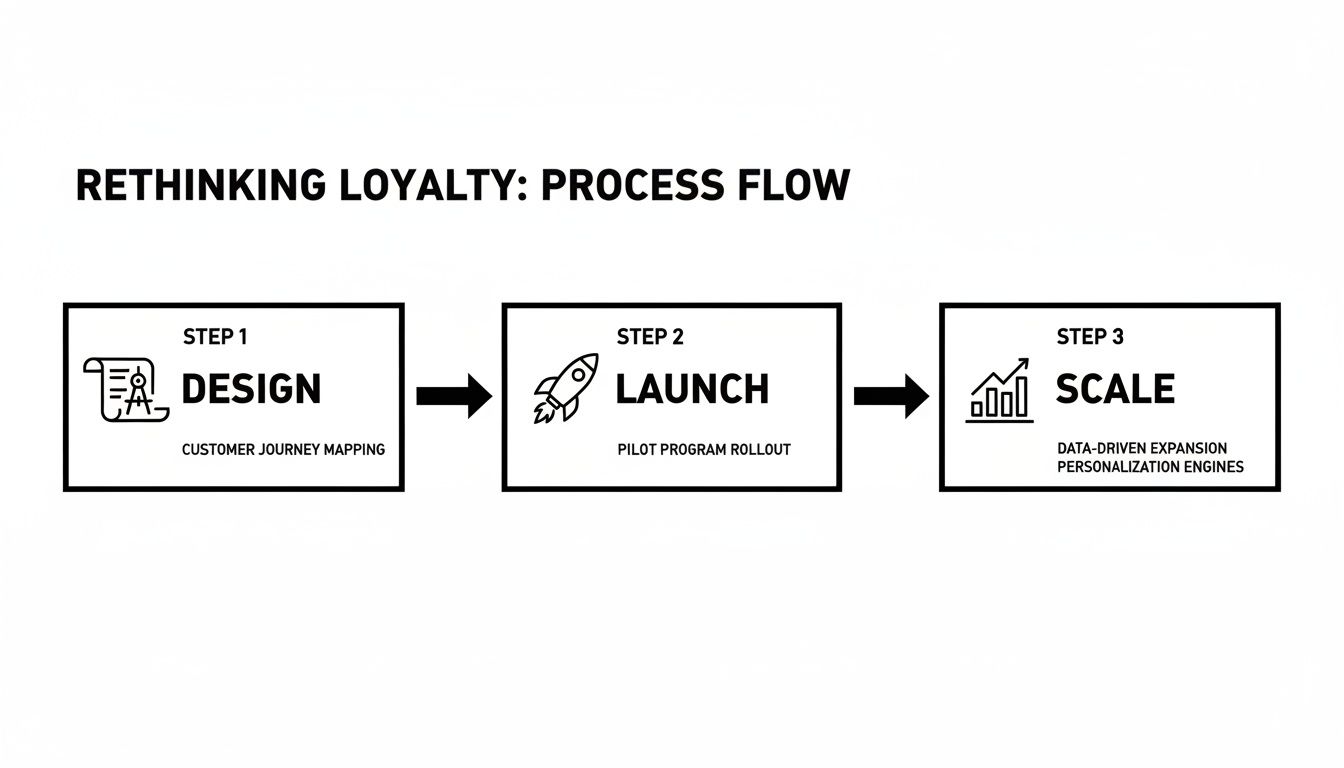
The best programs are built with clear goals, launched to see what works, and then scaled based on real data. It’s an iterative loop.
Choosing the Right Program Model
Once you know your "why," it's time to figure out the "how." The structure of your program needs to feel natural for your users while pushing your objectives forward. When you're putting this framework together, focus on things that genuinely improve the experience and boost loyalty.
There are a few go-to models in the Web3 space, each with its own flavor:
- Points-Based Systems: This is the classic for a reason. Users do stuff, they earn points, and they cash those points in for rewards. It’s simple, everyone gets it, and it’s fantastic for driving a high volume of different actions.
- Tiered Programs: Think of this as a video game for your community. As users rack up points or hit certain milestones, they "level up" to unlock new perks and status. This is a powerful tool for long-term retention, giving your most dedicated members something to strive for.
- NFT-Gated Access: Here, you use NFTs as the key to a VIP room. They can unlock special Discord channels, exclusive content, or better rewards. This model is perfect for creating a deep sense of ownership and making people feel like true insiders.
A huge mistake I see all the time is overcomplicating the model right out of the gate. Start simple. You can always add fancy layers like tiers or NFT-gating once you've proven that your core loop of quests-and-rewards actually resonates with people.
For instance, a new GameFi project could kick things off with a dead-simple points system just to get people in the door. Once the community is humming, they might roll out a tiered system where top players get first dibs on new in-game assets. That kind of strategic layering is what separates a good program from a great one.
Crafting Quests That Actually Get People Hooked
A loyalty program is just a shell until you fill it with quests your community wants to do. This is where the magic happens—turning your big-picture goals into bite-sized, rewarding, and honestly, fun activities. The quality of your quests will make or break the whole thing.
The secret is to think like a chef creating a balanced meal. You can't just serve up a constant diet of heavy, on-chain tasks and expect people to stick around. A great program mixes quick, easy wins with more involved challenges, creating a journey that feels both approachable and genuinely meaningful. It’s all about building momentum.
Having a deep library of quest templates is your superpower here. You can mix and match activities to keep things fresh and appeal to everyone, from the brand-new member to your most dedicated degen.
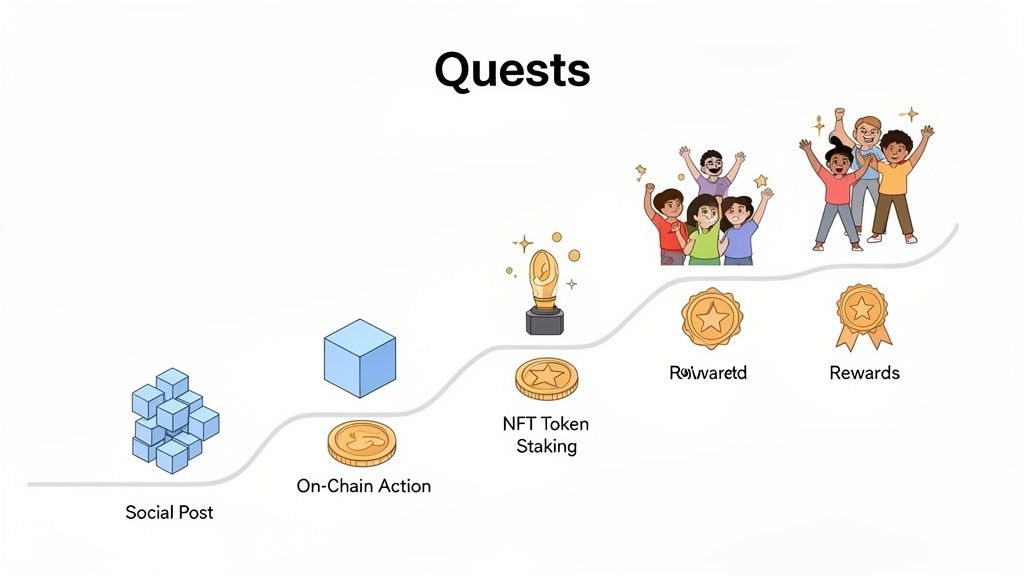
Platforms like Domino make it dead simple to roll out different quest types so your program never gets stale. You can design rewards for everything from social shout-outs to on-chain transactions, all from one place.
The Psychology Behind Quests That Stick
Great quests aren't just a checklist; they tap into basic human psychology. To keep users hooked, you need to put on your game designer hat. The aim is to create a compelling loop: effort, achievement, reward. Get that right, and they'll keep coming back.
It all starts with a clear sense of progression. Users need to feel like they’re moving forward. Kick things off with dead-simple tasks—like joining your Discord or following on X—to give them an instant taste of victory. That little dopamine hit builds confidence and makes them way more likely to tackle bigger challenges down the line.
From that starting point, you can start weaving in a mix of on-chain and off-chain activities:
- Low-Lift Social Tasks: These are your bread and butter for getting the word out. Think simple things like tweet verifications, Discord reactions, or jumping into a Telegram raid. They're quick, easy, and give users a steady drip of small wins.
- Creative Community Stuff: Get your community to create value for you. This could be anything from submitting fan art and writing a thoughtful thread about your project to creating a tutorial video. Using AI to help review these submissions makes it way easier to manage at scale.
- High-Impact On-Chain Actions: These are your power moves. Use them to drive specific behaviors you want to see, like staking NFTs, providing liquidity, or voting on a governance proposal. Just make sure the rewards are beefy enough to match the effort.
A well-designed quest path should feel like a natural journey, guiding a user from being a passive lurker to an active, core contributor. Every completed task should deepen their connection and make them feel more invested in your success. You're building ownership, one quest at a time.
Setting Rewards and Dodging Burnout
This might sound obvious, but the reward must feel right for the effort involved. A simple follow shouldn't grant the same points as a complex on-chain transaction. Getting this wrong is a surefire way to frustrate your community and is a classic mistake I see all the time.
To keep people from burning out, you need variety. If every single quest feels like a grind, people will just tune out. Mix it up! Throw in surprise rewards, run limited-time "bonus quests," and create collaborative goals for the whole community to tackle together. This adds a bit of unpredictability and excitement that keeps things interesting. For a deeper dive, check out our guide to designing Web3 quests.
It’s also crucial to remember just how powerful these programs can be. Traditional consumer data shows some wild habits: 55% of people almost always sign up for a loyalty program, and a whopping 74% feel more loyal after a good experience. In fact, 52% of members engage with their programs every single week. We're seeing the same patterns in Web3, where smart quest design leads to huge jumps in active users. Just look at Sephora—their loyalty members drive 80% of their total sales. That’s the power of a dedicated user base.
At the end of the day, crafting engaging quests is an art, but it's an art informed by data and psychology. It takes empathy for your users, a clear vision for your project's goals, and a commitment to constantly tweaking and improving. Nail that blend, and you'll create a system that doesn’t just reward action—it inspires real, lasting loyalty.
Automating Verification and Integration
Let's be honest: manual verification is where loyalty programs go to die. As soon as you start getting traction, the idea of checking every single tweet, screenshot, or Discord message becomes a soul-crushing bottleneck. It’s the fastest way to burn out your team. If you want a program that can handle hundreds, let alone thousands, of users without falling apart, automation isn't just a nice-to-have. It’s everything.
This is where a solid no-code toolkit really shines. When you automate the grunt work of verification, you free up your team to think strategically and creatively. It means you can launch ambitious campaigns and actually scale them without having to hire an army of community mods.
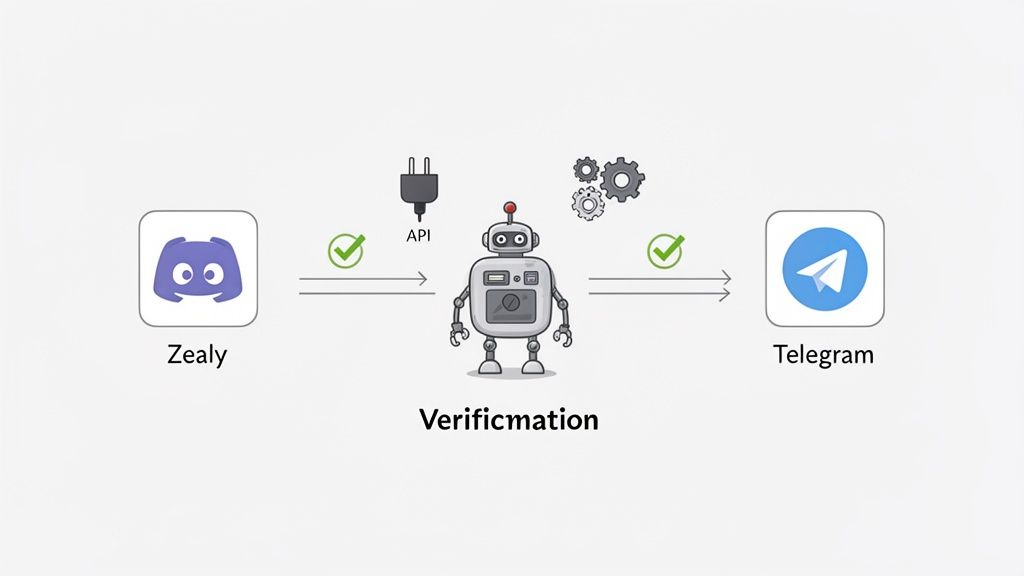
Scaling Up With Automated Checks
Modern loyalty platforms make it surprisingly easy to set up automated checks for all sorts of activities. The goal is to make sure rewards are sent out instantly and accurately, which creates that smooth, satisfying loop for your community.
Here’s a taste of what you can—and should—be automating:
- On-Chain Actions: Instantly confirm wallet activities. Think NFT staking, token swaps, or adding liquidity. This is non-negotiable for rewarding people who are directly engaging with your protocol.
- Social Media Engagement: Did they follow, retweet, or quote tweet on X? Set up a workflow to check it automatically. No more scrolling through endless notifications.
- In-App Events via API: This is a big one. You can connect your loyalty program directly to your dApp or product. Reward users for things like finishing a tutorial or trying a new feature, which directly ties product usage to your rewards system.
This kind of automation completely changes the game. You can go from nervously launching a small campaign to confidently running multiple large-scale initiatives at once, all because you know the system is handling the verification workload. For a deeper dive into building these kinds of workflows, check out our guide on marketing automation best practices.
The Power of AI in Content Review
So, what about the creative stuff? The quests that require a human eye, like judging fan art or reading a thoughtful thread? This is where AI-powered content review is becoming a game-changer.
Instead of a person manually slogging through thousands of submissions, you can train an AI to do the first pass. It can automatically flag low-effort spam or submissions that don't meet the brief, letting your team focus their valuable time on the high-quality content that deserves attention. This makes it possible to run awesome, community-driven creative campaigns that would otherwise be an operational nightmare.
Automation isn't about replacing the human touch; it's about amplifying it. By letting technology handle the boring, repetitive tasks, you give your team the freedom to engage with your community in more meaningful ways. They can celebrate top contributors, gather feedback, and actually build relationships.
Weaving It All Together with Integrations
A loyalty program shouldn't feel like a separate app or a disconnected experience. To get real engagement, you need to weave it directly into the platforms where your community already spends their time. Great loyalty program management is all about creating a seamless, multi-channel experience.
You do this with smart integrations into your existing tool stack. For example, connecting your loyalty platform to tools like Discord, Telegram, or Zealy lets you:
- Announce new quests right in the channels people are already watching.
- Send instant notifications when someone completes a task or earns a reward.
- Let users check their points or progress with a simple bot command.
This cohesion is what makes a program stick. When it feels like a natural extension of the community, participation rates go through the roof. It removes friction and keeps the program top-of-mind.
The industry is already moving this way. A recent study found that 90% of program owners are planning to overhaul their systems in the next three years, with a huge emphasis on AI and easier management. For Domino users, this is already happening—our no-code quests and AI review have powered over 25 million quest completions.
Measuring Your Program's Health and Fueling Growth
So, you've launched your loyalty program. That's a huge first step, but the real work starts now. Getting a program live is one thing; turning it into a growth machine for your project is a completely different ballgame.
You can't just set it and forget it. Success in this space comes from obsessively tracking what’s working, understanding what’s not, and constantly tweaking your approach. We’re moving beyond vanity metrics like total sign-ups and digging into the data that actually tells you a story about how users are behaving. This is how you build a program that doesn't just exist but actively drives your project forward.
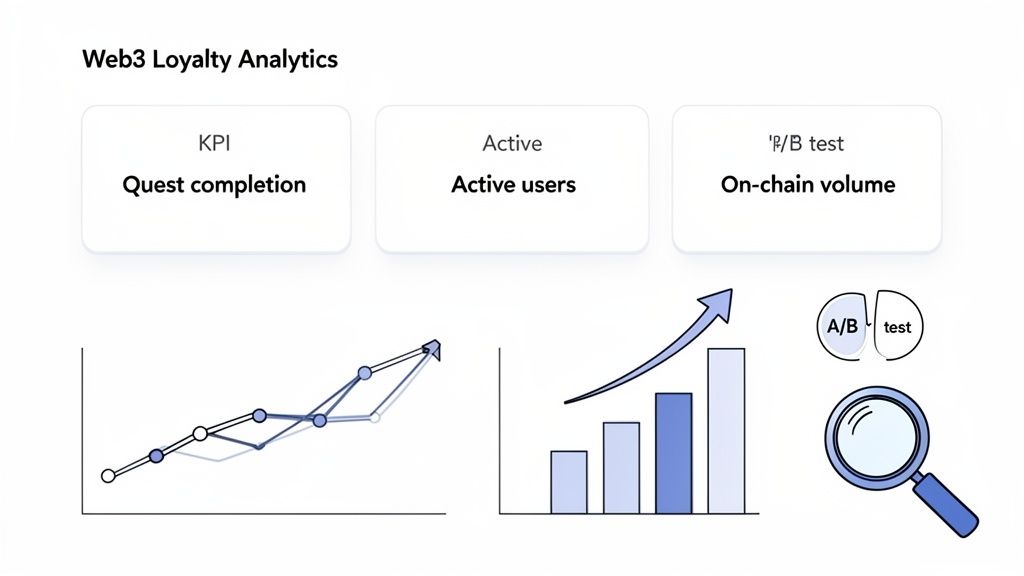
The KPIs That Actually Matter
Your analytics dashboard needs to be your source of truth, not just a place for ego-boosting numbers. To get a real pulse on your program's performance, you need to zero in on a few core metrics that reflect genuine engagement and project growth.
When we build out dashboards, we always start with the essentials—the numbers that guide every decision from here on out.
Essential Web3 Loyalty Program KPIs
Here's a breakdown of the key metrics to track, what they actually mean, and why they're so crucial for your project's growth.
| Metric (KPI) | What It Measures | Why It's Important |
|---|---|---|
| Quest Completion Rate | The percentage of users who start a quest and see it through to the end. | Your number one engagement signal. A low rate is a big red flag that tasks are too hard, confusing, or just not worth the reward. |
| Active User Lift | The increase in unique wallets interacting with your protocol or dApp since the program launched. | Directly links your loyalty efforts to core product usage. It proves your program is bringing people back for more. |
| On-Chain Transaction Volume | The total volume of swaps, stakes, or mints driven by users in your loyalty program. | For DeFi or GameFi, this is your bottom line. It's the clearest indicator of your program's direct economic impact. |
| Reward Redemption Rate | The percentage of earned points or rewards that users actually claim. | A low rate can mean your rewards aren't exciting enough or the redemption process is a pain. This is a direct measure of reward appeal. |
By keeping a close eye on these numbers, you get a clear, data-backed view of your program's performance. It’s about turning hunches and gut feelings into objective facts.
Turning Raw Data Into Smart Decisions
Data is just a bunch of numbers until you give it meaning. The real magic happens when you start turning these metrics into smart, actionable changes that make your program better over time. You have to put on your analyst hat and constantly ask, "Why?"
Let's say you see a massive drop-off rate in a multi-step quest. Don't just shrug it off. Dig in. Is the reward for that last step too small? Is there a bug preventing people from completing a specific action? By finding that friction point, you can make a change—like simplifying the task or boosting the reward—and see if the completion rate bounces back.
The best loyalty programs are never set in stone. They're living, breathing systems that evolve with community feedback and hard data. Your ability to listen to what the numbers are telling you will ultimately define your success.
To make sure your program has staying power, you also need to incorporate solid membership retention strategies. This is where A/B testing comes in handy. You could run two similar quests with different rewards—one offering points, the other an exclusive NFT—to see which one gets more traction.
This kind of continuous experimentation is exactly how you unlock sustained growth and keep your community hooked for the long haul.
Avoiding Common Loyalty Management Pitfalls
Launching a loyalty program is the easy part. The real work—and where most programs stumble—is in the day-to-day management. It's about sidestepping the common traps that can turn an exciting initiative into a source of frustration for your community.
I've seen it happen time and again: a project designs a quest that's just too complicated. When someone has to jump through six different on-chain hoops and then craft a convoluted social media post, they're not engaged—they're annoyed. That initial spark of interest fizzles out, and your participation plummets.
Another classic mistake is a wonky reward structure. If a simple "Follow us on X" quest gives nearly the same points as a high-effort on-chain action like staking, you're sending a clear message to your power users: their effort isn't valued. That kind of imbalance kills trust and motivation fast.
Battling Boredom and Apathy
Even a perfectly balanced program can grow stale. If your community is just doing the same old social follows and retweets week after week, they'll get bored. This "loyalty fatigue" is a real killer. Your program stops feeling like a fun journey and starts feeling like a predictable grind.
The trick is to keep things fresh and dynamic:
- Mix Up Your Quest Types: Don't just stick to one formula. Follow a week of social media tasks with a challenge centered on in-app activity or creative user-generated content.
- Drop Surprise Bonuses: Unexpected rewards are a fantastic way to delight your most active members. It adds a bit of serendipity and keeps people checking in.
- Launch Time-Sensitive Sprints: Create a sense of urgency with special campaigns that offer bigger rewards for a limited time. This can reignite engagement in a big way.
A loyalty program should never feel like a chore. The moment it stops being fun and starts feeling like work, you’ve lost the battle for genuine engagement. The goal is to create a system that feels rewarding, not demanding.
Outsmarting Reward Farmers
One of the biggest headaches in Web3 is the "reward farmer"—bots and bad actors who game the system with low-effort or automated junk just to drain your reward pool. They devalue the entire program for your real community and can blow through your budget in no time.
This is where automated verification becomes your secret weapon. For creative quests, you can use AI-powered content review to instantly flag and filter out spammy submissions. For on-chain and social tasks, automated checks confirm the actions were actually completed.
This approach is crucial. It weeds out the bots and ensures that rewards go to the people who are genuinely participating and adding value—the community members who truly deserve it.
Got Questions? We've Got Answers.
Still have a few things rattling around in your head about running a Web3 loyalty program? That’s totally normal. Here are a few of the most common questions we get from teams just like yours.
Can I Actually Do This Without a Massive Budget?
Yes, you absolutely can. The old way meant hiring a team of expensive devs. But with modern no-code loyalty program management platforms, that's no longer a requirement.
You can get a sophisticated, automated program off the ground all by yourself. This frees up your budget to go where it really matters: into the rewards that get your community excited, not into a black hole of engineering salaries.
How Do I Know if My Loyalty Program is Even Working?
Great question. You have to look past the vanity metrics and focus on the KPIs that really signal the health of your project. I always tell teams to track a few key things:
- Active User Lift: Are more unique wallets actually interacting with your protocol because of the program?
- On-Chain Transaction Volume: Can you see a direct link between program members and a bump in swaps, stakes, or mints?
- Quest Completion Rates: How many people are actually finishing the tasks you set? High drop-off rates tell you something isn't clicking.
These numbers give you a clear, data-driven story about your program's ROI. It's the kind of proof that moves the conversation from "I think this is working" to "I know this is working."
What's the Single Biggest Mistake I Should Avoid?
Easy. Don't "set it and forget it." Launching a program and then walking away is the fastest way to kill community engagement and waste all your hard work. It just leads to stagnation.
Your loyalty program isn't a one-and-done product launch; it's a living, breathing part of your community. It needs constant care and feeding based on data and what your users are telling you.
If a quest is a dud or a reward isn't landing, you have to be ready to pivot. Great loyalty program management isn't about having a flawless launch—it's about staying engaged and constantly making things better.
Ready to build a loyalty program that actually moves the needle, without all the technical headaches? With a tool like Domino, you can design and automate both on-chain and off-chain quests in a matter of minutes. Why not launch your first campaign today?