A Guide to Loyalty Program Gamification in Web3
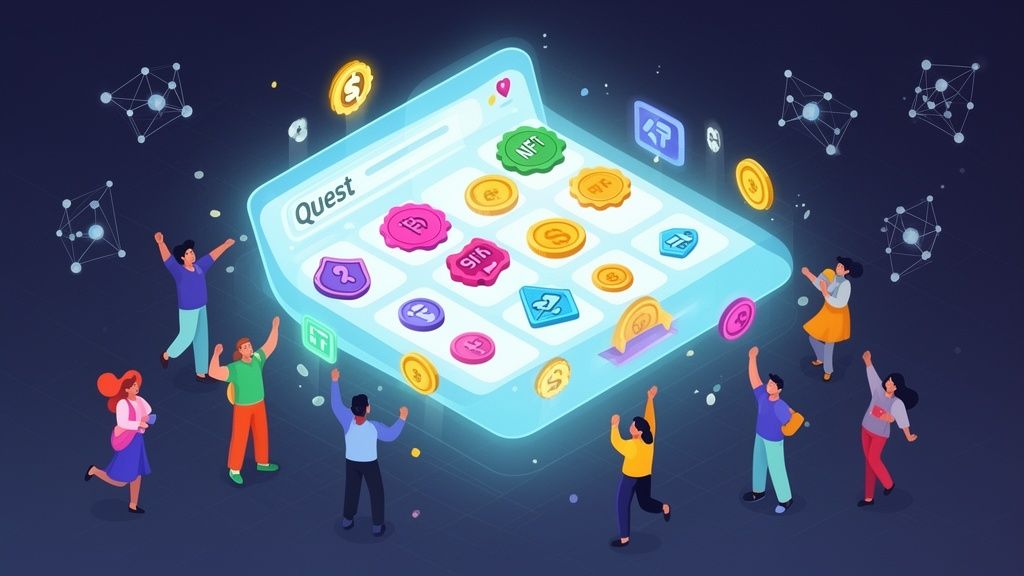
So, what do we even mean by loyalty program gamification?
Think of it as injecting the fun and addictive elements of games—like points, badges, leaderboards, and challenges—right into your loyalty system. It's the difference between a boring punch card and an epic quest. You're turning passive members into active players, tapping into that universal human drive for achievement, competition, and rewards.
Why Gamification Is a Non-Negotiable for Web3 Loyalty
Let’s be real for a second. Most loyalty programs are snooze-fests. They're purely transactional, completely forgettable, and do absolutely nothing to build a real bond with your community. In Web3, where your community is your project, that old-school, passive approach is a death sentence. You need something that hits different for a decentralized, digitally-native crowd.
This is exactly where gamification comes in. It’s not just a trendy buzzword; it’s a total overhaul of how you build and maintain an engaged community. By weaving in game mechanics, you create these powerful feedback loops that get people showing up day after day and build a genuine sense of belonging.
Turning Lurkers into Die-Hard Fans
Gamification flips the script. It makes simple, everyday actions feel like meaningful progress on a shared adventure. Instead of just begging for a follow or a retweet, you're inviting members to complete a quest, earn a super-rare badge, or battle their way up the community leaderboard. That small change in framing has a massive psychological impact.
It taps directly into what makes us tick:
- Achievement: Racking up points and unlocking badges gives people a real sense of accomplishment. It feels good.
- Competition: Leaderboards spark friendly rivalries and keep people coming back to see where they stand.
- Belonging: When you introduce community-wide goals or team challenges, members feel like they're part of something much bigger than themselves.
Suddenly, participating in the community doesn't feel like a chore—it feels like a game you actually want to play. People aren't just mindlessly collecting points; they're investing their time and energy into an ecosystem they genuinely care about. We get into the nitty-gritty of this in our guide to crafting effective Web3 loyalty programs in our detailed guide.
The Numbers and the New Generation
Look, this isn't just about good vibes; it's backed by some serious market trends. The global loyalty management market is on track to hit $41.21 billion by 2032, and gamification is a massive part of that explosion. I've seen it myself—a well-designed gamified system can boost repeat purchases by around 30%.
This is especially true for younger audiences. A recent study showed that 71% of Gen Z and 72% of Millennials are more likely to join a loyalty program than they were a year ago, and they're specifically looking for these kinds of interactive, game-like experiences. You can discover more insights on these loyalty trends if you want to dig deeper.
The real magic of gamification is that it doesn’t just reward the final transaction, like a sale. It rewards people all along their journey, turning casual community members into your most passionate advocates.
At the end of the day, gamifying your loyalty program is about building a community that can weather any storm. You're not just creating a passive audience; you're building an army of champions who will drive your project's growth from the ground up.
Designing Your Web3 Quest Framework
Alright, let's get into the fun part: actually building this thing. When you're designing the framework for your gamified loyalty program, the first step is to get ruthlessly clear on one question: What’s the number one thing you want to achieve?
Are you trying to blow up your user base and get as many new faces in the door as possible? Or is the real goal to get your existing members more deeply involved? Maybe you just need to drive specific on-chain actions to boost protocol usage.
Your answer here is your north star. It dictates every single quest you create and every reward you hand out. A program laser-focused on user acquisition will feel completely different from one built to encourage governance voting, and that’s exactly how it should be.
This whole process is about turning passive lurkers into genuine, vocal advocates for your project.
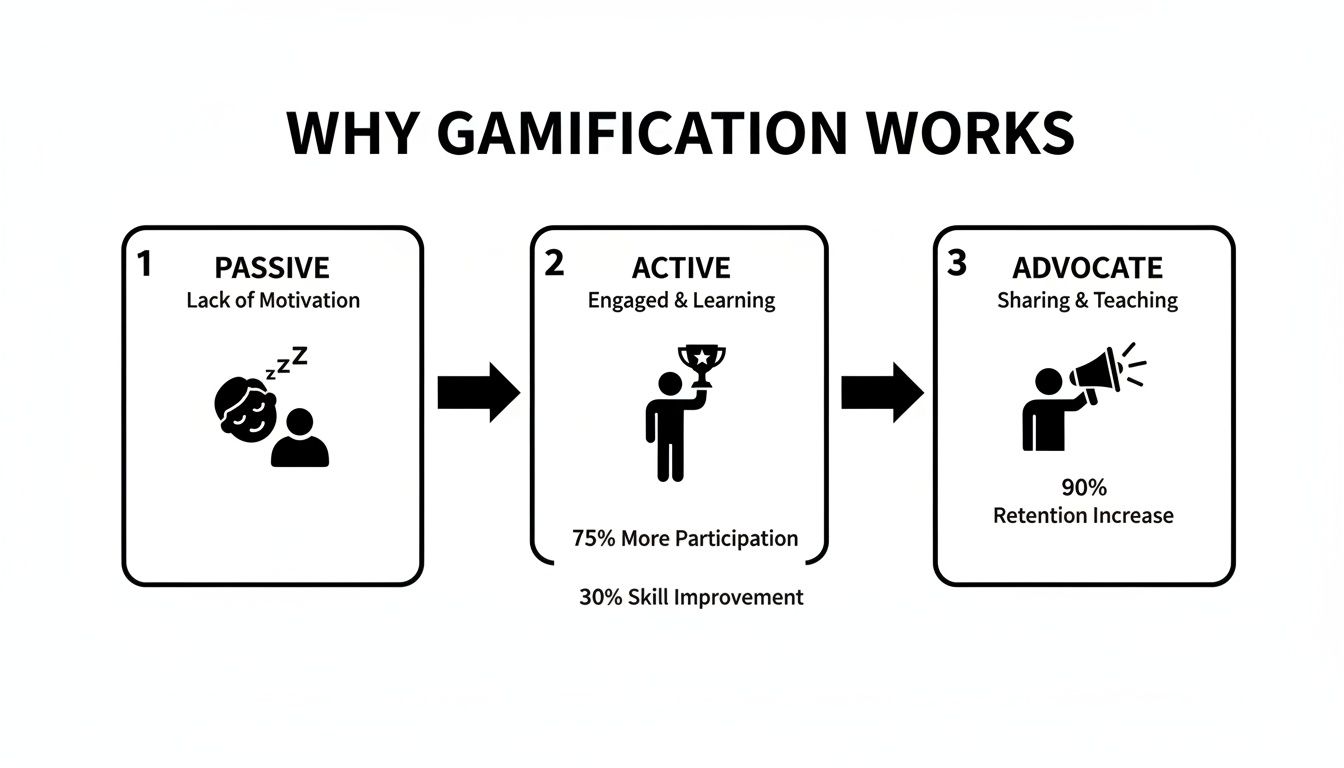
Gamification is the engine that moves people along this path. It provides the little nudges and rewards that transform casual interest into active participation and, eventually, true community ownership.
Mixing On-Chain and Off-Chain Quests
A common mistake I see is projects focusing on only one type of task. The most successful Web3 loyalty programs create a healthy mix of quests that build your social footprint (off-chain) and ones that directly strengthen your protocol (on-chain). You need both.
The idea is to create a natural, seamless journey for your members. Someone totally new to your world can start with simple, low-friction tasks and then, as they get more comfortable and invested, move on to more meaningful on-chain actions. This progression feels earned and rewarding, not intimidating. You can dive deeper into how to structure these in our guide to launching effective Web3 quests for your community.
Here are some ideas to get you started, balancing easy entry points with high-value actions.
On-Chain vs. Off-Chain Task Ideas for Your Quests
A breakdown of different quest types to inspire your loyalty program design, balancing community growth with protocol interaction.
| Task Category | Off-Chain Example (Domino Supported) | On-Chain Example (Domino Supported) |
|---|---|---|
| Social Engagement | Follow us on X (Twitter) & Like a specific post | Hold a specific partner NFT in your wallet |
| Community Building | Join our Discord server & achieve a certain role | Vote on a Snapshot governance proposal |
| Content & Education | Read our latest blog post & answer a quick quiz | Stake a minimum amount of our native token |
| User Acquisition | Invite 3 friends to join the quest campaign | Bridge assets to our L2 network for the first time |
This table just scratches the surface, but it shows how you can guide a user from simple social follows to more impactful protocol interactions.
Your quest framework should be a funnel that not only grows your community but also deepens its on-chain footprint. Each task should be a stepping stone to greater involvement.
This is where a no-code toolkit like Domino really shines. You can build out and launch all these different quest types in a fraction of the time, without bugging a developer. Pre-built templates for things like Twitter follows or Discord role verification mean you can get a sophisticated campaign live in minutes, not weeks.
Crafting an Irresistible Reward Structure
Finally, you need to make it all worthwhile. Your rewards have to be compelling enough to get people to actually do the quests. The best strategies I’ve seen use a blend of different reward types to hit on different user motivations. Don't just make it rain tokens; be more creative than that.
Think about a tiered reward system that offers a little something for everyone:
- NFTs: These are perfect as digital badges of honor. They prove someone participated and can become coveted status symbols within the community.
- Tokens: Nothing wrong with direct on-chain rewards! Tokens give users a real, tangible stake in your ecosystem’s success.
- Exclusive Access: This is a big one. Think whitelist spots for an upcoming mint, access to private Discord channels, or a sneak peek at new features. These rewards create a powerful sense of belonging and status.
By balancing these different elements, you create a reward system that has legs and keeps your community engaged for the long haul.
Picking Game Mechanics That Actually Hook People
This is where the magic happens. A loyalty program isn't just about handing out points for clicks. To get people genuinely invested, you need to tap into the core psychological drivers that make games so compelling. The real goal is to build a system that practically runs itself because people want to participate.
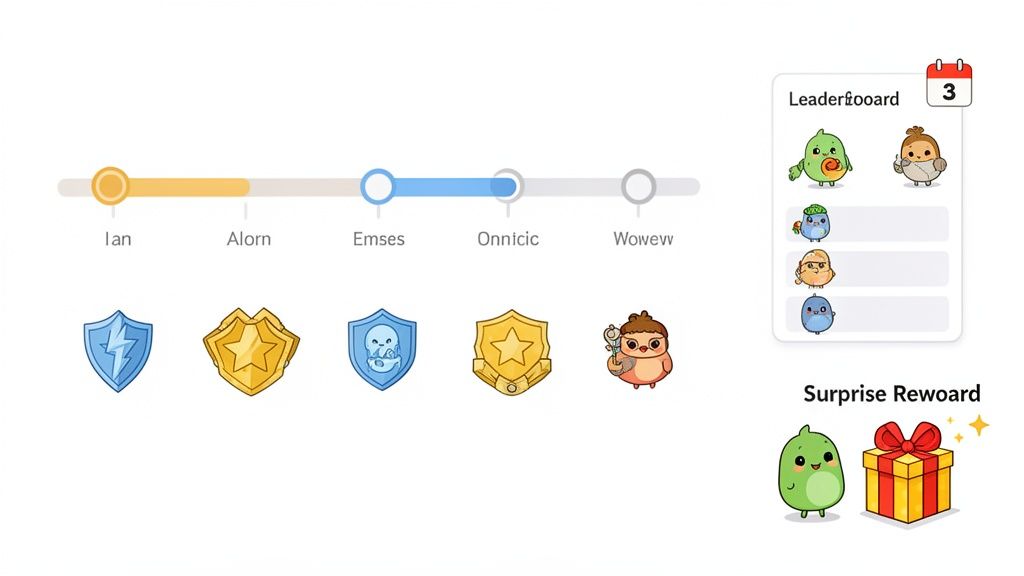
Great loyalty program gamification creates an emotional connection, not just a transactional one. When someone sees a progress bar moving forward, you're tapping into a powerful concept called the 'Endowed Progress Effect.' It’s a simple but effective psychological nudge that makes people way more likely to see a task through to the end.
The numbers don't lie. Just look at the retailer limango—they saw a 3x increase in purchase frequency by adding gamified challenges. TheCHIVE credits 6% of its annual revenue to its loyalty program, which pulls in a staggering 6,800 referred visits a month from its leaderboard alone. This isn't just fluff; it's real, sustainable growth.
Leaderboards vs. Personal Streaks: What's Right for Your Crew?
One of the first big calls you'll make is whether to push competition or focus on individual progress. Honestly, the answer comes down to the vibe of your community.
Competitive Leaderboards: These are gold for firing up high-volume actions and stoking a little friendly rivalry. They work best when the tasks are clear and repeatable, giving everyone a fair shot at climbing to the top.
Personal Streaks: If your community is more about learning or consistent effort, streaks are your best friend. They motivate daily check-ins and celebrate personal growth without the intimidation factor of a public leaderboard, which can sometimes scare off newcomers.
Simple social actions are perfect for this, like liking content on platforms such as Threads, which can be easily woven into a Web3 quest. It's a small action that adds up to a big feeling of progress.
Pro Tip: You don't have to choose just one. The most effective programs I've seen often blend both. A public leaderboard can highlight your top champions, while personal milestones and streaks give everyone a win, no matter where they rank.
Building a Gamification Engine That Lasts
A program that really sticks around uses a mix of mechanics to appeal to different types of people. If you just rely on points, the experience will get stale, fast.
Try layering these elements to create something much more engaging:
- Achievement Badges: These are your digital trophies. Hand them out for key milestones—making a first on-chain swap, inviting five friends, you name it. They become status symbols that people want to collect and show off.
- Surprise & Delight: Don't be predictable. Randomly dropping unexpected rewards on active members creates genuine moments of excitement and keeps people coming back to see what might happen next.
- Community Goals: Get everyone pulling in the same direction. Set a collective target, like hitting a certain number of governance votes, and reward everyone who chipped in. It builds a powerful "we're in this together" feeling.
By mixing and matching these ideas, you build a dynamic system that feels less like a marketing ploy and more like a core, rewarding part of being in your community.
Scaling Your Program with Smart Automation
So, your gamified program is a hit. The community loves it. Now you have a new, and much better, problem: volume.
When a campaign really takes off, you could be looking at thousands of task completions every single day. Trying to verify all of that manually? It's not just slow—it’s a surefire way to kill your momentum. This is where smart automation, particularly AI-powered tools, becomes your secret weapon.
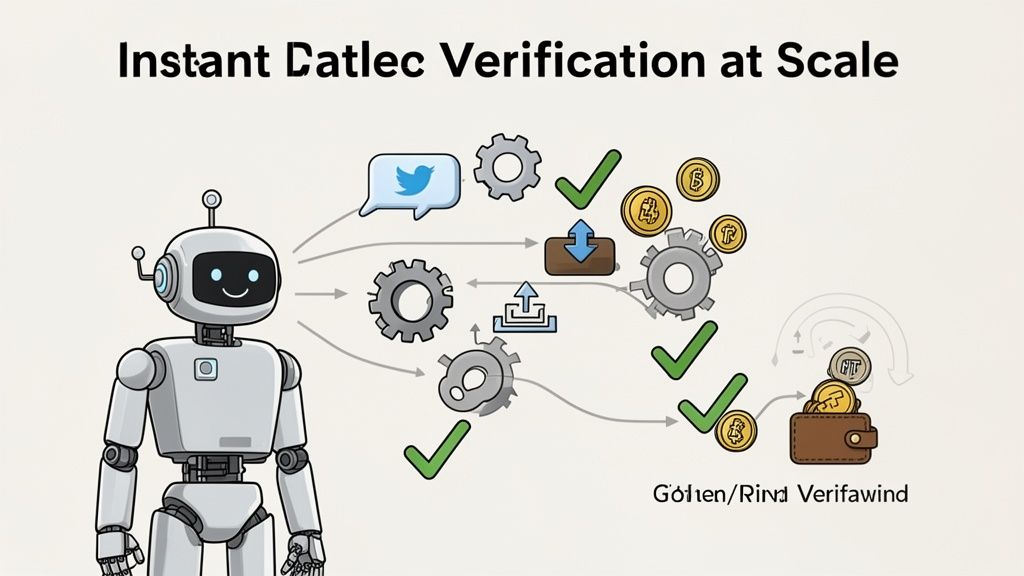
Imagine launching a quest and watching as thousands of Twitter follows, Discord comments, and content submissions get verified and rewarded on the spot. This isn't science fiction; it's what modern questing platforms are built to do. The whole point is to ditch the grunt work so your team can focus on what they do best: cooking up creative strategies and actually talking to your community.
Making Instant Verification a Reality
The biggest bottleneck in scaling any loyalty program gamification is just making sure people did what they claimed they did. This gets especially tricky with off-chain tasks where you can’t just peek at a block explorer. That’s where AI and API integrations are a lifesaver.
Good toolkits plug directly into the platforms your community already lives on:
- Social Media: An AI can instantly see if a user’s tweet has the right hashtag and mention, or confirm they’ve smashed the follow button on X.
- Community Hubs: Integrations can check if a member has a specific role in Discord or has dropped a reaction on your latest announcement.
- In-App Actions: With a simple API hook, you can reward people for actions they take right inside your dApp, like finishing a tutorial or trying out a new feature.
This kind of automated system keeps things fair, fast, and scalable. Your members get that instant gratification, and you keep them hooked.
By automating verification, you turn your loyalty program from a manual headache into a self-sustaining growth engine. The experience becomes frictionless for both your team and your community.
Avoiding the Dreaded Engagement Cliff
We're seeing a huge trend toward 'always-on' gamification to fight the dreaded 'engagement cliff'—that classic drop-off in activity right after a big airdrop or event ends. Automation is what makes this sustainable.
Platforms like Domino, which have powered over 25 million completed quests across 13,000 campaigns, are perfect examples. Their no-code tools and built-in automation let even small teams manage massive programs without breaking a sweat.
Instead of one-off campaigns that come and go, you can build a steady stream of quests and challenges. This keeps the energy high and weaves participation into the daily life of your community. Your program stops being a series of frantic sprints and becomes an engaging marathon that builds real, long-term value.
If you're looking to dive deeper into the nuts and bolts, we've put together some marketing automation best practices to get you started.
How to Measure Success and Optimize for Growth
So, you've launched your gamified loyalty program. Pop the champagne? Not quite. Getting it live is just the first step—the real work starts now. The magic happens when you dive into the data, figure out what's clicking with your community, and continuously fine-tune your strategy.
Forget vanity metrics like the total number of participants. In Web3, real success is measured by KPIs that show a healthy, growing community and actual on-chain activity.
We need to go deeper than surface-level numbers. Instead of just counting sign-ups, you should be tracking the week-over-week growth of truly active users—the ones who are actually completing at least one quest. Are your quests bringing new, engaged people into your Discord and X? And the million-dollar question: are all these off-chain shenanigans actually leading to on-chain conversions?
Identifying Your Winners and Losers
Think of your analytics dashboard as your mission control. It’s the fastest way to see which quests are a hit and which are gathering dust. Keep a close eye on completion rates. If a quest gets thousands of clicks but almost no one finishes it, you’ve got a problem. Maybe it's too confusing, or maybe the reward just isn't worth the effort.
On the flip side, if a particular quest is blowing up, that's your new playbook. This is what a data-driven approach is all about—doubling down on what works.
- Popular Quests: Which tasks are people actually enjoying? Is it the creative stuff, like meme contests, or simple social follows?
- Top Rewards: What gets people moving? Is it the rare NFT badge or a handful of tokens? The answer might surprise you.
- User Drop-off Points: Find out exactly where you're losing people. Do they bail when asked to connect a wallet or perform a specific on-chain transaction?
The goal is to create a tight feedback loop where community behavior directly shapes your next move. Stop guessing what your members want—let the data tell you the real story.
By spotting these patterns, you can consistently sharpen your loyalty program gamification to keep people hooked and engaged for the long haul.
A Framework for Continuous Optimization
Optimization isn’t a one-and-done task; it’s a constant cycle of testing, learning, and improving. To make sure your program stays effective, you should always be experimenting. This is where methods like A/B testing in marketing come in handy. It’s a simple, powerful way to make smart decisions backed by cold, hard data.
Here’s a quick example of how you could run a test:
- Create Two Quest Versions: Set up the same basic quest, but offer two different rewards. Let's say Version A gives out 100 community points, and Version B offers an exclusive Discord role.
- Target a Small Segment: Don't roll it out to everyone. Show each version to a different 10% slice of your community.
- Analyze the Results: Give it a week, then check the numbers. Did the points or the role drive more completions? Now you know which reward is more compelling.
You can use this simple framework for just about anything—from quest descriptions and reward sizes to the difficulty of the tasks. By constantly testing and iterating, you're no longer operating on hunches. You're building a program that evolves with your community and delivers a clear, measurable ROI for your project.
Got Questions About Gamified Loyalty Programs?
Jumping into loyalty program gamification for the first time? You probably have a ton of questions. Let's run through some of the most common ones we hear from Web3 teams who are excited to get started but want to nail it from day one.
This quick-fire round should clear up any doubts and show you just how easy it can be to build a gamified loyalty experience that people actually love.
How Much Technical Skill Do I Actually Need?
Honestly? Next to none, as long as you have the right toolkit. The days of needing a dedicated dev team just to spin up a quest campaign are long gone.
Platforms like Domino were built specifically to be no-code. That means you can design, launch, and manage even complex campaigns from a simple visual dashboard. You can link on-chain actions and plug into apps like Discord and X (formerly Twitter) without touching a single line of code. The whole idea is to let community managers run their own growth plays.
What Rewards Actually Work for Web3?
The best reward strategies mix it up to hit different user motivations. It’s not just about airdropping tokens and calling it a day.
A smart approach combines both on-chain and off-chain rewards:
- On-Chain Goodies: These are the classics for a reason. Things like NFTs, your project's native tokens, or those highly sought-after whitelist spots are super effective because they tie directly into your ecosystem's value.
- Off-Chain Perks: Don't sleep on the power of status and access. Exclusive Discord roles, early access to new features, or shout-outs from the core team build a real sense of belonging and recognition—often without costing you a thing.
The best loyalty programs make members feel valued in more ways than one. A blend of tangible assets and social recognition creates a reward structure that keeps everyone hooked, from die-hard crypto natives to total newcomers.
How Do I Stop People from Cheating the System?
This is a huge—and totally valid—concern. The last thing you want is your program getting overrun by bots and farmers. The solution is all about having bulletproof verification.
For on-chain tasks, the blockchain itself is your source of truth. It's simple to automatically verify if a wallet holds a specific NFT or completed a certain transaction. No guesswork needed.
For off-chain stuff, AI-powered verification is the only way to do it at scale. Modern tools can instantly check if a tweet has the right hashtag, confirm a user actually joined your Telegram, or even analyze submitted content to see if it meets your criteria. This slashes fraud and makes sure your rewards go to real community members who are helping you grow.
Ready to build a gamified loyalty program that just works? With Domino, you can launch your first quest campaign in a few minutes, not a few months. Start building your community today.