Increase App Retention with Quests and Rewards
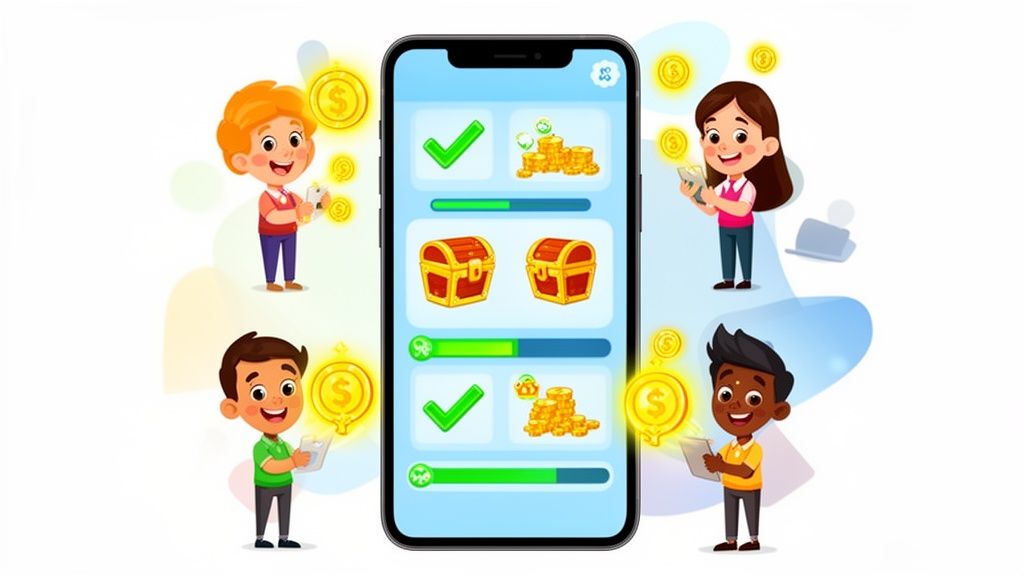
Let's be real for a moment. To keep users coming back to your app, you absolutely have to show them its value right away and make that first session count. The hard truth is that most apps lose a staggering 75% of new users within the first 24 hours. That makes a strong, rewarding onboarding experience less of a "nice-to-have" and more of a survival tactic.
Why Your App Is Losing Users and How to Fix It
That pit in your stomach when you check your analytics and see a massive user drop-off? You're not alone—it’s pretty much the industry standard. It's a tough pill to swallow: you launch your amazing new app, only to watch three out of every four people vanish by the next day.
This isn't just a hunch. Across the board, the average Day 1 retention rate is a grim 25-26%. That means only one in four people even bothers to open your app again after installing it. The data doesn't lie, and it paints a clear picture of just how brutal that initial churn is.
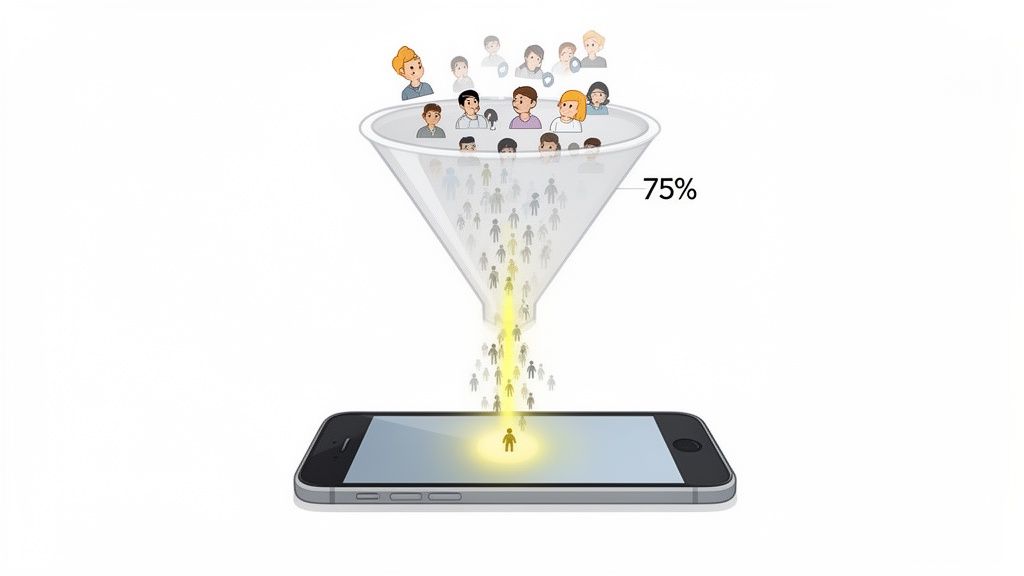
This initial 24-hour window is where you win or lose the retention game. So, why the mass exodus? The reasons are often simple, but their impact is huge.
The Brutal Reality of User Drop-Off (Average Retention Rates)
Here's a quick look at how quickly the average app loses its users over the first month. This data highlights the critical windows for re-engagement.
| Timeframe | Average Retention Rate |
|---|---|
| Day 1 | 25.3% |
| Day 7 | 11.7% |
| Day 30 | 5.7% |
As you can see, the drop is fast and steep. If you don't hook them on Day 1, your chances of seeing them on Day 30 are slim to none.
The First Impression Problem
New users show up with a mix of excitement and skepticism. If they’re hit with a confusing interface, a sign-up process that feels like doing taxes, or vague instructions, that excitement dies fast. They won't stick around to figure it out; they'll just bounce.
In the Web3 world, this problem gets turned up to eleven. Concepts like connecting a wallet, signing transactions, or understanding gas fees can feel like a foreign language to newcomers. A clunky or intimidating first experience is one of the biggest reasons people churn. Users need to feel like they're making progress and accomplishing something right from the get-go.
The first interaction a user has with your app sets the tone for their entire journey. If they don't find value or feel a connection within the first few minutes, you've likely lost them for good.
That "aha!" moment—where a user gets what your app is all about—has to happen quickly. If it's buried under a mountain of tutorials or complicated steps, most people will never get there. You can dig deeper into why a solid app user retention rate is so crucial to understand these dynamics better.
What’s in It for Them?
Another classic mistake is having a weak or fuzzy value proposition. Someone downloaded your app to solve a problem or do something cool. If you don't immediately show them how your app helps with that, they’ll just find a competitor who does.
This is especially true for Web3 apps, where the benefits aren't always as obvious as in a traditional app. Ask yourself:
- Is the utility clear? Does the user know what they can actually do in your app right now?
- Is the reward tangible? Can they see a clear path to earning something, connecting with others, or achieving a goal that matters to them?
- Is the experience fun? Are you just giving them a tool, or are you creating an engaging world they actually want to spend time in?
If you can't answer these questions from the user's perspective, you've got a problem. They don't see the "why," so they'll never stick around for the "how." Fixing this isn't about small UI tweaks; it’s about a mindset shift. Stop thinking about what you want users to do and start focusing on what motivates them to act in the first place.
Hook New Users with a Gamified Onboarding Experience
Let's be honest, your onboarding is your one shot to make a first impression that actually sticks. Far too many apps drop new users into a boring tutorial or a wall of text, which is basically a one-way ticket to the uninstall button.
What if, instead, you welcomed them with a series of quick, rewarding quests? The kind that guide them directly to your app’s “aha!” moment. This isn't about hand-holding; it's about giving them a clear path to an early win, turning a confusing first session into something fun and memorable. The goal is to teach by doing, making users feel accomplished right from the start.
Map Your Core Value Actions
Before you can build out a quest, you need to know where you're sending people. What are the key actions that make your app's value click for a new user?
Get your team together and figure out the 2-3 actions someone has to take to get that initial spark. Forget the nice-to-haves for now and focus only on the absolute essentials.
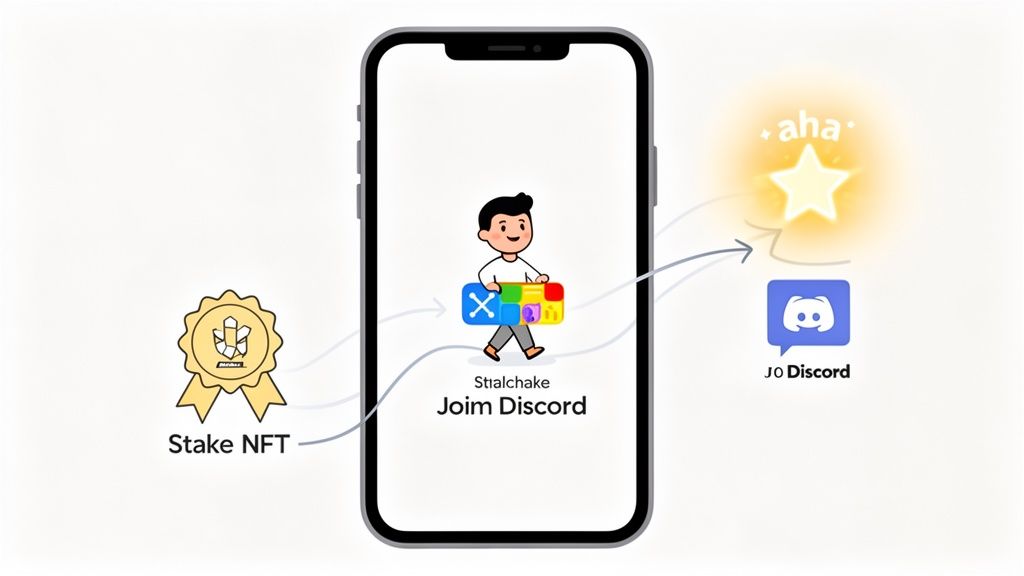
For a Web3 project, this might look like:
- Staking their first token or NFT: This gets them interacting with your on-chain mechanics immediately.
- Joining a specific Discord channel: This plugs them directly into your community.
- Minting a free "welcome" NFT: This gives them instant ownership and a tangible asset.
These actions are the building blocks of your onboarding quests. They aren't random busywork; they're the most direct path to getting a user activated and invested on Day 1.
Design Your Onboarding Questline
With your core actions defined, it's time to string them together into a questline that feels like a journey, not a to-do list.
For instance, a new user in a decentralized game could be greeted with an "Initiation Ritual" questline:
- Quest 1: "Connect with the Clan" — The first step is simple: join the Discord and say hello in the
#new-memberschannel. Reward them with a unique Discord role and a little bit of in-app currency. - Quest 2: "Claim Your Sigil" — Next, guide them to connect their wallet and mint a free "Recruit's Badge" NFT. This not only teaches a core function but also gives them a cool collectible.
- Quest 3: "First Pledge" — Finally, have them stake that new NFT to earn their first rewards. This closes the loop, showing them exactly how they can participate in your app's economy.
This simple sequence turns a dry process into an engaging story. Users aren't just clicking buttons; they're completing meaningful tasks that unlock real value. For a deeper dive into streamlining these early steps, you might want to explore what's possible with customer onboarding automation.
Your onboarding flow should feel less like a manual and more like the first level of a game. Each completed quest should build momentum and make the user eager to see what's next.
By structuring onboarding this way, you create immediate positive feedback. Users finish their first session feeling accomplished, holding a few rewards, and knowing exactly what to do next—a powerful antidote to Day 1 churn. A smooth sign-up process is also critical; you can learn more about combining a quest and email login to reduce friction even further.
Keep It Simple and Rewarding
The secret to a great gamified onboarding is to kill the friction. Your first few quests should be almost laughably easy to complete. Don't ask for a deep understanding of complex mechanics or a huge commitment right away.
The rewards need to be immediate and satisfying, too. While you can save the big-ticket items for later, the initial rewards should provide that instant hit of gratification.
Good Onboarding Rewards Often Include:
- A little in-game currency to give them a taste of the economy.
- Exclusive cosmetic items or starter NFTs for status and a sense of belonging.
- Experience points (XP) to show clear progress and unlock future perks.
Remember, the whole point is to get users to that "aha!" moment as fast as possible. A well-designed onboarding experience doesn't just show them what your app does—it makes them feel like they're a part of it from the moment they arrive.
Build Lasting Habits with Reward-Driven Loops
Getting users in the door with a slick onboarding process is one thing. Getting them to stick around? That’s the real challenge. Lasting retention happens when your app becomes part of their routine. This isn't about splashy, one-off campaigns; it's about engineering habit-forming loops that give people a compelling reason to come back. Every. Single. Day.
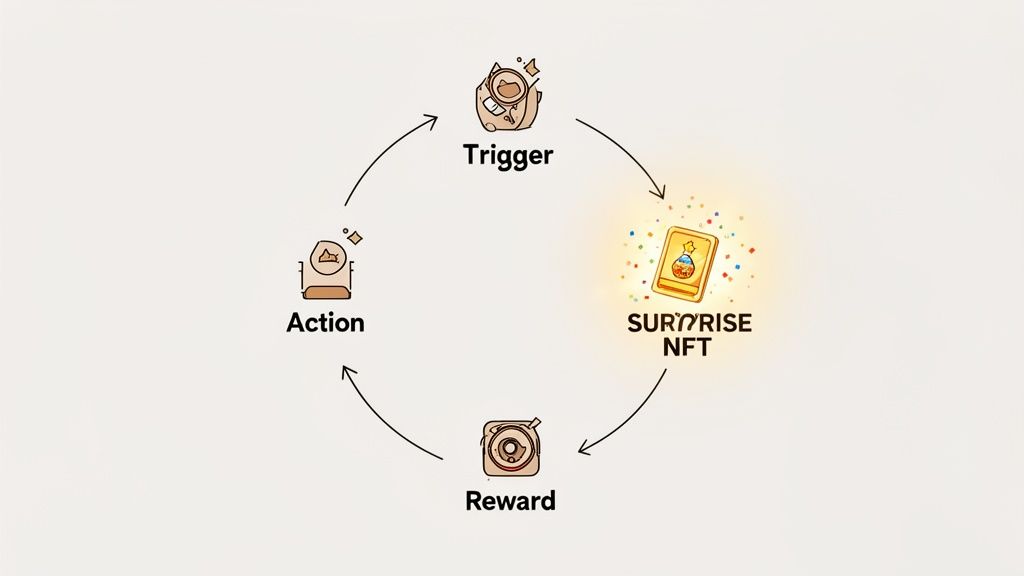
The secret sauce is a simple but powerful cycle: a trigger prompts an action, which is then reinforced by a reward. This loop creates a psychological craving that drives repeat engagement and, over time, can seriously increase app retention.
Design Your Engagement Rhythm
To build a habit, you need a rhythm. Think of it like a drumbeat. You want a consistent cadence of quests that aligns with how you want people to interact with your app. This predictable structure gives them something to look forward to and helps solidify your app in their daily lives.
Start by mapping out the frequency of your core engagement loops:
- Daily Quests: These are your bread and butter. Small, low-effort tasks designed to make opening your app a daily reflex. A "Daily Check-In" is a classic for a reason—it’s a gimme, providing an instant reward that reinforces the habit from day one.
- Weekly Challenges: These require a bit more skin in the game but come with bigger rewards. A weekly on-chain challenge, like "Complete 3 Swaps This Week," pushes users to engage more deeply with your core features.
- Special Events: Time-limited quests are your hype machine. Tying them to holidays, product launches, or community milestones creates urgency and excitement, driving massive spikes in activity.
This layered approach gives you a steady beat of engagement that keeps your app top-of-mind without feeling like a chore.
The Power of Variable Rewards
Okay, so a predictable rhythm is key. But the rewards themselves? They shouldn't be. This is where you tap into the psychology of variable rewards. If a user knows exactly what they’ll get every time, the action can feel transactional. But when the outcome is a surprise, it lights up the brain's dopamine system like a slot machine.
A surprise NFT drop can be far more powerful for long-term loyalty than a fixed, expected reward. The anticipation of what could be is a powerful motivator that keeps users coming back for another "pull of the lever."
Instead of just giving 10 points for every social share, mix it up. One share might earn 5 points, the next could get them 20, and a third might enter them into a raffle for a rare NFT. This element of chance transforms a mundane task into an exciting gamble, making the whole experience stickier. If you're looking for more ideas, you can explore different ways of racking up points to keep your reward system feeling fresh.
Concrete Web3 Quest Examples
Let's get out of theory and into practice. Here’s how you can apply these habit loops in a Web3 context to build a compelling experience that keeps users coming back.
Example 1: A DeFi Protocol A DeFi protocol wants to encourage daily liquidity provision and weekly governance participation.
- Daily Quest: "Add $10 to any liquidity pool." This is a small, manageable ask that drives a core business metric.
- Weekly Challenge: "Vote on at least one governance proposal this week." This fosters a sense of ownership and gets users invested in the project's future.
- Variable Reward: Completing the weekly challenge could grant a fixed amount of XP but also enter them into a raffle to win a "Governance Gem" NFT that boosts future rewards.
Example 2: An NFT Gaming Project An NFT game needs players to log in daily to care for their assets and get active in the community.
- Daily Quest: "Feed your creature." This simple action connects the user to their in-game assets and builds an emotional bond. It’s not just a task; it’s caretaking.
- Social Bounty: "Share a screenshot of your creature on X with #OurGame." This taps into the user's pride and drives organic marketing for you.
- Variable Reward: The daily "feeding" quest might yield a standard food item, but it could occasionally drop a rare cosmetic item, creating a moment of delightful surprise.
By building these simple yet effective loops, you're not just asking users to come back. You're giving them a rewarding, exciting, and consistently engaging reason to make your app part of their world.
Turn Your Users into a Thriving Community
A sticky app is rarely just about its features. More often than not, what keeps people coming back is a vibrant, buzzing community. When users feel like they're part of something bigger, your app stops being a tool and becomes a destination. That sense of belonging is a powerful retention magnet.
People might come for your product, but they'll stay for the community. It builds a powerful moat around your project that makes it incredibly difficult for a competitor to poach your users. The real goal is to shift from a one-way street between you and your users to a web of connections between the users themselves.
Spark Collaboration with Community Quests
A great first step is to design experiences that actually require users to talk to each other. Passive consumption doesn't build bonds, but active collaboration sure does. Think about creating quests that can only be finished by working together or by jumping into community spaces.
This means going beyond the simple "Like our Tweet" tasks. We need to get into more meaningful social actions. Design quests that pull people into your main hubs—like Discord or Telegram—and reward them for being valuable members.
Here are a few ideas I've seen work well:
- Discord Helper Quest: Reward users for answering another user's question in a help channel. This takes some of the load off your support team and fosters a culture of peer-to-peer help from day one.
- Collaborative Content Creation: Run a quest asking users to submit fan art, memes, or gameplay clips. Then, let the community vote on the top entries to pick the winners. This turns content creation into a fun, shared event.
- Team-Based Challenges: Launch a quest where users have to form small squads to hit a collective goal, like pooling a certain number of staked tokens by the end of the week.
Think of these quests as social icebreakers. They give users a reason to interact and a common objective to rally around.
Empower Your Superusers
Every community has them: the top 1% of users who are just incredibly passionate, active, and knowledgeable. These people are your future ambassadors, moderators, and content creators. Your job is to not just spot them, but to actively empower them.
Don't let this incredible resource sit on the sidelines. You need to create a clear path for your most dedicated users to step up, take on more responsibility, and gain status within the community. When you do this right, it creates a powerful flywheel where your best users help onboard and engage the next wave of newcomers.
Identifying and empowering your most passionate users is one of the highest-leverage things you can do. They will become your greatest advocates and multiply your community-building efforts tenfold.
A great way to formalize this is with an ambassador program that has different roles and responsibilities. You can use simple quests to find your most promising candidates first.
- "New Member Greeter" Quest: Reward users for welcoming a certain number of new people in your Discord's #introductions channel.
- "Lore Master" Quest: Challenge users to create a short guide or tutorial about one of your app's more complex features.
- "Feedback Champion" Task: Give bonus rewards to users who leave detailed, constructive feedback in a dedicated channel.
The people who consistently jump on these quests are your prime candidates for an official ambassador role. Once you've found them, give them the tools and recognition they've earned—a special Discord role, exclusive access to the team, or even a small share of project rewards. This not only makes them feel valued but also signals to the entire community that genuine engagement is seen and rewarded. You're turning your users into builders, creating a self-sustaining ecosystem that fuels loyalty and keeps people coming back.
Measure Your Retention Efforts and Iterate Smarter
Launching quests and building a community are great, but if you're not measuring the impact, you're flying blind. To really get a handle on user retention, you have to know what's working, what's falling flat, and why. This means looking past flashy download numbers and digging into the metrics that show you have a healthy, engaged user base.
Think of it as building a tight feedback loop. You push a campaign live, watch how users react, and then use that data to make your next move smarter. This is the difference between an app that enjoys a little temporary hype and one that has real staying power.
Defining Your Core Retention Metrics
First things first, let's make sure we're tracking the right numbers. Vanity metrics like total sign-ups look great in a pitch deck, but they tell you nothing about whether people are actually sticking around. To get a real pulse check on your app's health, you need to be obsessed with these time-based retention rates:
- Day 1 Retention: This is your onboarding report card. It tells you the percentage of users who come back the day after they install. If this number is low, it’s a massive red flag. Your first-time user experience either has too much friction or isn't delivering that critical "aha!" moment.
- Day 7 Retention: This one signals early value. If users are still around after a week, you've likely hooked them with your core features. Your initial habit-forming loops are doing their job.
- Day 30 Retention: This is the gold standard for long-term product-market fit. A healthy Day 30 rate means your app has woven itself into a user's routine, proving it delivers real, lasting value.
A quick look at industry benchmarks shows just how much these numbers can vary. Day 30 retention can be as high as 11.6% in digital banking or as low as a painful 2.1% in education. It's worth checking out some common mobile app retention benchmarks to help set realistic goals for your own project.
If you can move the needle on D1, D7, and D30 retention, you're building a sustainable foundation for growth. Everything else is just noise.
Analyzing Your Quest Completion Funnels
Beyond those big-picture numbers, your quest system is an absolute goldmine of behavioral data. Every multi-step quest you create is a mini-funnel. By analyzing where users drop off, you can uncover some incredibly powerful insights about friction points in your app.
Let's say you launch a three-part community quest designed to get people involved in your project's governance. You're trying to guide them from inviting friends to collaborating on a proposal and finally casting a vote.
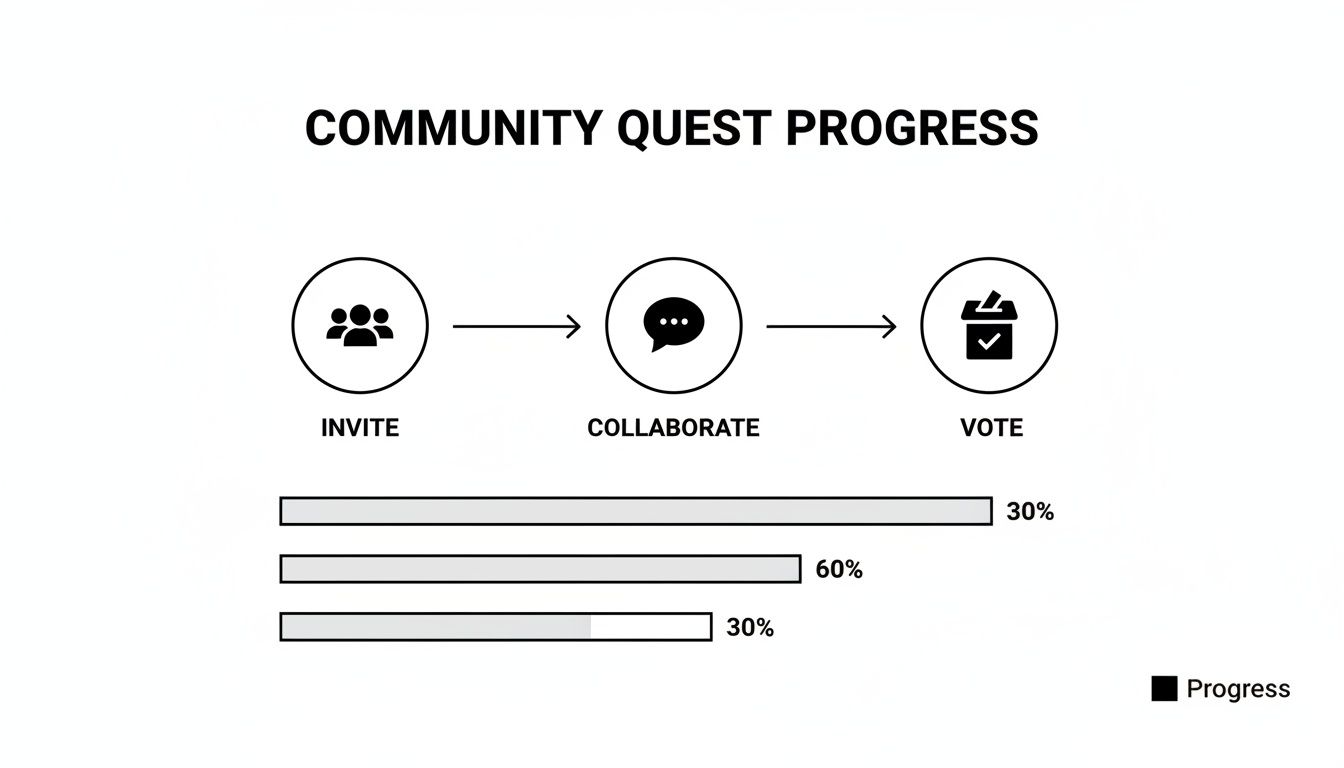
The data here shows a huge drop-off between collaborating and voting. That’s not a guess; it's a specific, actionable insight telling you exactly where the problem is.
By tracking completion rates for each step, you can see the story unfold:
- Step 1: Invite a Friend (90% completion) - Awesome. People have no problem with this step. It's easy and has low friction.
- Step 2: Collaborate on a Proposal (70% completion) - Still pretty good, but we lost a few people. Maybe the collaboration tool is a little clunky or the instructions aren't clear enough.
- Step 3: Vote on the Proposal (25% completion) - Ouch. This is where the wheels fell off. The massive drop-off is a clear signal that something is seriously wrong. Is the voting process too complex? Are there gas fee issues? Is the UI confusing?
This kind of data is invaluable. Instead of just guessing, you now have a rock-solid hypothesis to work with: "Simplifying the on-chain voting interface will increase quest completion." Now you have a specific, measurable problem to go solve.
The Launch, Measure, Iterate Loop
This brings us to the very heart of a smart retention strategy: a continuous cycle of experimentation. Your goal isn’t to get it perfect on day one. It’s to get a little bit better with every single iteration.
It breaks down into a simple, repeatable process:
- Launch: You release a new questline, tweak your onboarding flow, or kick off a community challenge based on what you currently know about your users.
- Measure: You immediately start tracking your key metrics. How did this new feature affect D7 retention? Where are people dropping off in the funnel?
- Iterate: Armed with fresh data, you form a new hypothesis and design your next experiment. You double down on what worked and go back to the drawing board on what didn't.
This iterative process turns retention from a guessing game into a science. By consistently listening to what your data is telling you, you can systematically chip away at friction, boost engagement, and build an app that users genuinely want to come back to, day in and day out.
Your Top App Retention Questions, Answered
Even with the best playbook, you're going to have questions when you start putting these ideas into action. Let's tackle some of the most common ones I hear from Web3 teams who are using quests and rewards to keep their users around.
How Quickly Will I Actually See a Difference?
You can see a pop in your short-term numbers—like Day 1 and Day 7 retention—almost right away. This is especially true if you kick things off with a really engaging, gamified onboarding quest. That initial bump is a huge win for fighting that brutal first-day user drop-off.
Now, for the bigger picture, like boosting your Day 30 retention, you need to play the long game. Think more in terms of one to three months. Real, sticky habits don't form overnight. Stay patient, keep tweaking your reward loops, and give your community quests time to work their magic.
On-Chain vs. Off-Chain Quests: Which Should I Use?
Honestly? You need both. Don't think of it as an "either/or" situation. They serve totally different, but equally important, purposes.
- Off-Chain Quests: These are your low-hanging fruit. They're perfect for getting people in the door and warming them up. Simple things like "Follow us on X," "Join our Discord," or "Read our latest blog post" build that initial connection without any technical friction.
- On-Chain Quests: This is where you drive real product usage and create power users. You want people staking tokens, minting an NFT, or casting a vote in a governance proposal. These are the actions that get them invested—literally and figuratively—in your protocol.
A killer questline smoothly walks a user from the easy off-chain stuff to the more meaningful on-chain actions. You're basically guiding them on their entire journey from curious newcomer to die-hard fan.
The trick is to stop seeing on-chain and off-chain quests as a choice. Use the easy off-chain tasks to build some early momentum, then guide those users toward the high-value on-chain actions that create true, lasting stickiness.
Do Rewards That Aren't Tokens Even Work?
Oh, absolutely. Sometimes they work even better. While a token drop is always nice, rewards that give users status, access, and a real sense of belonging can build a much deeper, more durable kind of loyalty.
Think about offering things like:
- Exclusive roles in Discord that show off someone's OG status.
- Unique, non-transferable NFT badges for big achievements.
- Early access to new features or private community channels.
- Raffle tickets for a shot at a really cool physical or digital prize.
These rewards tap into what makes people tick, which can be way more powerful than just a financial handout in the long run. If you want to explore this more, these 8 proven mobile app retention strategies offer some great ideas that translate well.
How Do I Stop People from Just Farming My Rewards?
Reward farming is a very real problem, but you can definitely design your system to fight it. The secret is to build quests that demand genuine interaction with your product, making them a pain to automate.
For example, instead of a brain-dead "Visit our website" quest, try something like, "Find the hidden emoji on our roadmap page." You want a good mix of easy, low-reward tasks and more involved, high-reward quests that you can only solve if you actually understand the product. This makes sure your best rewards go to your most dedicated users, not just some bot. It's how you increase app retention in a meaningful way by rewarding real engagement.
Ready to put all this into practice? With Domino, you can build, launch, and automate all of these reward-based quests in minutes, no coding required. Stop bleeding users and start building a community that sticks around. Check it out at https://domino.run.