Your Guide to Web3 Community Building That Actually Works

In the world of Web3, we need to get one thing straight: community isn't a "nice to have" marketing tactic. It's the whole damn product. A thriving community is what gives your token value, drives real user adoption, and builds a defensive wall around your project that nothing else can. It's how you turn passive users into die-hard fans.
Your Community Is Your Biggest Flex
Let’s toss out the old playbook of just racking up follower counts. In Web3, growth is led by the community itself—it's the only way to build something that lasts. When people feel a real sense of ownership and belonging, they do more than just use your dApp. They start building it with you.
This creates an incredible feedback loop. Your most engaged members give you priceless insights, shout down the FUD (fear, uncertainty, and doubt) for you, and become your best recruiters, pulling in their own networks.
This isn't just some fluffy, feel-good idea; it has a real impact on the bottom line. Recent numbers show that 86% of businesses now see community management as essential, and 72% are planning to pump more money into it. Even better, active online communities see a 53% higher customer retention rate. That's a direct line from a solid community to long-term survival. You can dig into more of these community management trends to see just how big this shift is.
It All Starts with a Shared Mission
The best communities aren't just hanging out—they're rallying around a shared purpose. It’s not just about the tech; it's about the movement you're all building together. This is the fuel that gets people to volunteer their time and skills, whether they’re slinging memes, writing tutorials, or welcoming newbies into the fold.
What does that look like in practice?
- A Shared Identity: Members feel like they're part of something bigger than themselves.
- Collective Ownership: Everyone feels like they have skin in the game. Your project's win is their win.
- Organic Advocacy: The most passionate members become your most authentic and effective marketers, hands down.
The game changes completely when your community stops thinking of themselves as customers and starts acting like co-creators. That's the tipping point where your project truly becomes unstoppable.
This is where a platform like Domino comes into play, giving you the tools to design quests that get people working together and feeling that collective rush.

You can see how structured, rewarding activities can transform a bunch of individual actions into a powerful, collective force. It builds momentum and a real sense of shared purpose. Before we get into the nuts and bolts of how to do this, you have to internalize why it matters so much.
Laying the Groundwork for Your Community
Before you even think about inviting the first person into your Discord, you need a game plan. Great communities don't just spring up out of nowhere; they're built with purpose, brick by brick. The first, and most important, brick is figuring out who you're actually building this for.
So many projects trip up right here. They rush to get bodies in the door and end up with a ghost town of lurkers instead of a buzzing hub of true fans. You have to get specific. Are you trying to pull in DeFi degens who are glued to Etherscan, or are you hoping to attract NFT artists who care more about aesthetics and creative freedom? Maybe your focus is on developers who want to get their hands dirty building on your protocol.
Each group needs a totally different vibe, from the way you talk to them to the platforms where you hang out. Getting this right from the start is crucial, so spending time on how to identify your target audience will save you a world of pain later. Everything else you do flows from this single decision.
Nail Your Core Story
Okay, so you know who you're talking to. Now, why should they care? This is your core value proposition—the one compelling reason someone should spend their precious time and energy on your project over thousands of others. It’s the story that hooks them and makes them want to stick around.
Think of it as your community's origin story. It needs to feel real, be easy to remember, and connect with what your target audience actually wants.
- What problem are you solving? Be crystal clear. No jargon.
- What unique vibe are you offering? Is it exclusive access, a chance to build something together, or just a shared sense of identity?
- What's the big picture? Give them a mission they can get excited about and feel a part of.
Your story isn't just marketing fluff. It's the cultural DNA of your community. It’s what members will tell their friends when they’re trying to explain why your project is so cool.
Pick Your Starting Tech
Once your audience and story are locked in, you can start making smart choices about your tech stack. Don't overcomplicate it at the beginning, but picking the right tools now will prevent massive migrations and headaches down the road. The first big decision is always your home base.
Discord or Telegram? That's the classic question. Discord is amazing for deep, organized conversations with dedicated channels, roles, and powerful bot integrations. On the other hand, Telegram is king for massive, rapid-fire announcement channels and has a super low barrier to entry for users worldwide. The "right" answer depends entirely on the kind of community you want to build.
From there, you can start thinking about how to recognize and reward people for getting involved. We've got a whole guide on designing effective community rewards that actually help you hit your goals. Nailing this early planning means you're building on solid ground, ready to grow without crumbling.
How To Design Quests That People Actually Enjoy
Let’s be honest. Nobody enjoys the endless "like, retweet, tag three friends" grind. That's not building a community; it's just asking people to do chores. If you want real, sticky engagement, your quests need to feel less like a to-do list and more like a game that actually helps your project grow.
The secret sauce is mixing things up. Don't just hammer on one type of task. You need to blend creative, fun off-chain activities with meaningful on-chain actions. This keeps things interesting and plays to the different strengths and motivations of your members.
Think about it this way: you could run a campaign that combines an on-chain action, like making a swap on your new DEX, with an off-chain challenge to create the best meme explaining why that swap is so cool. Suddenly, you're not just getting transactions; you're educating users and generating hilarious, organic marketing content at the same time. You're turning lurkers into genuine participants.
Mixing On-Chain and Off-Chain Actions
Getting the balance right is key. You want to walk users through your ecosystem while also unlocking their creativity and social influence. The first step is to ask yourself: what actions really matter for my project right now?
Here are a few ideas to get the wheels turning:
- On-Chain Tasks: These are all about direct interaction with your protocol. Have people mint a commemorative NFT, stake a small amount of tokens, or vote on a simple governance proposal. These aren't just empty clicks; they give members real skin in the game and build product familiarity.
- Off-Chain Tasks: This is where your community's personality can really come through. Ask them to create video tutorials, write thoughtful Twitter threads breaking down a new feature, or even help out with your documentation. These tasks build powerful social proof and a library of assets you can use for months.
The best quests I've ever seen are the ones that create a feeling of shared purpose. When members feel like they're building alongside you, their loyalty goes through the roof. They stop being users and start being true believers.
This whole idea of co-creation is a huge trend right now. To fight off the inevitable community fatigue, the smartest projects are leaning into more personalized and even real-life (IRL) experiences. It's about giving members a real voice and letting them shape the community's culture and knowledge base.
Building Smart and Sustainable Reward Systems
Rewards are the engine of any questing system, but you have to be careful. Your goal is to inspire genuine participation, not just attract a swarm of mercenaries who will dump your token and vanish the second the rewards dry up. A well-designed system layers different kinds of incentives.
Try thinking in tiers:
- Experience Points (XP): Give these out for every completed quest. They let users level up, climb leaderboards, and unlock new roles.
- Exclusive Roles: Grant special Discord roles like "OG Contributor" or "Protocol Expert." These come with bragging rights and, more importantly, access to private channels and alpha.
- NFTs & Soulbound Tokens: Use non-transferable NFTs as badges of honor for hitting major milestones. They're a permanent record of someone's contribution.
- Token Rewards: Save the big token drops for high-effort, high-value contributions. Think code contributions, detailed bug reports, or exceptional user-generated content.
This layered approach creates an ecosystem that's far more engaging and sustainable than just throwing tokens at everyone. We get into the nitty-gritty of these strategies in our guide to community gamification, which shows you how to build incentive loops that last. A balanced reward system isn't just a nice-to-have; it's a cornerstone of building a community that's here for the long haul.
Choosing the Right Home for Your Community
Every great community needs a place to call home. This is where your people will gather, share ideas, and connect with your project. Picking this digital headquarters is a huge decision because it sets the tone for the entire member experience. This isn't just about features; it's about the very culture you're trying to build.
Most projects start on familiar ground: Discord and Telegram. Discord is a beast for structured conversation, with its multi-channel setup perfect for deep dives and organized activities. Telegram, on the other hand, is all about speed and scale. It's fantastic for blasting out announcements and keeping a massive, global audience synced up without much fuss.
But let's be real, these platforms have their downsides. You're building your community on rented land, meaning you play by their rules and live with their limitations. It also splinters the user journey, pulling people away from your own website to engage.
Beyond the Usual Suspects
That's where dedicated questing platforms like Zealy come into play. They're built from the ground up for Web3 projects, offering a gamified, task-driven experience that gets people involved. While they're great at what they do, they can still feel like a separate, third-party destination—another app your users have to visit.
The real game-changer is a white-label solution. By embedding the community experience directly into your own website with a tool like Domino, you create a seamless, fully branded hub. It feels like a natural part of your project because it is. This approach keeps everyone in your ecosystem, strengthens your brand identity, and gives you total control over the experience and the data.
The goal is to make joining in feel effortless, not like jumping between a bunch of different apps. A white-label solution brings your community home, right where it belongs on your own turf.
Not sure which path to take? This decision tree can help you map your core goals to the right kind of quests, which will point you toward the best platform for the job.
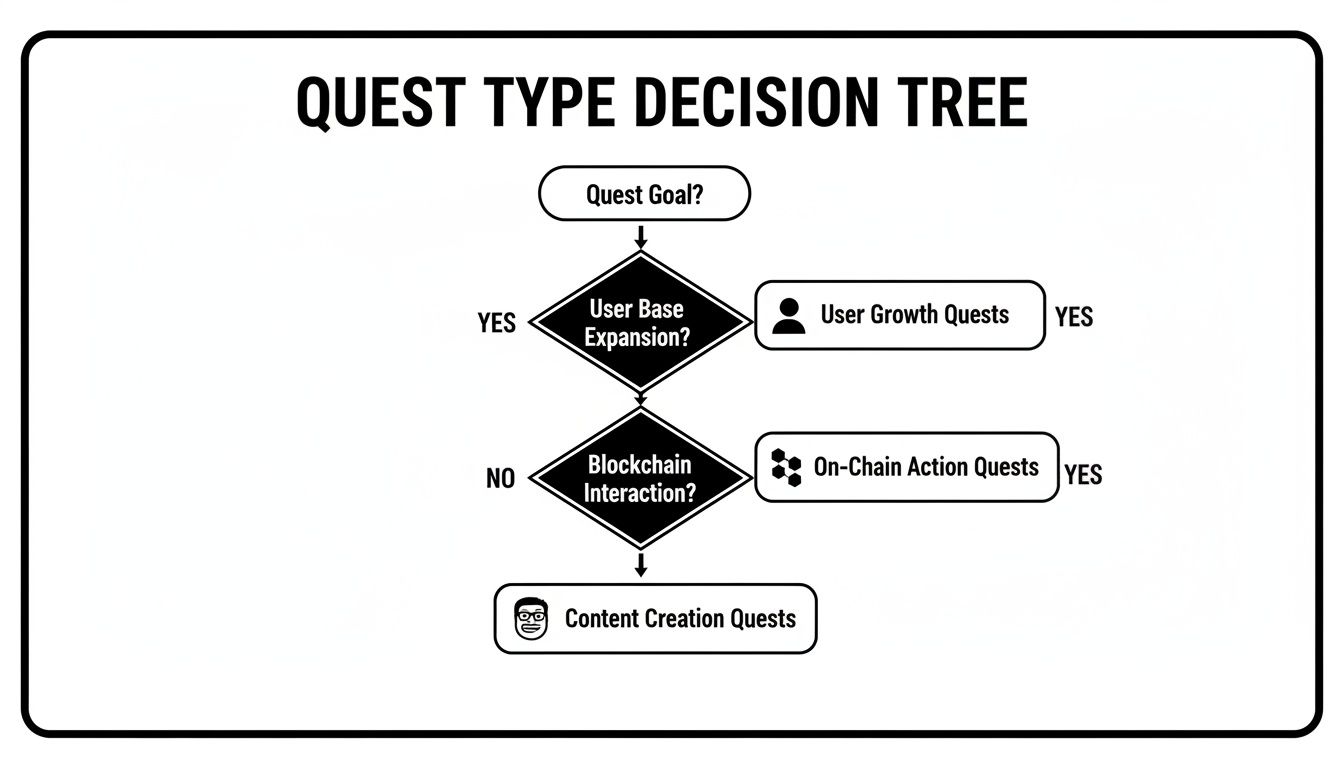
As the flowchart shows, if you're chasing user growth, your tasks will look very different than if you're trying to drive specific on-chain actions. Each goal is better suited to certain platforms.
Making the Right Call for Your Project
To help you figure out what makes the most sense for you, here’s a quick breakdown of the common choices.
Community Frontend Platform Comparison
| Platform Type | Primary Use Case | Pros | Cons |
|---|---|---|---|
| Discord/Telegram | Initial community gathering and announcements. | Easy to set up, low cost, large existing user bases. | Rented land, limited branding, fragmented user journey. |
| Specialized Platforms (e.g., Zealy) | Gamified engagement and user acquisition campaigns. | Purpose-built for Web3 quests, strong network effects. | Third-party platform, can feel disconnected from your brand. |
| White-Label Solution (e.g., Domino) | Fully integrated, branded community hub on your site. | Total control over UX, data ownership, seamless experience. | Higher initial setup effort and potential cost. |
Ultimately, the best choice really boils down to your project's stage, your budget, and where you see your community heading in the long run.
- Just Starting Out? Discord or Telegram are no-brainers. They're cheap, easy, and perfect for building that initial spark.
- Ready for Growth? A specialized platform can add the structure and gamification you need to scale engagement effectively.
- Established and Scaling? A white-label solution offers that premium, branded experience that fosters true loyalty and keeps people coming back.
Each option is a different path forward. To get an even more granular look at the pros and cons, check out our deep dive into the top Web3 quest platforms. It'll give you the clarity you need to build your community on the right foundation.
Look, let's be real. If you're trying to manually verify every single quest submission, you're on a fast track to burnout. It's a classic community manager trap.
What starts as a handful of tasks quickly turns into an avalanche as your community grows. At that point, your only options are to either hire a small army of mods or get smart about automation.
The right tools are a complete game-changer here. Modern platforms can tap directly into APIs and use a bit of AI magic to automatically check both on-chain and off-chain actions. This means you can confirm someone followed you on Twitter, holds a specific NFT, or actually used your dApp—all without lifting a finger. It's the only way to scale without losing your mind.
But this isn't just about saving your own time. Automation creates a way better experience for your members. They get that instant feedback for their efforts, watch their XP rack up right away, and get their rewards on the spot. That tight feedback loop is pure gold for keeping people hooked and coming back for more.
A Real-World Automation Workflow
Let’s say you’re launching a new feature. You want to get the word out and, more importantly, get people to actually use it. You could set up a simple quest like this:
- Off-Chain Task: Follow the project's account on X (formerly Twitter).
- Content Task: Post about the new feature using a specific hashtag.
- On-Chain Task: Go and make one transaction using that new feature.
Trying to do this manually? You’d be stuck digging through thousands of Twitter profiles and getting lost in Etherscan. It’s a total nightmare.
But with a platform like Domino, the whole thing becomes hands-off. The system just connects to social APIs and blockchain data to instantly confirm each step is done.
This is the leap from being a reactive community manager to a strategic one. You're no longer buried in tedious verification tasks. Instead, you're free to focus on what actually moves the needle: building real relationships and cooking up creative campaigns.
It’s no surprise the industry is leaning heavily into AI, which is expected to be a $500 billion market by 2030. These aren't just buzzwords; AI is powering everything from automated moderation and smart chatbots to sentiment analysis. These tools make our jobs easier and help us create more personalized experiences for our members. You can dive deeper into how AI is shaping community management to see where things are headed.
Ultimately, this kind of tech integration is what modern community building is all about. When a member finishes a quest, the verification is instant, the XP hits their account, and they're already looking for the next challenge. This seamless flow is everything. It keeps the momentum going and shows your community you actually value their time and effort.
Measuring Community Growth That Matters
So, are your community-building efforts actually paying off? It's easy to get fixated on vanity metrics like total member count, but let's be real: a Discord server packed with 50,000 bots isn't just useless, it's a drain on resources. If you want to prove your ROI and make smart moves, you have to track the KPIs that signal a healthy, active, and sustainable community.
True community health is all about engagement, not just size. The projects that thrive are the ones that adopt a data-driven mindset from the get-go.
Key Web3 Community Metrics
To really get a feel for your community's pulse, you need to track the right data. This is where a good dashboard that pulls in both on-chain and off-chain activities becomes your best friend. It’s the only way to see which campaigns are actually landing and which ones are falling flat.
Forget the fluff. These are the metrics I've seen make the biggest difference:
- Daily Active Participants (DAP): This isn't just about who logs in. We're talking about who is actively completing quests, dropping reactions on announcements, or jumping into discussions. It's a direct signal of daily involvement.
- Quest Completion Rate: Look at the percentage of members who start a quest and actually see it through. If this number is high, it's a great sign that your tasks are well-designed and the incentives are hitting the mark.
- On-Chain Retention: This is the big one. How many of your members keep interacting with your protocol week after week? This is the gold standard for proving your community efforts are driving real product adoption.
- Conversion to Core Actions: Keep an eye on how many quest participants eventually perform high-value actions—like staking tokens or providing liquidity—without a direct quest telling them to. This shows you're building genuine users, not just reward hunters.
The real win is seeing your community shift from extrinsic motivation (rewards) to intrinsic motivation (a genuine belief in the project). Your metrics should tell that story.
By zeroing in on these specific indicators, you stop guessing. You get real, actionable insights that help you fine-tune your strategy, prove the value of your community building work, and create a system that encourages genuine, long-term participation. This is how you make sure your efforts are building a rock-solid foundation for the project's success.
Your Top Web3 Community Questions, Answered
Building a community in Web3 comes with a unique set of challenges. I get asked about these all the time, so let's tackle some of the most common questions head-on.
How Much Should I Actually Budget for Community Rewards?
This is a big one, and the answer is usually "less than you think." A solid starting point is to allocate around 1-2% of your total token supply for your first year of community programs.
Early on, it’s not about throwing money at people. Focus on rewards that offer real value beyond a simple cash grab. Think exclusive Discord roles, first dibs on new features, or utility NFTs. This approach filters for genuine believers, not just token farmers who will dump and run.
What's the Single Biggest Mistake Projects Make?
Chasing vanity metrics. Hands down. I've seen so many teams get obsessed with having the biggest Discord server or the most Twitter followers, but it's a trap.
A server with 50,000 members who never say a word is completely useless. It's just noise. A tight-knit group of 500 passionate advocates who give you honest feedback and spread the word organically is infinitely more valuable. Always, always choose quality engagement over sheer numbers.
Your real mission is to spark genuine conversation and create a space where people want to participate. That's what builds a community that will carry your project through thick and thin.
How Do I Keep Bots From Wrecking My Campaigns?
Ah, the bot problem. It’s an ongoing fight, but you absolutely can win it. The key is a multi-layered defense.
First, use a platform with built-in bot detection and Sybil resistance. It does a lot of the heavy lifting for you. For those digging into the core concepts behind this, understanding decentralized social media offers great context on user-centric principles.
Next, get creative with your quests. Make them hard for a script to complete. Ask for user-generated content, thoughtful feedback, or video submissions. You can also add on-chain requirements, like holding a minimum token balance or a specific NFT, which instantly filters out most freshly created bot wallets.
Ready to stop the manual grind and start scaling your community the right way? Domino is the toolkit you need to design, launch, and measure powerful reward campaigns in just a few minutes. Build your community the smart way with Domino.