12 Best Waitlist Software Tools For Web3 Projects in 2026
In Web3, a launch isn't just about dropping a product; it's about building a movement. But how do you capture that initial spark and turn it into a thriving, engaged community? It starts with a smart waitlist strategy, and generic sign-up forms just don't cut it anymore. The right waitlist software acts as your project’s first community hub, filtering for quality, incentivizing early adopters, and building momentum long before your token or dApp goes live.
This guide dives deep into the best tools for the job. We'll move beyond traditional restaurant and retail options to focus on software that understands the unique needs of Web3: viral loops, wallet integrations, and token-gated access. To implement these tools effectively for your project's debut, understanding robust product launch frameworks is essential; you can explore some great examples in these 9 Product Launch Strategies for PMs in 2025.
We'll break down 12 top-tier options, complete with screenshots and direct links, highlighting the specific features that will help you attract genuine believers, not just bots and bounty hunters. Let’s find the perfect platform to kickstart your community growth engine.
1. Waitwhile
Waitwhile is a powerhouse in the world of queue management, though it wasn't built specifically for Web3. It’s more of a general-purpose waitlist software designed for brick-and-mortar businesses like salons or clinics. However, its robust API and messaging features make it a surprisingly flexible tool for Web3 projects that need to manage access to physical events, merch drops, or even high-touch onboarding for a DAO.
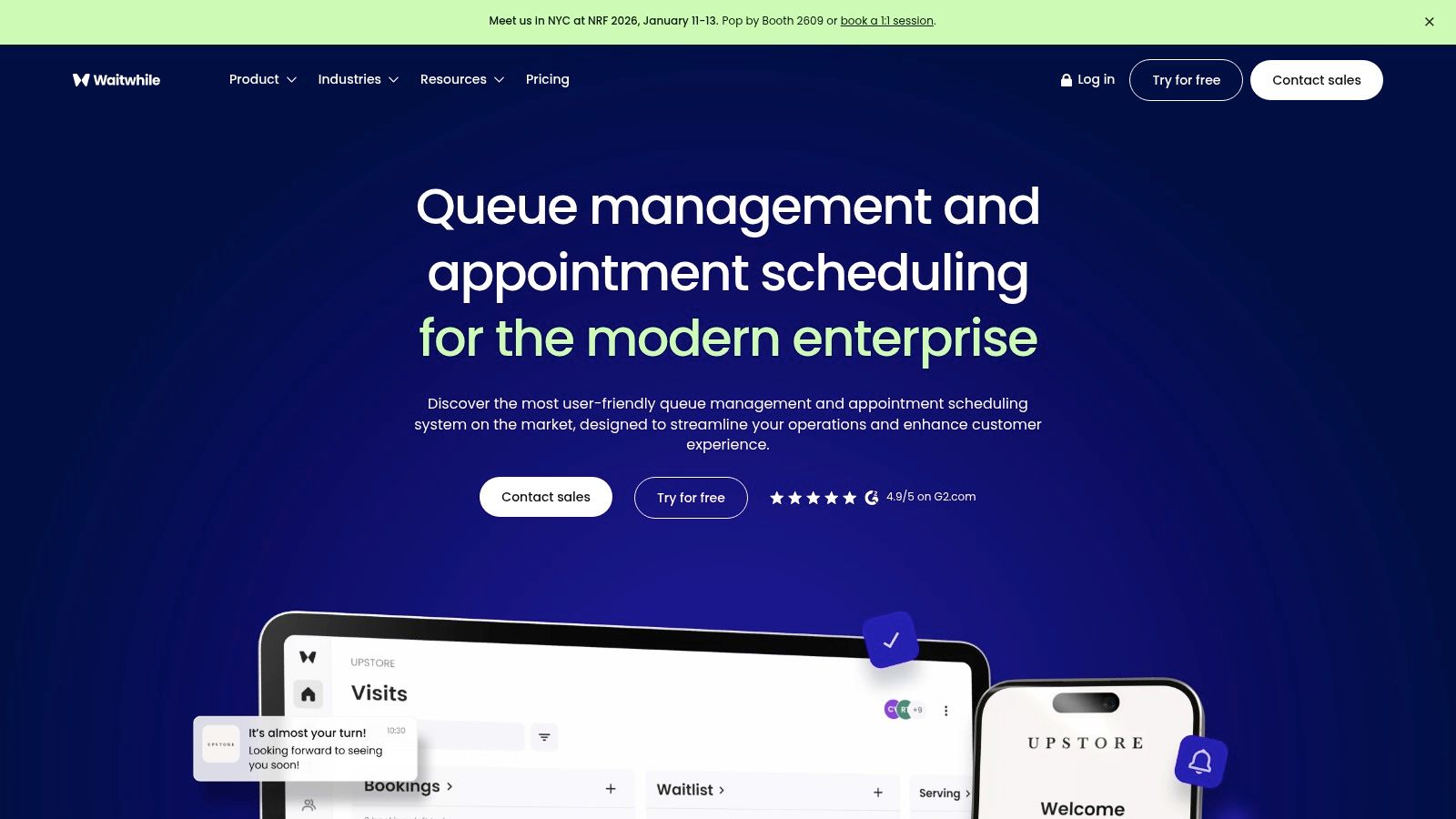
Its strength lies in its multi-channel communication; you can keep your community updated via SMS, email, and web chat. The self sign-up links and kiosk mode are great for IRL events, like managing the line at a booth during a crypto conference.
Quick Look
- Best For: Web3 projects managing in-person events or physical product drops.
- Key Feature: Strong two-way messaging and a solid API for custom integrations.
- Pricing: Starts with a free plan for up to 50 visits/month. Paid plans begin at $39/month.
- Vs. Domino: Waitwhile is focused on physical and appointment-based queues, whereas Domino is built for digital, viral Web3 waitlists with native crypto features.
- Implementation Tip: Use their API to connect your sign-up form with a token-gating script. This allows you to verify NFT ownership before adding a user to an exclusive event waitlist.
2. Waitlist Me
Waitlist Me is a straightforward and affordable tool that has been around for a while, primarily serving restaurants, retail, and salons. For a Web3 project, its simplicity is its biggest asset, especially for managing smaller, in-person community meetups or merch drops without a hefty price tag or complicated setup. It's the no-fuss option for when you just need a digital line.
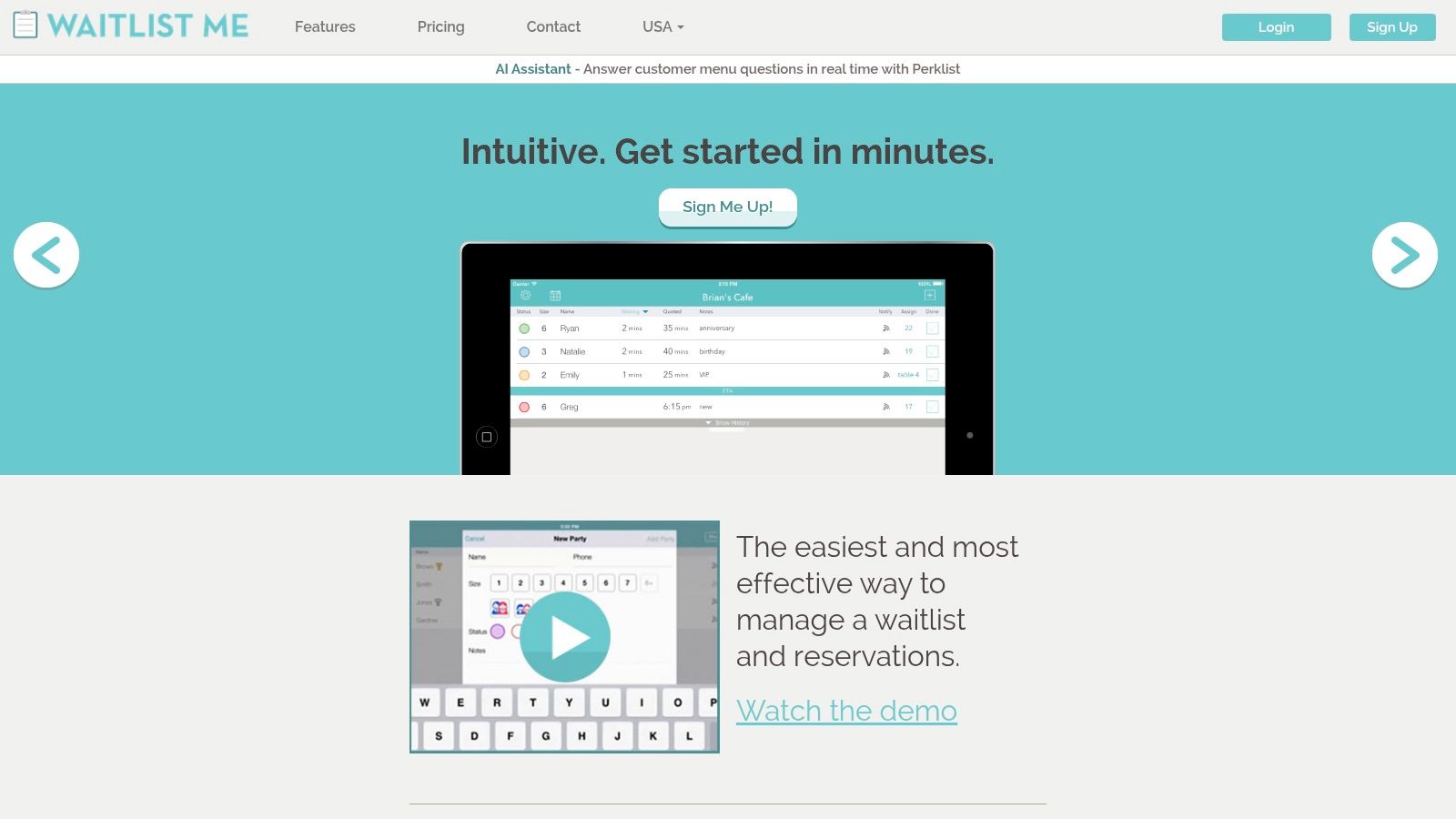
The platform shines with its cross-device support (iOS, Android, web) and public-facing waitlist page, which you can easily link in a Discord or Telegram announcement. While it lacks deep Web3 integrations, its simplicity makes it a solid piece of waitlist software for getting a queue system running in minutes for a physical event.
Quick Look
- Best For: Bootstrapped Web3 projects needing a simple queue for IRL events or small merch drops.
- Key Feature: Extremely simple UI and multi-device syncing across web and mobile apps.
- Pricing: Free plan for up to 100 guests/month. Paid plans start at a very accessible $24.95/month.
- Vs. Domino: Waitlist Me is designed for simple, in-person queueing. Domino is built for scalable, digital Web3 campaigns with viral loops and crypto-native features.
- Implementation Tip: Use the public waitlist page link as the call-to-action in your event announcements. Attendees can see their spot in line in real-time without needing to download an app.
3. QLess
QLess is an enterprise-level beast, built to manage massive queues for organizations like the DMV, universities, and large healthcare systems. While not a native Web3 tool, its core function as a sophisticated waitlist software makes it relevant for large-scale, real-world Web3 activations, like managing entry for thousands at a major conference or orchestrating a high-demand physical merch drop for a blue-chip NFT project.
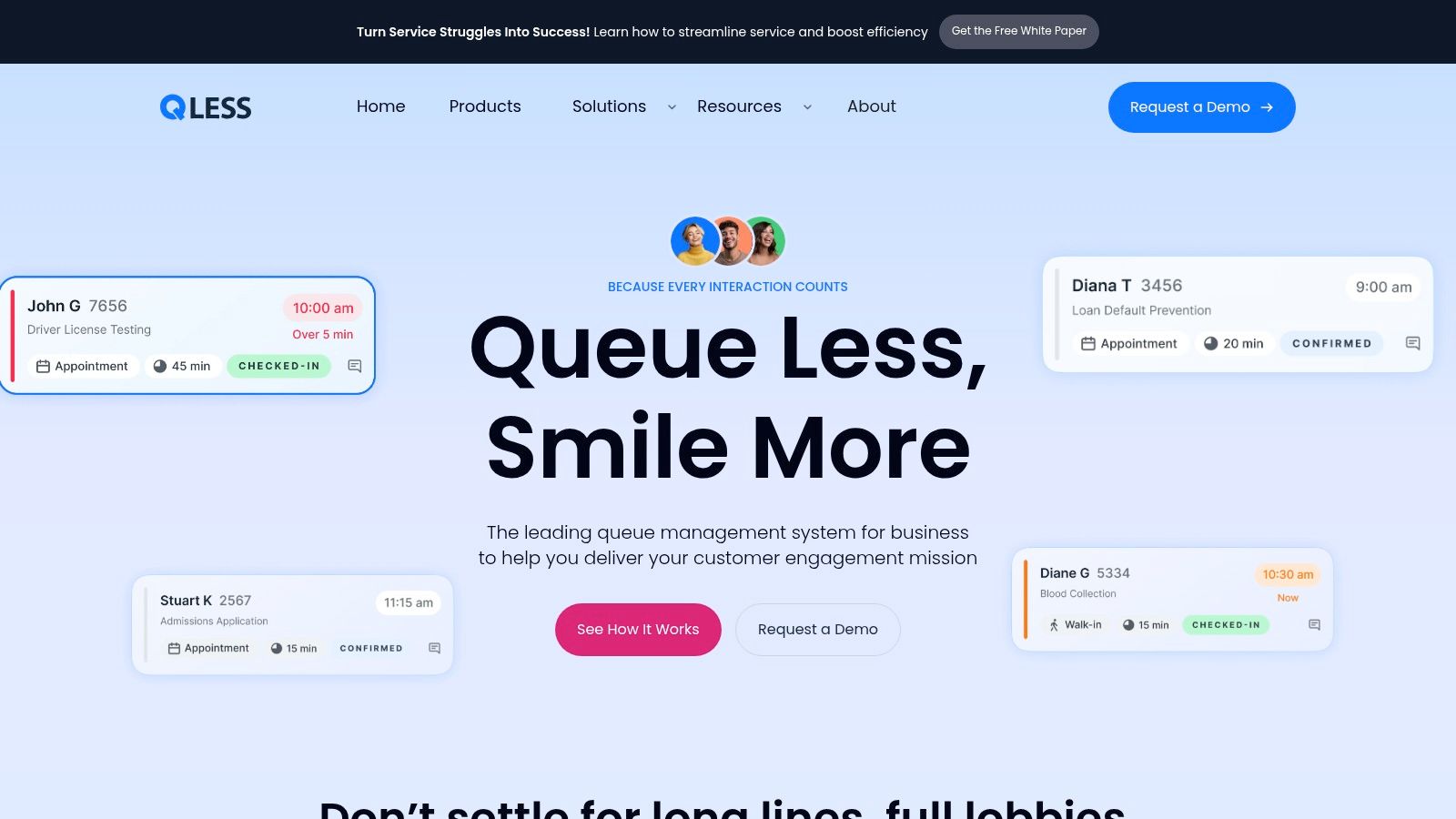
Its power lies in its scalability and robust SMS communication workflows, allowing users to join a virtual line from their phone and receive real-time updates. The platform is designed to handle immense foot traffic and reduce physical congestion, a problem that often plagues popular Web3 events and pop-ups.
Quick Look
- Best For: Large-scale Web3 conferences, major IRL brand activations, and high-volume physical redemptions.
- Key Feature: Proven enterprise scalability and advanced SMS-based queue management.
- Pricing: Not publicly listed; requires a custom quote through a sales-led process.
- Vs. Domino: QLess is for managing physical, real-world lines at scale, whereas Domino is optimized for creating viral, digital waitlists for online product launches and community growth.
- Implementation Tip: Integrate its check-in system with a token-gating solution at your event's entrance. A user scans a QR code to join the virtual queue, which first verifies their wallet for a specific NFT or token before adding them to the line.
4. OpenTable for Restaurants
While OpenTable is the undisputed king of restaurant reservations, it's not the first tool you’d think of for Web3. However, its sophisticated table management and waitlist software features offer a unique angle for exclusive, real-world dining experiences tied to a Web3 project, like a dinner for top NFT holders or a DAO meetup. It’s built to manage physical capacity and guest flow with precision.
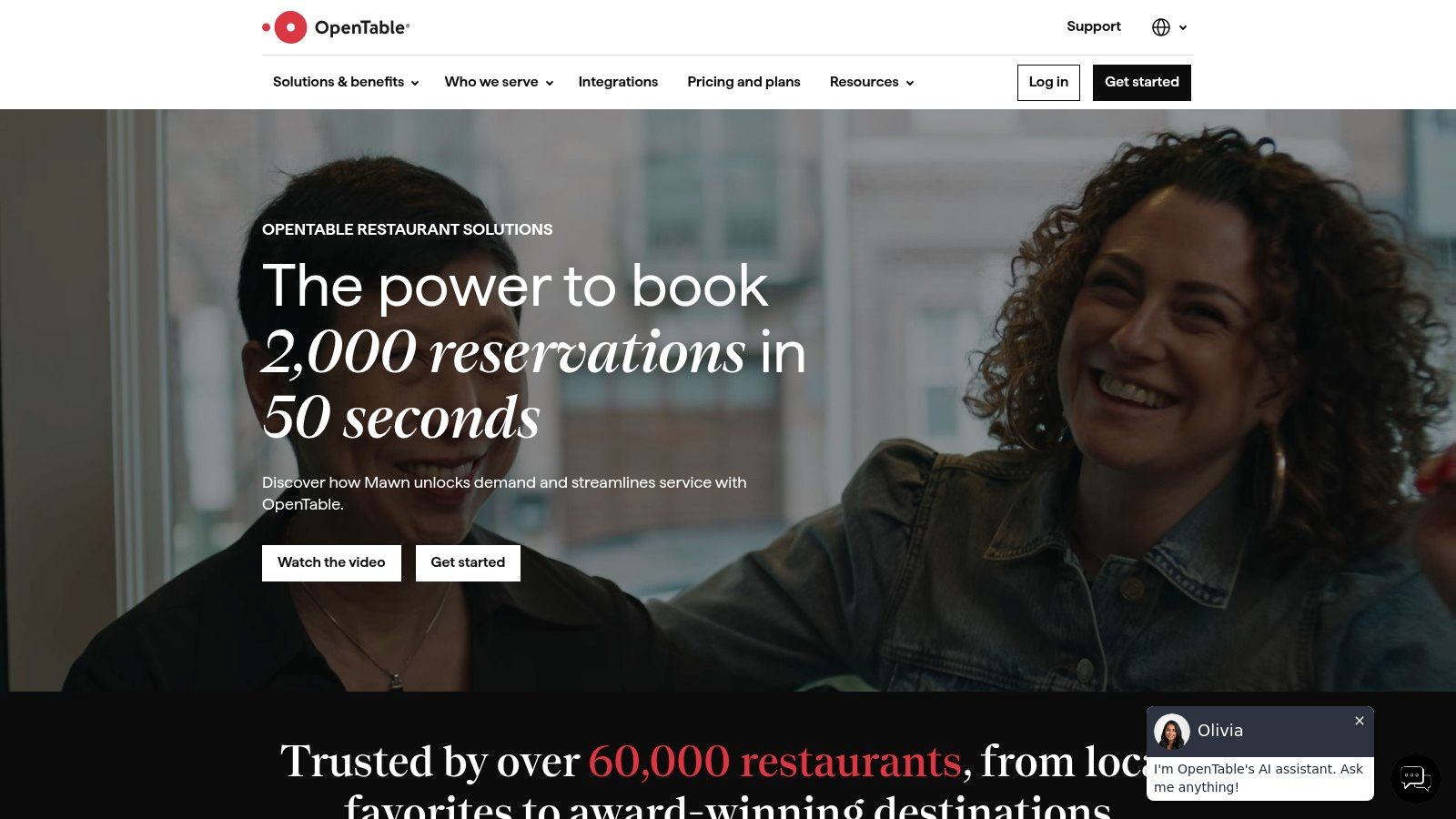
Its core strength is combining a public-facing reservation marketplace with private waitlist and guest management tools. This dual functionality is perfect for a pop-up restaurant event where you need to manage both a public guest list and a VIP list for token holders, all within one system that integrates with point-of-sale hardware.
Quick Look
- Best For: Web3 projects hosting exclusive IRL dining events or pop-up restaurants.
- Key Feature: Integrated reservation marketplace and in-house waitlist/table management tools.
- Pricing: Plans start at $39/month plus per-network cover fees. A "Basic" plan is available with no monthly subscription but higher fees.
- Vs. Domino: OpenTable is for managing finite physical seats at a specific time and location. Domino is for building a scalable, digital-first waitlist for an app or online launch.
- Implementation Tip: Manually add verified token holders (from a snapshot) to the OpenTable guest list with a special "VIP" tag. Use the platform’s CRM notes to track wallet addresses for airdrops or post-event perks.
Visit OpenTable for Restaurants
5. Resy OS
Resy OS is a heavyweight in the restaurant industry, known for powering reservations and waitlists at trendy, upscale venues. While not a native Web3 tool, its premium feel and robust guest management features make it an interesting choice for exclusive, real-world Web3 dining clubs, token-gated dinners, or high-value networking events where the attendee experience is paramount. Think of it as a tool for managing access to IRL utility.
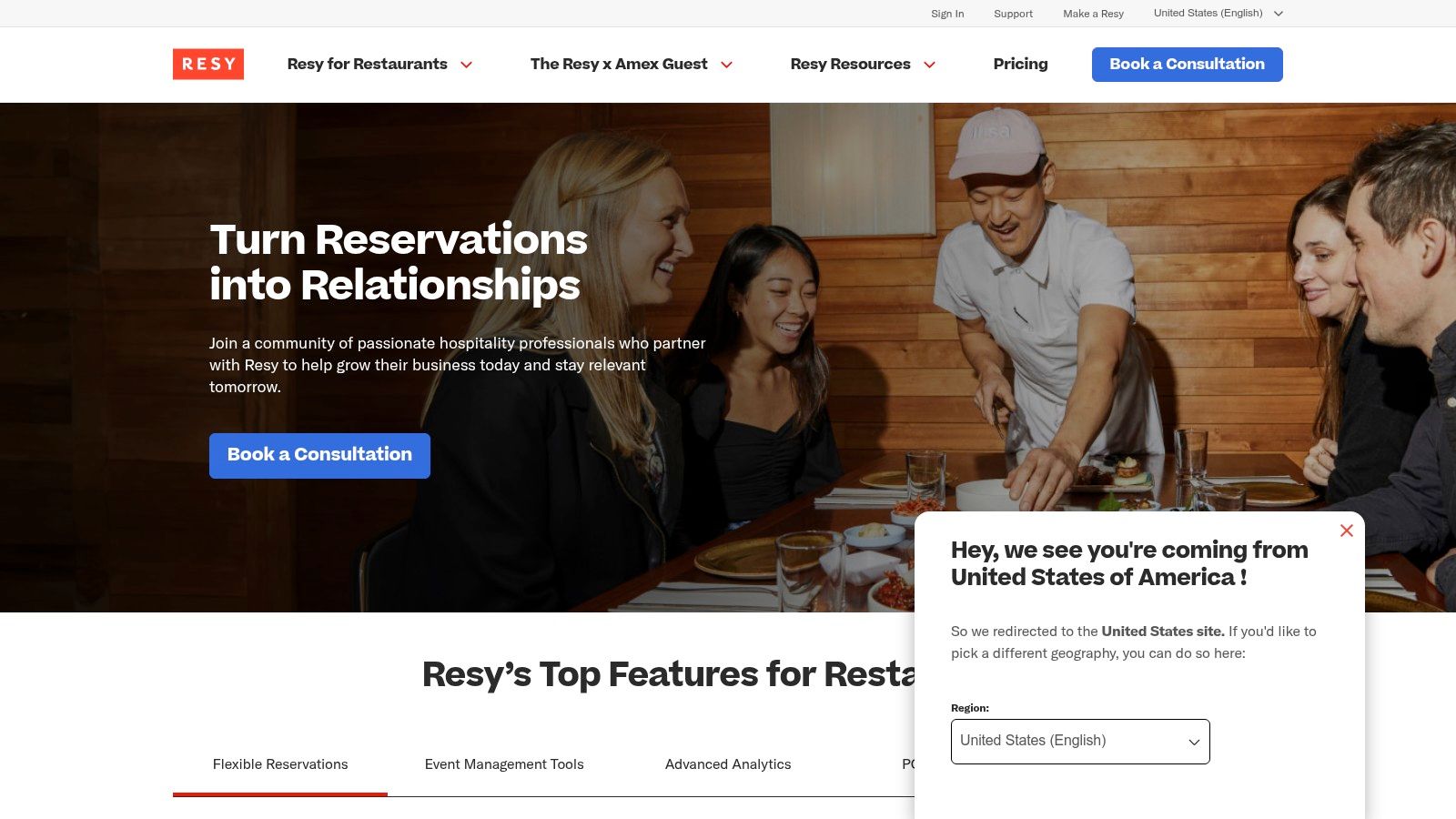
The platform excels at creating a premium, high-touch experience. Its strong CRM-style guest profiles allow organizers to add notes (like a user's ENS name or DAO affiliation) and track attendance, turning a simple dinner into a data-rich community touchpoint. This is more than just waitlist software; it’s a front-of-house operations tool for curated experiences.
Quick Look
- Best For: High-end, token-gated IRL dining events or exclusive Web3 social clubs.
- Key Feature: Powerful guest CRM with detailed profiles, notes, and tags for a personalized experience.
- Pricing: Not publicly listed; requires a consultation and is sales-led.
- Vs. Domino: Resy OS is built for physical restaurant-style queues and reservations, while Domino is designed for digital, viral waitlists and product launches.
- Implementation Tip: Manually add verified wallet holders from your community to the Resy guest list, using the "tags" feature to segment them by NFT trait or token-holding tier for special perks on-site.
6. SevenRooms
SevenRooms is an enterprise-grade hospitality platform that goes way beyond a simple waitlist. It’s built for restaurants, hotels, and nightlife, focusing on creating detailed guest profiles and automating marketing. For Web3, this is an interesting angle for exclusive IRL experiences, like a members-only dinner for a DAO or a token-gated event at a partner venue. Think of it less as a simple waitlist software and more as a full guest experience CRM.
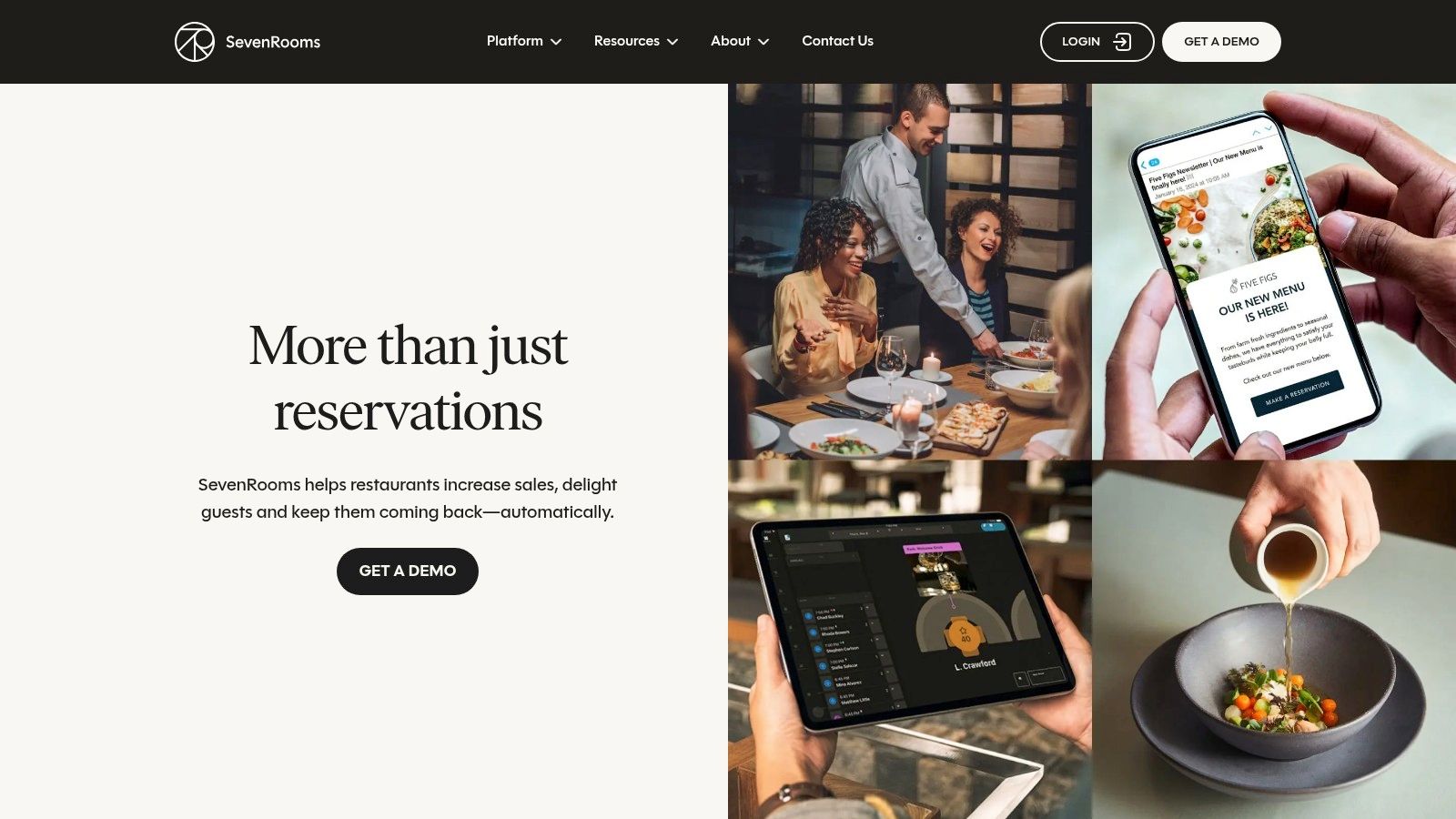
Its power lies in the 360-degree guest profiles, which can track preferences and spending habits, offering a way to reward high-value community members with premium real-world perks. The deep POS and marketing integrations allow for a seamless connection between digital engagement and physical venue operations.
Quick Look
- Best For: High-end, token-gated physical events and exclusive hospitality experiences.
- Key Feature: Deep guest CRM with 360° profiles and marketing automation.
- Pricing: Custom quote-based, aimed at the enterprise and multi-location businesses.
- Vs. Domino: SevenRooms is for managing premium, in-person experiences with deep CRM, while Domino is a digital-first tool for building online waitlists and viral growth.
- Implementation Tip: Integrate their system with your community platform to automatically tag wallet addresses in guest profiles, allowing you to track IRL attendance and spending of specific token holders.
7. Toast Tables (Toast POS)
Toast Tables is a bit of a niche player in the broader waitlist software space, but it's an absolute powerhouse for a specific use case: Web3 projects launching or partnering with real-world food and beverage venues. Think NFT-gated restaurants or token-holder-only pop-up cafes. It’s an add-on for the widely used Toast Point of Sale (POS) system, not a standalone tool.
Its biggest advantage is the seamless integration with the POS. When a guest checks in, their waitlist profile syncs directly with their eventual order, giving you a complete picture of your community members' activity. This is perfect for tracking engagement and rewarding top holders at IRL activations where food or drinks are served.
Quick Look
- Best For: Web3 projects with a physical restaurant or pop-up component already using Toast POS.
- Key Feature: Deep, native integration with Toast POS for a unified view of guest activity from waitlist to payment.
- Pricing: Starts at $50/month as an add-on to a Toast POS subscription. Flat monthly fee with no per-cover charges.
- Vs. Domino: Toast is exclusively for physical restaurant management, while Domino is built for scalable, digital-first Web3 campaigns with viral growth mechanics.
- Implementation Tip: While it lacks a direct API for token-gating, you can create a simple pre-qualification step using a tool like Domino for wallet verification. Then, manually add verified holders to the Toast waitlist for exclusive access or perks at your venue.
Visit Toast Tables
8. Yelp for Restaurants (Guest Manager + Yelp Host)
While firmly rooted in the "Web2" world of physical restaurants, Yelp’s Guest Manager offers a unique angle for certain Web3 projects, particularly those blurring the lines between digital and physical experiences. Think of a members-only NFT restaurant, a token-gated coffee shop, or an exclusive pop-up event for a DAO. This platform leverages Yelp’s massive consumer audience to drive foot traffic and manage queues.
Its standout feature is Yelp Host, an AI phone assistant that can handle calls, answer questions, and add people to your waitlist automatically. For a lean team running a physical pop-up, this automation is a game-changer, freeing up resources to focus on the community. It’s a very specific tool for a very specific use case, but for those projects, it’s an incredibly powerful waitlist software solution.
Quick Look
- Best For: Web3 projects with a physical retail or event component, like NFT-gated restaurants or merch pop-ups.
- Key Feature: AI phone agent (Yelp Host) that automatically manages inbound calls and waitlist sign-ups.
- Pricing: Full Guest Manager pricing is quote-based and requires a sales call.
- Vs. Domino: Yelp is entirely focused on physical venue management, while Domino is built for scalable, digital-first Web3 campaigns with viral mechanics.
- Implementation Tip: If running a token-gated event, use the waitlist as a public entry point. Then, have staff at the door use a simple app like Tokenproof to verify asset ownership before seating guests from the Yelp list.
9. Queue-it
Queue-it is the heavy-duty bouncer for your website during a high-demand event. It’s not a traditional pre-launch waitlist builder; instead, it creates a virtual waiting room to manage massive traffic spikes during NFT mints, ticket sales, or limited-edition merch drops. This powerful waitlist software prevents your servers from crashing and ensures a fair, first-in, first-out process for everyone trying to get in.
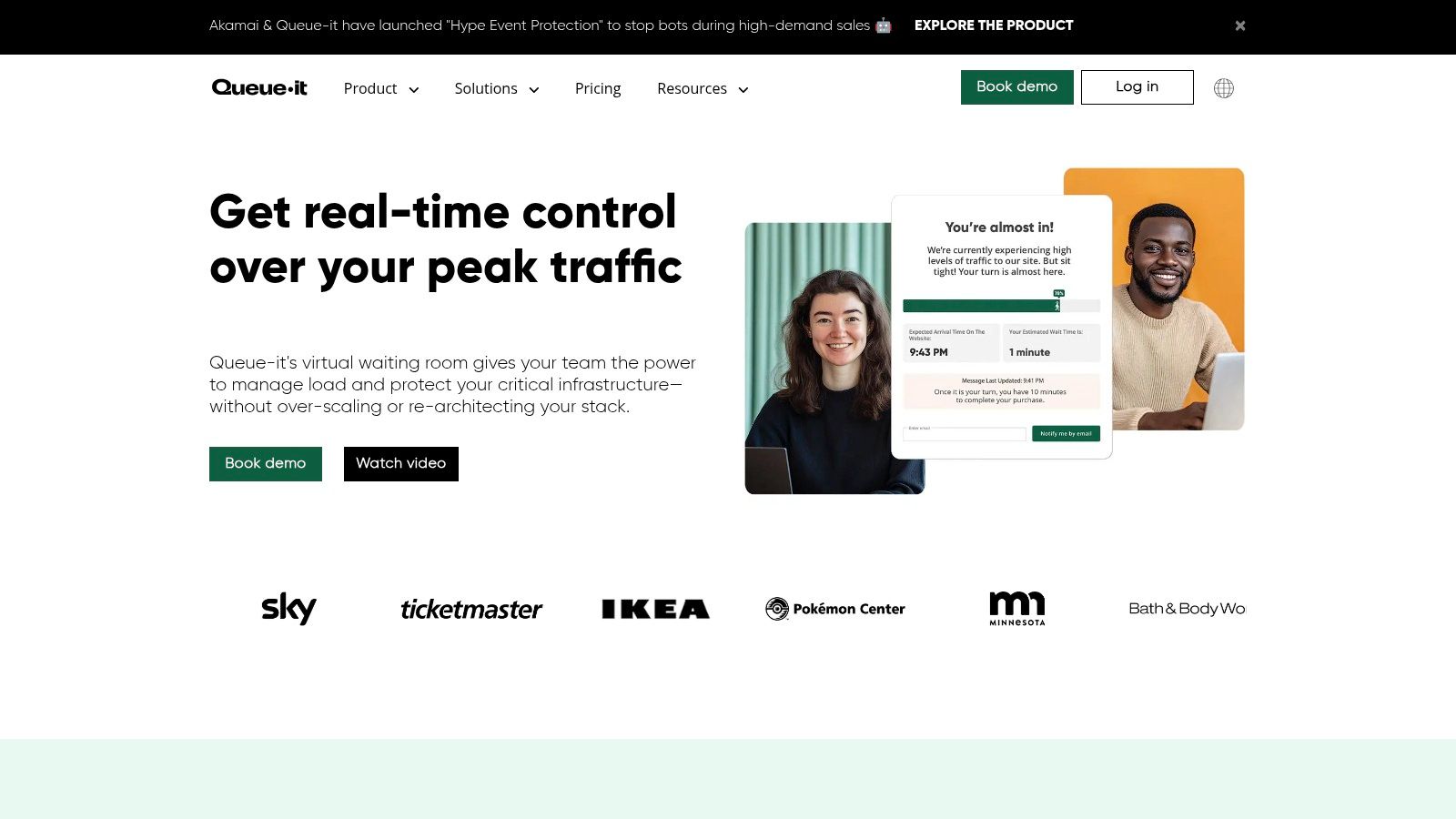
Its strength lies in its purpose-built infrastructure for handling hype. When thousands of users hit your site simultaneously, Queue-it places them in an orderly line, showing their progress and estimated wait time. This provides a transparent and less frustrating user experience while protecting your backend from getting overwhelmed.
Quick Look
- Best For: High-traffic NFT mints, token sales, or limited physical product drops where website stability is critical.
- Key Feature: Virtual waiting room technology that acts as a safety net against traffic overload.
- Pricing: Custom pricing based on event size and traffic volume; requires a quote.
- Vs. Domino: Queue-it manages real-time traffic during a launch event, whereas Domino is designed to build an audience and viral hype before the launch.
- Implementation Tip: Use Queue-it's pre-queue feature to let users line up before the official mint time. This builds anticipation and provides a clear starting point for the sale, ensuring fairness.
10. Prefinery
Prefinery is a veteran in the prelaunch space, offering powerful tools for building viral waitlists and referral campaigns. While not Web3-native, its strength lies in its developer-friendly API and robust milestone reward system, making it an excellent waitlist software for SaaS-style dApps or NFT projects that want to gamify their launch. You can create campaigns where users unlock roles or WL spots by referring friends, creating a powerful growth engine.
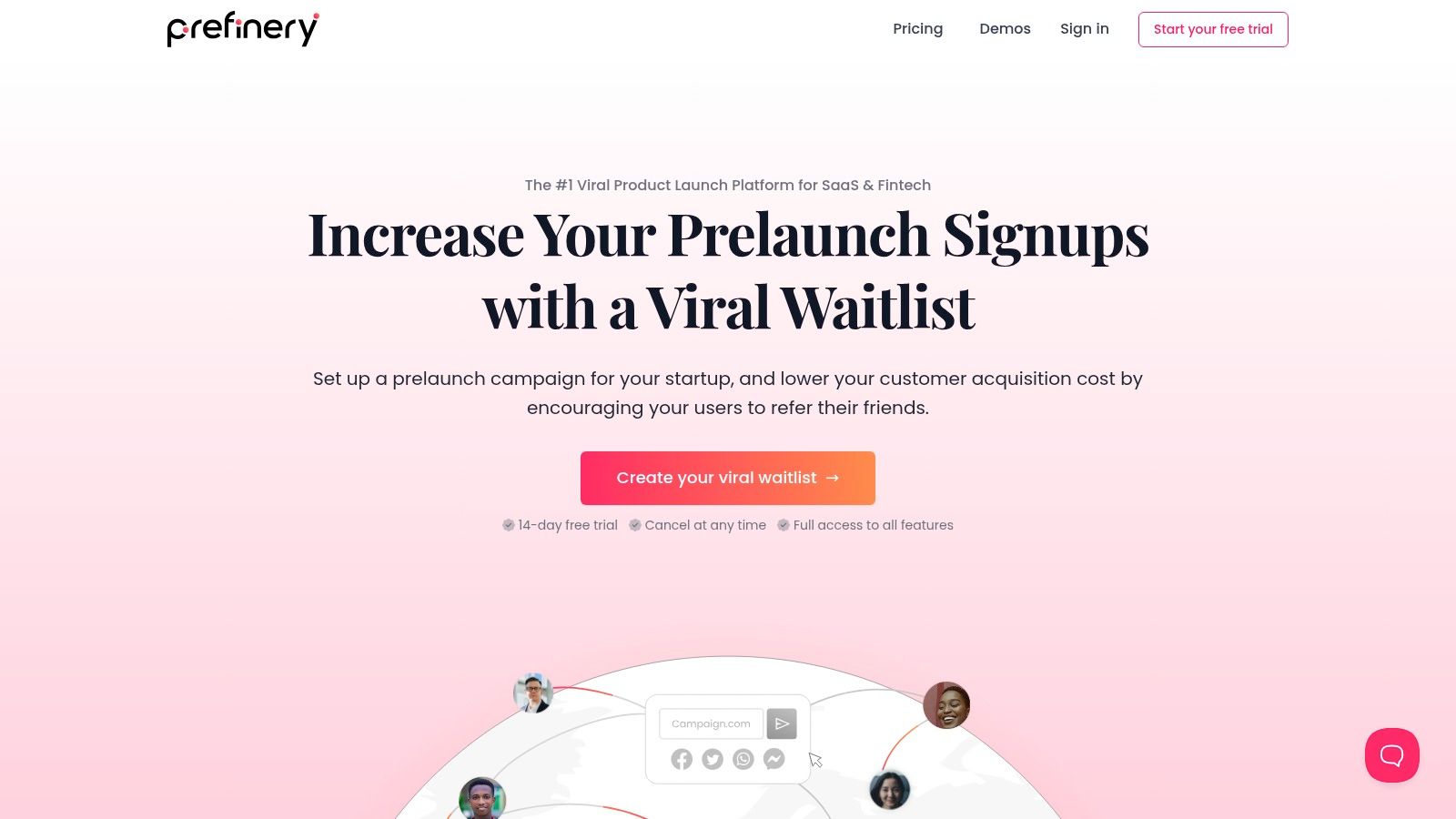
Its focus is purely on marketing and growth for prelaunch campaigns. The anti-fraud features and double opt-in are crucial for ensuring your list is full of legitimate, engaged community members rather than bots. The system is built for customization through its API and webhooks, giving dev teams the flexibility to integrate it into a broader Web3 stack.
Quick Look
- Best For: dApp launches and NFT projects wanting a traditional, viral referral system with milestone rewards.
- Key Feature: Highly customizable referral programs with gamified rewards and strong anti-fraud protection.
- Pricing: Starts at $49/month for up to 2,500 users.
- Vs. Domino: Prefinery is a powerful tool for standard viral marketing, while Domino integrates this with native Web3 actions like wallet connections and token-gated rewards.
- Implementation Tip: Use webhooks to trigger a Discord bot that automatically assigns a "Verified" role to users once they complete the double opt-in on your Prefinery waitlist.
11. Viral Loops
Viral Loops is a growth marketing classic that has become a go-to for launching products with a bang. While not a native Web3 tool, its template-driven approach makes it incredibly fast for setting up a prelaunch waitlist, especially its "Startup Prelaunch" and "Milestone Referral" templates. These are perfect for building hype and rewarding early community members with swag, allowlist spots, or other perks for bringing in new sign-ups.
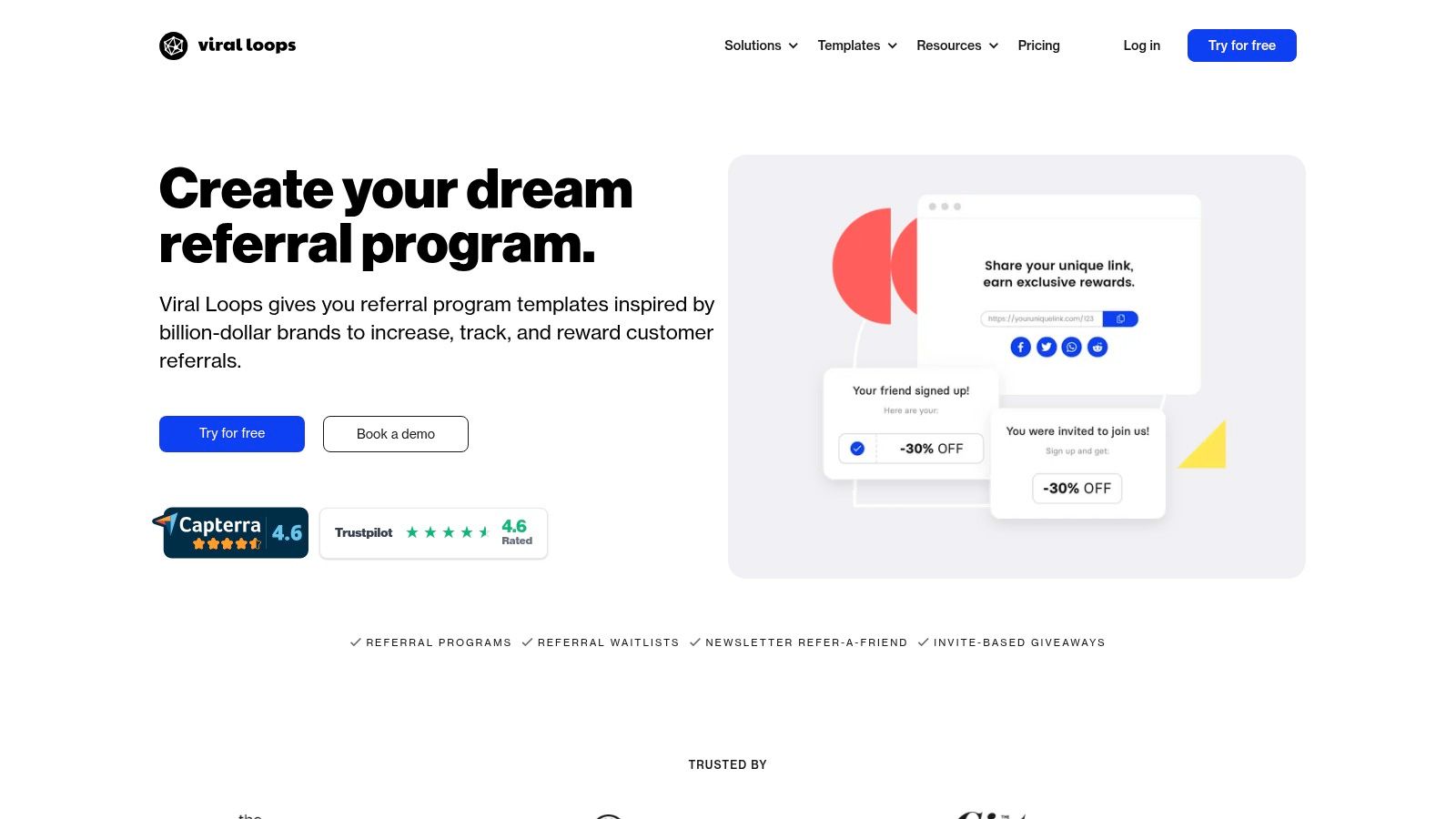
Its core strength is in creating powerful, multi-tiered referral loops that incentivize sharing. The platform also offers solid fraud detection to ensure your leaderboard isn't full of bots, and it integrates with marketing stacks like HubSpot, making it easy to nurture leads after they join your list. For a deeper dive, you can learn more about how to set up a powerful Web3 referral program.
Quick Look
- Best For: Web3 projects focused on rapid, referral-driven community growth before a token or product launch.
- Key Feature: No-code templates for milestone rewards and viral prelaunch campaigns.
- Pricing: Starts at $49/month for up to 1,000 participants. Higher tiers remove branding and add API access.
- Vs. Domino: Viral Loops is a generic growth tool with strong templates, while Domino is Web3-native, offering wallet sign-ups and token-gating out of the box.
- Implementation Tip: Use their API on a higher-tier plan to connect with a custom script that cross-references sign-up emails with wallet addresses from a community snapshot for exclusive rewards.
12. KickoffLabs
KickoffLabs is a veteran in the viral marketing space, offering a suite of tools perfect for creating landing pages and referral campaigns. While not Web3-native, its strength lies in its powerful leaderboard and "move-up-the-line" mechanics. It’s an excellent piece of waitlist software for projects that want to generate hype through traditional social sharing and email sign-ups before a token launch or platform release.
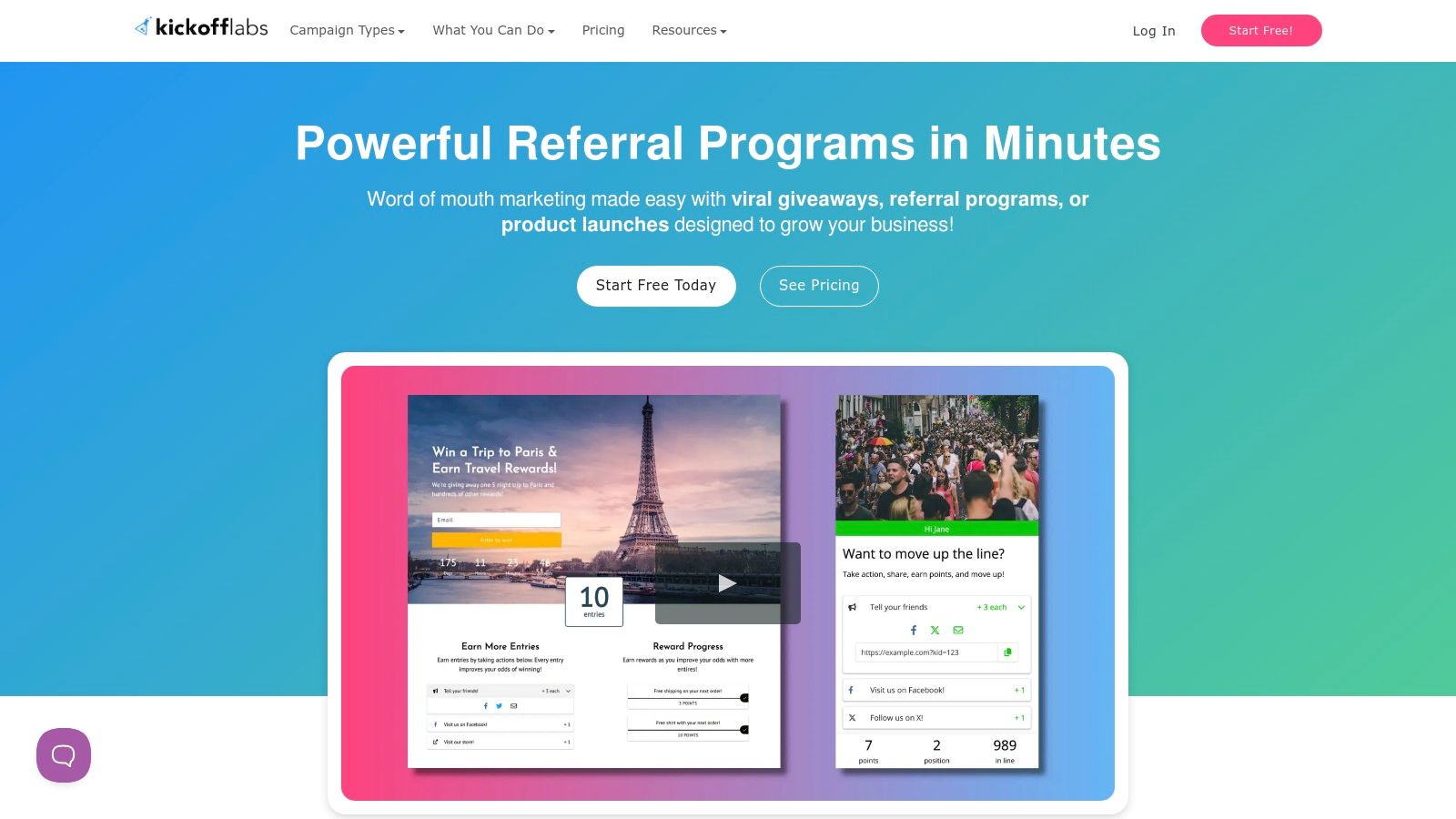
The platform makes it incredibly fast to spin up a prelaunch campaign with templates designed for conversion. Its fraud prevention is a key feature, helping ensure your leaderboard isn't dominated by bots, which is crucial for maintaining the integrity of your community-building efforts. You can learn more about how KickoffLabs supports the growth of your Web3 community here.
Quick Look
- Best For: Web3 projects focused on building a large pre-launch email list through viral referral mechanics.
- Key Feature: Robust leaderboard functionality with advanced fraud detection and prevention.
- Pricing: Starts at $29/month for up to 2,000 participants. Higher tiers unlock A/B testing and remove branding.
- Vs. Domino: KickoffLabs is a broad, powerful tool for general viral marketing, whereas Domino is purpose-built for Web3 with on-chain actions and wallet connectivity.
- Implementation Tip: Use their embeddable forms on your existing website and connect them to your Discord server via a tool like Zapier to automatically grant a "waitlist" role to new sign-ups.
Waitlist Software — 12-Platform Comparison
| Product | Target audience | Core features | Unique selling points | Pricing / Access |
|---|---|---|---|---|
| Waitwhile | Retail, services, healthcare, hospitality teams | Virtual waitlists & appointments, 2‑way SMS/email/web chat, kiosks, APIs | Flexible multi‑channel messaging; easy integrations | Free tier; visit‑based plans, SMS credits |
| Waitlist Me | Restaurants, salons, SMB venues | Text/call notifications, public waitlist page, kiosk, floorplans, reports | Extremely simple UI; transparent low pricing for SMBs | Low‑cost plans; per‑message costs beyond included |
| QLess | Government, healthcare, large venues | Mobile/web check‑in, real‑time wait forecasts, SMS workflows, kiosks, analytics | Proven at scale for high‑volume public sector deployments | Sales‑led enterprise pricing; heavier implementation |
| OpenTable for Restaurants | Restaurants wanting reservations + discovery | Online waitlist, customizable floorplans, guest CRM, marketplace distribution | Massive diner demand channel; mature FOH & POS integrations | Published plans; marketplace cover fees on some tiers |
| Resy OS | Upscale, trend‑driven restaurants | Waitlist & table management, CRM notes/tags, payments/ticketing add‑ons | Premium diner base in major cities; partner perks (AmEx/Square) | Sales‑led pricing |
| SevenRooms | Multi‑location restaurants, hotels, hospitality groups | Reservations, waitlist, 360° guest profiles, marketing automation | Deep CRM & marketing automation; enterprise multi‑location support | Sales‑led; typically higher than SMB tools |
| Toast Tables (Toast POS) | Restaurants already on Toast POS | Unlimited waitlist, real‑time table sync, guest profiles, Google bookings | Deep POS integration; flat monthly pricing (no per‑cover fees) | Flat monthly; best value for Toast customers |
| Yelp for Restaurants (Guest Manager + Yelp Host) | Restaurants seeking Yelp demand and automated calls | Live waitlist with SMS, AI phone agent, floor management, listing integration | Access to Yelp consumer demand; AI call handling | Guest Manager sales‑led; Yelp Host add‑on |
| Queue‑it | E‑commerce, ticketing, product drops, mints | Scheduled/FIFO waiting rooms, ETA/progress bars, anti‑bot & fairness controls, analytics | Purpose‑built for peak online traffic and fair queuing | Tiered plans incl. Starter; some implementation fees |
| Prefinery | SaaS & product prelaunch teams | Milestone/gamified waitlists, referrals, API/webhooks, embeds | Focused on prelaunch viral lists; developer‑friendly integrations | Paid plans with flexible overage model |
| Viral Loops | Startups & growth marketers | Prelaunch & milestone templates, fraud analysis, rewards, integrations | Fast to launch with templates; scales to large participant counts | Tiered plans; advanced features on higher tiers |
| KickoffLabs | SMBs and growth teams | Landing pages, referral leaderboards, fraud prevention, embeds | Quick setup for viral campaigns; clear analytics & SMB pricing | Tiered plans; branding removal on higher tiers |
Choosing Your Launchpad: From Simple Waitlist to Full-Scale Community Engine
And there you have it, a deep dive into the world of waitlist software. We’ve journeyed from traditional queue management systems like Waitwhile and Queue-it, which are great for high-traffic events, to the viral marketing powerhouses of Prefinery, Viral Loops, and KickoffLabs, designed to amplify your message. It’s clear that the right tool isn't just about collecting emails; it’s about crafting the perfect pre-launch experience for your audience.
For Web3 projects, this choice carries extra weight. A standard waitlist form feels disconnected from an ecosystem built on engagement and ownership. The real challenge is finding a solution that speaks the language of your community: wallets, tokens, on-chain actions, and integrations with platforms like Discord and Zealy. Bolting these Web3-native features onto a traditional platform often results in a clunky user experience and a missed opportunity to build genuine momentum.
Key Takeaways for Your Web3 Launch
As you decide on your platform, keep these core principles in mind:
- Focus on Engagement, Not Just Collection: A successful waitlist is an active community, not a passive list. Prioritize tools that let you incentivize actions, reward participation, and turn sign-ups into advocates before you even launch.
- Web3-Native is Non-Negotiable: Wallet connections and token-gated access are fundamental. If a tool doesn't support these out of the box, you’ll spend valuable time and resources building custom workarounds. Your waitlist software should feel like a natural extension of your dApp, not a separate marketing silo.
- Scalability Matters: Think about your goals. Are you expecting a massive airdrop event or a more curated, high-value community? A tool like Queue-it is built for massive traffic spikes, whereas a community-focused platform helps you nurture a smaller, more dedicated user base. For events or specialized experiences, exploring a simple guide to reservation software for events can provide additional perspective on managing guest flow.
Ultimately, your waitlist is the first promise you make to your future community. It sets the tone for everything that follows. Choosing the right software isn't just a technical decision; it's a strategic one that defines how you build, engage, and grow from day one. Don't just build a list; build a movement.
Ready to move beyond a simple form and build a true community engine? Domino is the all-in-one growth platform designed specifically for Web3. Transform your waitlist into an interactive, quest-based experience that drives engagement and prepares your community for a blockbuster launch. Check out Domino to see how it works.