How Do You Airdrop Tokens Without Any Code
So, you're thinking about how to airdrop tokens? It's one of the best ways to reward your community, and here's the kicker: you no longer need to be a developer to pull it off. With the right toolkit, you can plan and launch a crypto airdrop yourself, sending tokens to thousands of wallets in one go.
Your No-Code Airdrop Crash Course
Airdrops have come a long way from being simple marketing stunts. These days, they're a core part of building and growing a Web3 community. A well-planned airdrop isn't just about giving away free stuff; it’s a strategic move that can make or break a project.
And the scale can be massive. When Arbitrum did their airdrop in 2023, a staggering 42 million ARB tokens were claimed in the first hour. That’s the kind of buzz we're talking about.
What's The Real Goal Of An Airdrop?
At its heart, an airdrop is all about strategic distribution. It’s a way to get your token into the hands of the people who will actually value and use it. And you can do it all without writing a single line of code. If you're new to the concept, our guide on what is no-code development breaks down how it's all possible.
Most projects have one of a few key goals in mind:
- Rewarding Early Believers: There’s no better way to say "thank you" to the early supporters, beta testers, and OGs who stuck with you from the beginning.
- Decentralizing Ownership: Getting your token into as many different hands as possible is crucial. It prevents a small group from holding too much power and helps create a genuinely community-driven ecosystem.
- Generating Authentic Buzz: A well-executed airdrop gets people talking. It drives organic awareness and attracts new users far more effectively than most traditional marketing.
The best airdrops feel less like a giveaway and more like an invitation to become a true owner in the project's future. It’s about building a foundation of committed participants, not just speculators.
Airdrop Goal vs Airdrop Type
Matching your project's goals with the right kind of airdrop is crucial. This table shows common objectives and the airdrop strategies best suited to achieve them.
| Your Goal | Recommended Airdrop Type | Why It Works |
|---|---|---|
| Reward early community members | Retroactive Airdrop | You can analyze past on-chain activity (like using a testnet or interacting with a protocol) to find and reward your most loyal, long-term supporters. |
| Attract new users quickly | Standard or Holder Airdrop | This is the simplest way to get attention. By airdropping to holders of another popular token (e.g., ETH or SOL), you tap into a large, existing user base. |
| Incentivize specific behaviors | Task-Based Airdrop | Want people to use a new feature or join your Discord? Make it a requirement for the airdrop. It’s a direct way to drive the actions you want. |
| Fairly launch a new network | Genesis Airdrop | This distributes the initial token supply widely from day one, helping to establish a decentralized and community-owned foundation right from the start. |
Choosing the right strategy from the get-go ensures your airdrop doesn't just make a splash, but actually moves your project closer to its long-term vision.
Designing a Strategy That Actually Works
A successful airdrop isn't just about giving away free tokens; it’s a strategic move built on a solid plan. Before you even get to the "how," you need to lock down your "why." Seriously, what’s the end game here?
Are you trying to give a massive thank you to your earliest, most dedicated supporters? Or is the bigger picture about getting your token into as many hands as possible to build a truly decentralized network from day one? The goal you choose will steer every other decision you make down the line.
Think about it: rewarding loyalty means you’re focusing on your existing community. But if explosive growth is the target, you might be better off looking at users from a competitor’s platform.
Who Actually Gets Your Tokens?
Once your main objective is crystal clear, figuring out who to target becomes a whole lot easier. This is the part where you go from a vague idea to a specific list of wallet addresses. Who really deserves to get a piece of your project?
I’ve seen a few models work really well in the wild:
- Snapshot-Based Airdrops: You take a "snapshot" of the blockchain at a specific moment. Anyone holding a certain token or NFT at that time gets the drop. Simple and effective.
- Activity-Based Rewards: This is my personal favorite. You reward people for taking specific on-chain actions—like making a swap on your DEX, providing liquidity, or minting an NFT. It rewards genuine users, not just holders.
- Community Engagement: Don't forget off-chain! You can reward your most active Discord members or people who completed quests that show they're genuinely invested in what you're building.
We’ve seen some massive airdrops lately that really nailed this. Berachain, for instance, dropped a whopping 79 million BERA tokens on a mix of early testers, NFT holders, and dedicated community members. Kaito AI took a similar approach, targeting their Genesis NFT holders and key players from Binance's ecosystem. It just goes to show how you can blend tech adoption with real community building. You can find more examples of these 2025 crypto airdrops on ZebPay.
A well-defined audience is your best defense against "airdrop hunters"—those users who grab tokens just to dump them on the market. You want to attract long-term believers who will stick around and add real value.
Putting in this groundwork is what separates a launch that makes waves from one that fizzles out. It makes sure that when someone asks you about the mechanics of an airdrop, your answer starts with smart strategy, not just the technical details.
Setting Up Your Airdrop With Domino
Alright, you've got your strategy nailed down. Now it's time to put it into action, and thankfully, you won't need to write a single line of code. With Domino’s no-code toolkit, you can take your plan from a spreadsheet to a live airdrop campaign in just a few minutes.
This is where that list of wallet addresses you’ve carefully curated becomes the backbone of a real campaign. Everything is handled from a clean, simple dashboard, so you can stop worrying about the headaches of deploying and managing smart contracts yourself.
The first thing you’ll do is get your allowlist ready. This is nothing more than a simple CSV file with one wallet address per line. This list is your source of truth—it tells the system exactly who gets to claim your tokens.
Configuring Your Campaign Parameters
Once your allowlist is uploaded, you get to define the rules of the game. These settings are crucial for making sure the airdrop runs smoothly, fairly, and transparently for your entire community. Think of it as setting the guardrails for your token distribution.
Here are the main parameters you'll set:
- The Claim Window: You need to decide on the start and end dates for your airdrop. I’ve seen most projects run their campaigns for anywhere between 7 to 30 days. This gives everyone a reasonable amount of time to participate without leaving the claim open indefinitely.
- Token Allocation: This is where you specify how many tokens each wallet can claim. You might give everyone the same flat amount, or you could create different tiers based on how much they contributed or participated.
- Blockchain Network: Just pick the network you're on from a dropdown menu—whether it's Ethereum, Polygon, Base, or another chain Domino supports. The platform takes care of all the behind-the-scenes technical work for you.
Here’s a peek at the Domino interface where all this magic happens.
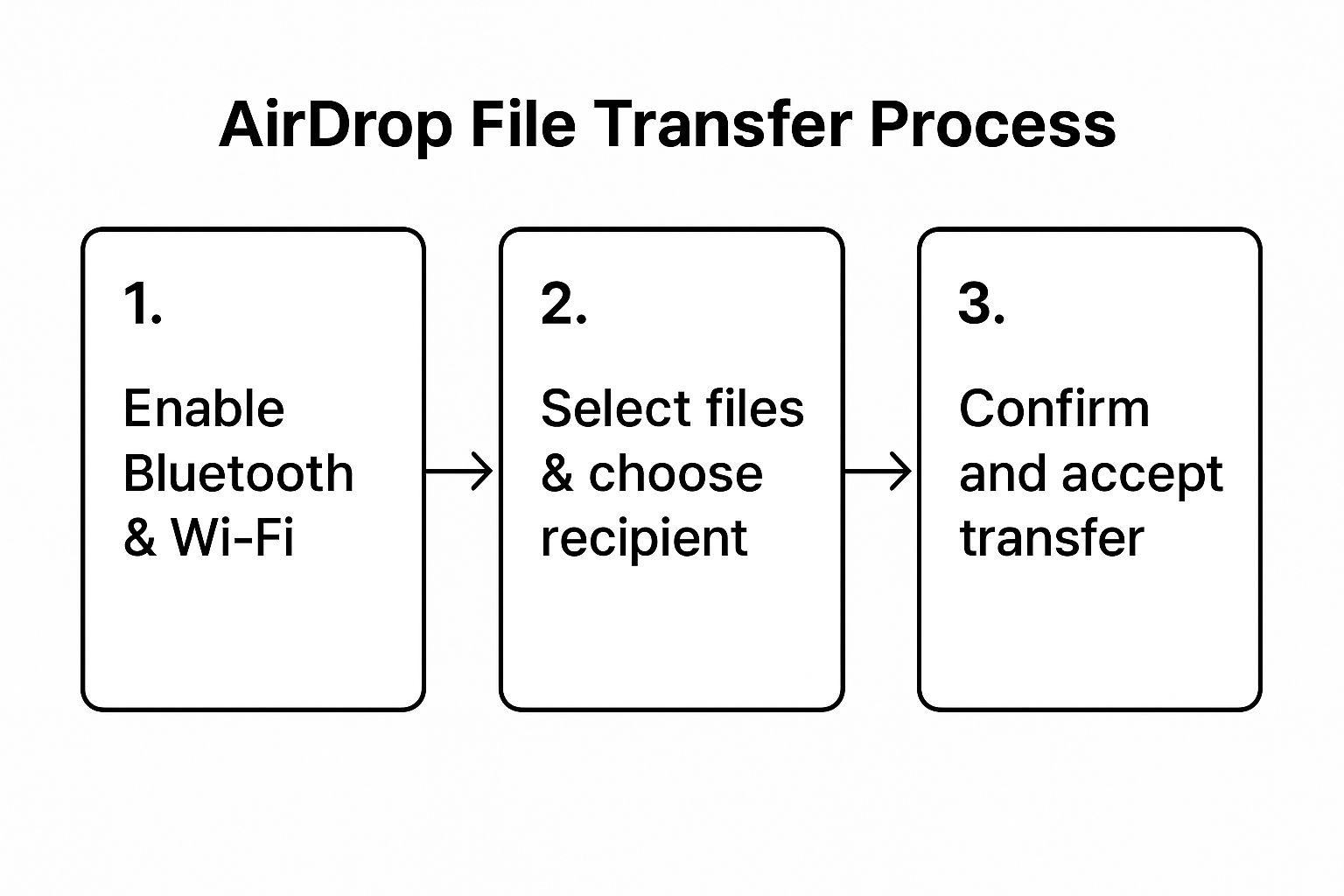
As you can see, it turns what would normally be a complex blockchain process into a set of straightforward form fields. You can easily double-check every detail before moving forward.
With these settings locked in, you’re just one final check away from launching.
Final Pre-Launch Checklist: Getting Ready for Liftoff
You wouldn't send a rocket to space without triple-checking every last bolt, and your airdrop is no different. This is your final chance to spot and squash any little bugs before they turn into major headaches post-launch. Trust me, rushing this part is a classic mistake you don't want to make.

Before you even think about going live, you need to lock down your recipient list. This means getting hands-on with essential data cleansing techniques to make sure every wallet address is correct. A clean, accurate allowlist is non-negotiable—it saves you from burning gas on failed transactions and guarantees your tokens land where they're supposed to.
The best way to do this? Run the whole thing on a testnet first. It's a complete dress rehearsal. You get to see the airdrop from your community's perspective, from connecting their wallet to seeing the tokens arrive. It’s a zero-risk way to confirm your allowlist is flawless and the claim process feels smooth.
Finalizing Your Launch Plan
Once you're satisfied with the mechanics, it’s time to prep for the main event. A great airdrop isn't just about a slick smart contract; it’s about clear, timely communication that builds confidence. A chaotic launch can undo months of goodwill in a matter of hours.
Here's what your final launch plan should nail down:
- Write the Announcement: Get your blog post or social media thread ready. It needs to be dead simple, explaining who is eligible, what they get, why they're getting it, and how to claim. Don't forget the claim dates and the only official link.
- Get the Claim Page Live: This is a breeze with Domino. The tool walks you through creating a secure, easy-to-use page where people can connect their wallets and get their tokens without any fuss.
- Be There for Launch: When you go live, be visible. Hang out in your Discord and Telegram for the first few hours. Answering questions and handling minor hiccups in real-time shows your community you're on top of your game.
A smooth launch is a massive trust signal. It proves your team is competent and that you respect your community's time and support. It transforms a simple token drop into a positive event that can build loyalty for years to come.
So, Your Airdrop Is Done. What Now?
Congratulations, the tokens are in the wild! But don't pop the champagne just yet. The real measure of a successful airdrop isn't the initial buzz—it's what happens in the weeks and months that follow. The real work is just beginning: turning those new token holders into committed, long-term community members.
This is your moment to prove the token has a real purpose. Your new holders are all wondering the same thing: "Okay, what can I do with this?" You need to have a solid answer ready to go, showing them this isn't just another speculative asset but a key that unlocks your entire ecosystem.
Don't Let the Hype Die Down
Your top priority is keeping that energy alive. A quiet community after an airdrop is a red flag, so you need to get people talking and, more importantly, doing.
Here are a few things you can do right away to keep the momentum going:
- Put the Token to Work, Fast: Give them something to do with their new tokens immediately. Think staking rewards, a vote on a fun community proposal, or access to an exclusive, token-gated channel on your Discord server.
- Share What's Next: Be crystal clear about your roadmap. What are you building? How will the token be integrated? Giving people a vision for the future gives them a reason to hold on.
- Set Clear Expectations: Tell your community exactly what’s happening next and be realistic about timelines. It’s always better to under-promise and over-deliver. That’s how you build real trust.
Airdrops are just the first step. To keep people interested, it's worth digging into proven member engagement strategies that can help build a genuinely active community.
Heads Up: Scammers love the confusion that follows an airdrop. They'll create fake support accounts and slide into DMs to "help." Get ahead of it by reminding your community that your team will never ask for private keys or send them links to "fix" a problem.
Finally, look at the data. What was your claim rate? How are people using the tokens on-chain? Every airdrop is a learning opportunity. Analyzing what worked (and what didn't) is key to building momentum for future campaigns and ensuring your next one is even bigger.
Common Airdrop Questions (And Real Answers)
Even with a no-code tool making things easier, a few questions always seem to pop up when you're planning an airdrop. Let's get these sorted out so you can feel good about your next steps.
What's This Airdrop Going to Cost Me?
Ah, the classic "it depends" question. But seriously, it really does. Your biggest variable cost will always be the blockchain gas fees, which can swing wildly depending on how busy the network is.
Think of it this way: sending tokens to 10,000 wallets during peak network congestion is going to be a lot pricier than sending to 500 wallets on a quiet Tuesday morning.
What you don't have to worry about with a tool like Domino is the massive upfront cost of hiring a developer to build a custom smart contract. That alone can save you thousands of dollars right out of the gate, leaving you with just the transaction fees for the drop itself.
Where Do I Find the Wallets to Airdrop To?
This is where your strategy from earlier really comes into play. You’re not just grabbing random addresses; you’re building a targeted "allowlist" based on the community you want to reward or attract.
So, where do you actually find these people?
- Go exploring. You can use a blockchain explorer like Etherscan to pull lists of who holds a specific token.
- Dig into the data. Tools like Dune Analytics are perfect for finding wallets that have taken specific actions, like interacting with a certain protocol.
- Ask your community. The most direct way is often the best. Collect addresses from your true fans through gated forms on platforms like Discord or Telegram.
Once you have your list, you just need to get it into a simple CSV file with one wallet address per line. That's it. If you want to get more granular on setting up your criteria, our guide on how you get airdrops breaks it down even further.
The two biggest things that can go wrong with an airdrop are technical bugs and security scams. A flaw in a custom contract can be catastrophic, and you can bet scammers will pop up with fake phishing links. Using a battle-tested no-code tool handles the tech risk, and clear, constant communication through your official channels is your best weapon against the scammers.
Ready to get your own airdrop off the ground without the technical drama? With Domino, you can set up and launch a secure, no-code airdrop in minutes. Start building your community today.