Top 12 Galxe Alternative Platforms for Web3 Marketers in 2025

Trying to grow a Web3 community feels like shouting into a hurricane. You’re fighting against bots, airdrop farmers, and the deafening noise of thousands of other projects. For a long time, Galxe was the go-to toolkit, a true pioneer for putting quest-based growth on the map. But as the space matures, the one-size-fits-all model is showing its cracks. Marketers and community managers are hitting a wall, searching for a Galxe alternative that offers more control, better bot filtering, or just doesn't require a developer on speed dial.
The core problem is simple: how do you scale real, authentic engagement without a huge budget or a dedicated engineering team? You need tools that are intuitive, powerful, and built for the specific challenges of Web3 growth, from running complex on-chain campaigns to simply verifying a retweet without letting in a thousand bots.
This guide is your shortcut to finding the perfect platform for your project's next growth phase. We've cut through the fluff to bring you a practical breakdown of the top 12 Galxe alternatives. Each option is analyzed based on:
- Ease of Use: How quickly can you get a campaign live?
- Verification Power: How well does it handle on-chain and off-chain tasks?
- Sybil Resistance: What tools does it offer to fight bots and farmers?
- Key Integrations: Does it play nice with Discord, Telegram, and other tools you already use?
Forget wading through marketing sites. Here, you'll find direct comparisons, screenshots, and honest assessments of each platform's strengths and weaknesses, so you can pick the right tool and get back to building your community.
1. Domino
Domino positions itself as a powerful, no-code Web3 community toolkit, making it a premier galxe alternative for teams that need to launch sophisticated campaigns quickly. It's built for marketers and community managers who want to drive measurable growth without relying on engineering resources. The platform's core strength lies in its ability to automate complex quest design and verification across multiple chains and platforms.
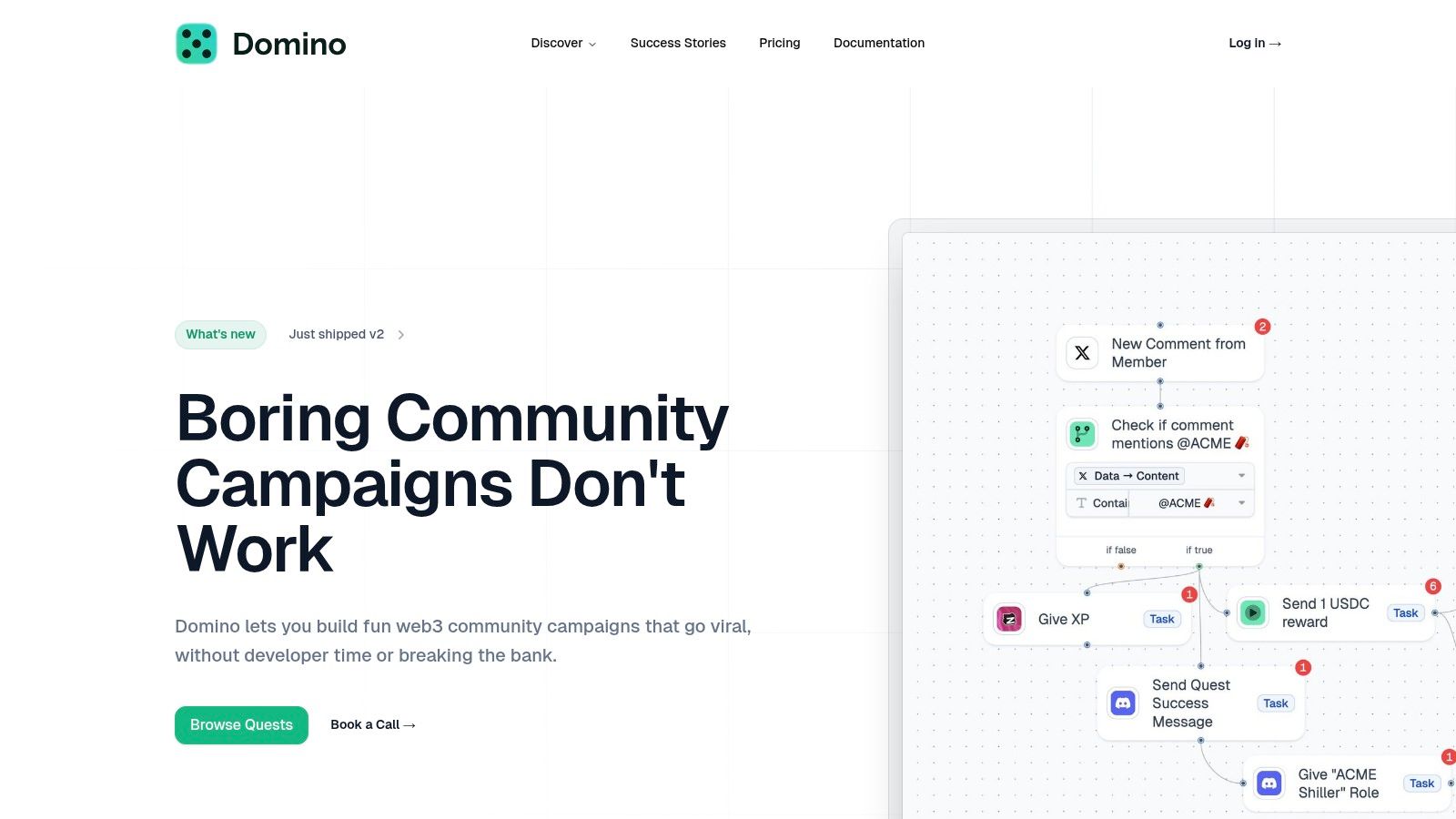
Trusted by over 65 Web3 teams like Solflare and Plena, Domino has powered more than 25 million quest completions. Its comprehensive feature set is designed to tackle the biggest challenges in Web3 marketing: user acquisition, engagement, and retention.
Key Strengths & Differentiators
What truly sets Domino apart is its combination of an extensive template library and advanced verification technology. This dual focus allows teams to deploy campaigns in minutes that would otherwise take weeks to build.
- Largest Quest Library: With over 130 ready-made templates, you can instantly create campaigns for user onboarding, social amplification, product testing, and on-chain actions. This significantly shortens the time from idea to launch.
- AI-Powered Verification: Domino uses AI to automatically verify user submissions, including tweets, screenshots, and even reactions. This drastically reduces the manual workload for community managers and helps prevent fraudulent activity.
- Advanced On-Chain Verification: It goes beyond simple wallet connections. Domino supports deep on-chain state verification across EVM, Cosmos, and Solana, allowing you to create quests based on specific NFT holdings, token staking, or contract interactions.
- Multi-Channel Deployment: Campaigns aren't siloed. You can deliver quests through various frontends, including Zealy, a white-label portal, Telegram, and Discord, meeting your community where they are most active. This is a key advantage for projects aiming for broad reach. You can learn more about how Domino fits into the ecosystem by exploring their insights on Web3 quest platforms.
Ideal Use Cases
Domino is best suited for growth-focused Web3 startups, DeFi protocols, and NFT projects that need a scalable, all-in-one solution. If your team needs to run high-volume campaigns that drive specific on-chain behaviors (like staking or minting) and amplify social presence simultaneously, Domino provides the necessary tools without requiring a single line of code.
Pricing and Access
Domino does not offer public pricing tiers. Instead, they focus on creating tailored plans based on a project's specific needs and scale. To get a quote and see a demo of the platform, you'll need to book a call with their team. This approach suggests a focus on more established projects or those with dedicated growth budgets, rather than a self-serve model for smaller teams.
Website: https://domino.run
2. Zealy (formerly Crew3)
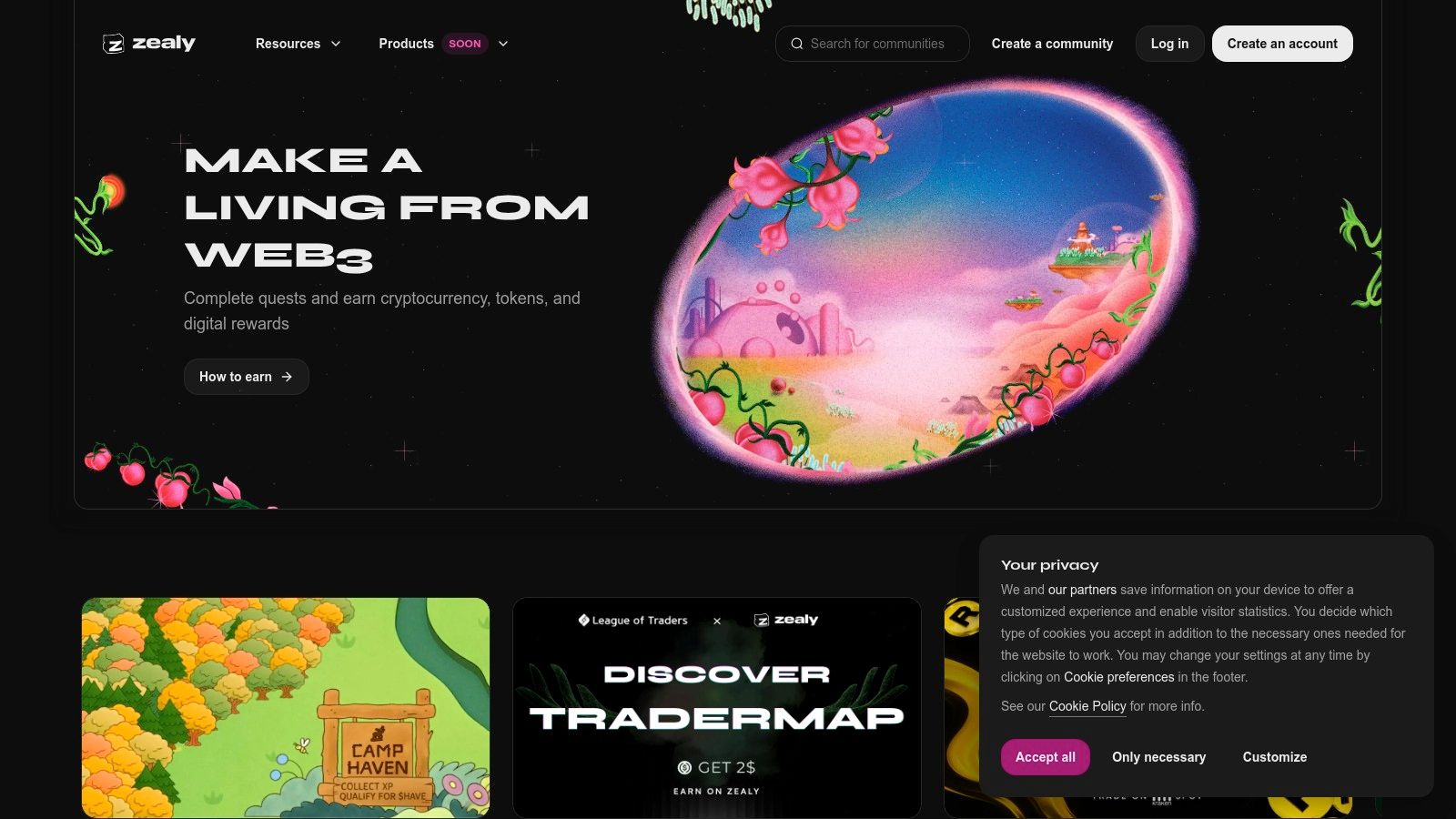
If you're looking for a Galxe alternative focused on rapid community activation and gamification, Zealy is a top contender. It excels at turning passive community members into active contributors through a system of quests, XP, and leaderboards. Projects can quickly spin up campaigns, or "sprints," that mix on-chain actions with social tasks like following on X or joining a Telegram group.
The platform's biggest strength is its massive, built-in user base. Zealy acts as a discovery hub where users actively seek out new projects to engage with, giving your campaign an immediate audience. This makes it ideal for short-term growth spurts, airdrop farming campaigns, and maintaining daily community engagement. For community managers, having robust Discord integration capabilities is essential, as much of Zealy's engagement is designed to drive activity back to servers like Discord.
Key Features & Use Cases
- Ideal Use Case: Running short-term, high-energy community growth "sprints" or ongoing engagement programs tied to a leaderboard.
- User Experience: The interface is clean and gamified, making it easy for users to jump in and start completing quests. For projects, the campaign setup is self-serve and straightforward.
- Pricing Model: It's free for users to participate. Projects can start on a free plan, with paid tiers unlocking features like advanced analytics, more admin seats, and API access.
- Unique Strength: The platform's powerful discovery engine and competitive "sprints" format make it a magnet for active Web3 users looking for the next big project.
While Zealy is fantastic for engagement, a potential downside is that many rewards are competitive, which might not suit campaigns aiming for broad, guaranteed participation. However, for driving hype and identifying your most dedicated community members, it's an incredibly effective tool. You can find out more details and see a walkthrough of the Zealy platform here.
Website: https://www.zealy.io
3. Layer3
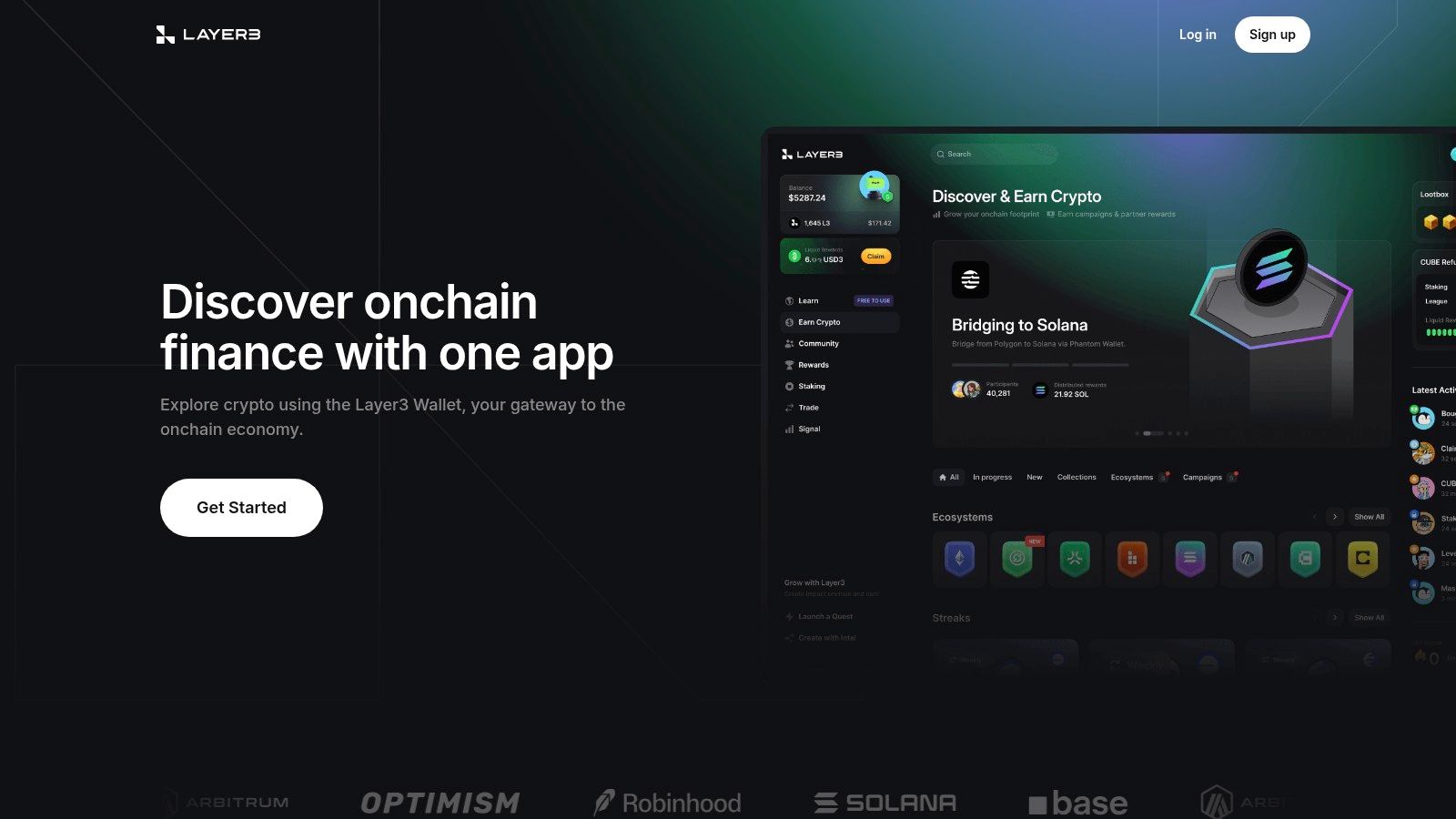
For projects prioritizing a polished user experience and deep technical integration, Layer3 stands out as a formidable Galxe alternative. It specializes in on-chain quests with high-quality UX, making it a favorite for protocols that want to guide users through complex product interactions. Its key differentiator is the robust developer tooling, including embeddable quest widgets and a Quest API that allow projects to bring the engagement experience directly into their own dApps.
This focus on integration means you can seamlessly guide users through actions without forcing them to leave your platform, significantly reducing friction. Layer3 also excels at multi-chain social activations and has leaned heavily into emerging platforms like Farcaster, offering Farcaster Frame support for feed-driven discovery. This makes it a powerful tool for growth and airdrop-aligned campaigns that demand both technical sophistication and a smooth user journey.
Key Features & Use Cases
- Ideal Use Case: Onboarding users to a dApp via embedded quests or running developer-centric campaigns using its API.
- User Experience: The interface is exceptionally clean and intuitive for end-users, while the developer tools (embeds/API) are well-documented for seamless integration.
- Pricing Model: It is free for users. For projects, access to the Quest API and deeper partnerships are typically arranged directly, suggesting a bespoke or enterprise-focused model.
- Unique Strength: The ability to embed quests directly within your own website or application. This powerful feature significantly shortens the user journey and boosts conversion rates for on-chain actions.
The main consideration with Layer3 is that some of its most powerful features, like the Quest API or inclusion in curated campaigns, may be reserved for official partners. While many quests are open, the platform feels more curated than a fully self-serve environment. However, for projects that can secure a partnership, Layer3 offers an unparalleled level of integration and user experience.
Website: https://layer3.xyz
4. RabbitHole / Quest Protocol
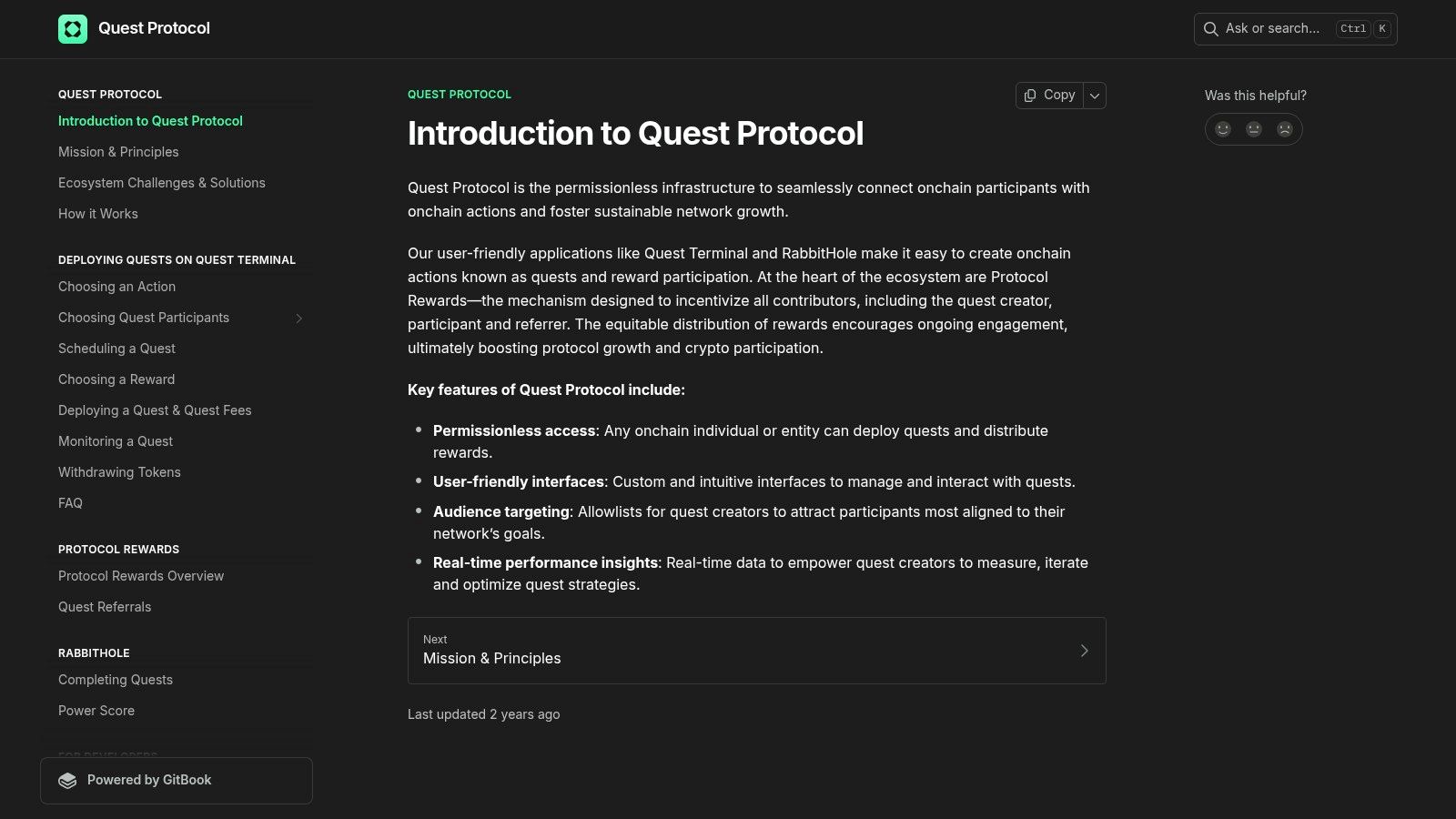
For projects prioritizing verifiable, on-chain actions, RabbitHole and its underlying Quest Protocol offer a powerful, permissionless infrastructure. This platform stands out as a Galxe alternative by focusing almost exclusively on rewarding users for completing genuine, on-chain tasks like swapping tokens, minting an NFT, or providing liquidity. It moves away from social engagement and zeros in on driving protocol usage.
The core of the platform is the Quest Protocol, which allows anyone to permissionlessly deploy quests and set rewards. This is ideal for developers and teams who want to create incentivized tutorials or stimulate specific network activities without a lengthy onboarding process. Its emphasis on on-chain data also provides creators with robust analytics and referral tracking to measure a campaign's direct impact on protocol growth. To learn how to integrate off-chain actions like Discord joins with on-chain quests, check out this guide on creating a Discord-gated quest.
Key Features & Use Cases
- Ideal Use Case: Driving specific, measurable on-chain user actions, such as boosting trading volume on a DEX or encouraging participation in a new protocol feature.
- User Experience: For users, it's a straightforward "do-this-get-that" experience. For creators, the permissionless nature is a major plus, though it requires more technical understanding than some competitors.
- Pricing Model: Creators pay gas fees to deploy quests and fund rewards. Users often pay a small on-chain claim fee to collect their earnings.
- Unique Strength: The infrastructure-first approach via Quest Protocol and its "Power Score" for sybil resistance allow for highly targeted and secure on-chain campaigns.
The main drawback is that RabbitHole's focus on purely on-chain activity may not suit campaigns aiming for broader social media growth. Additionally, the branding and app availability have shifted over time, which can create some initial confusion. However, for teams that need to prove product usage and reward genuine user behavior, RabbitHole's protocol-centric model is a perfect fit.
Website: https://help.rabbithole.gg
5. Intract
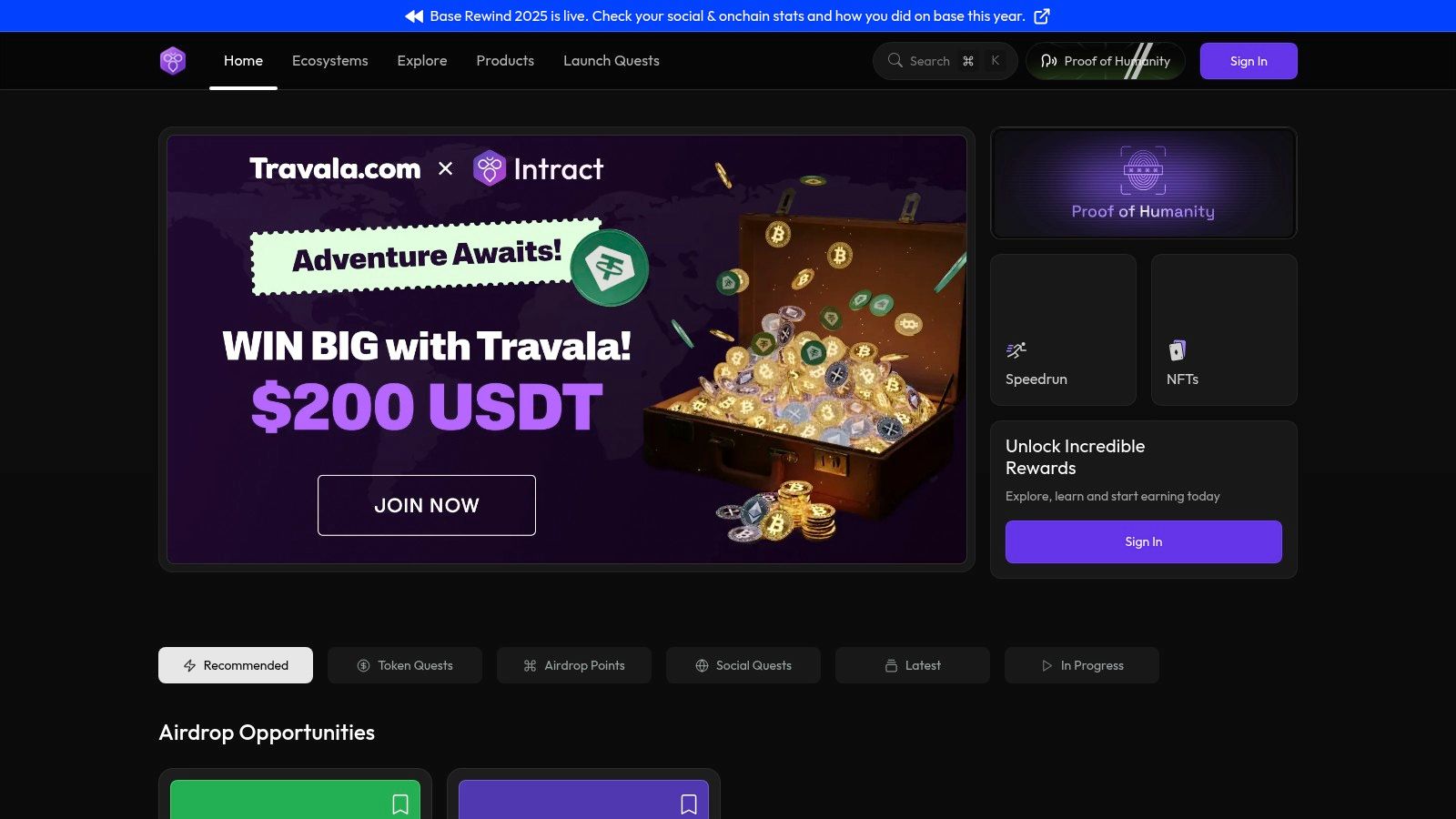
For projects prioritizing high-quality user acquisition and filtering out bots, Intract presents itself as a compelling Galxe alternative. Its core focus is on sybil resistance and proof-of-humanity, ensuring that the participants in your campaigns are genuine users, not automated scripts. This is achieved through sophisticated bot mitigation and human verification flows, making it ideal for airdrops or token-gated experiences where every participant counts.
Intract aims to provide higher-signal engagement by building tools for targeted incentive campaigns. It allows projects to create specific quests and verify on-chain actions while leveraging privacy-preserving claims to analyze user behavior without compromising data security. This focus on quality over sheer quantity makes it a strategic choice for projects building a sustainable, long-term community rather than just chasing vanity metrics.
Key Features & Use Cases
- Ideal Use Case: Running high-stakes airdrop campaigns or gated community programs where preventing sybil attacks and ensuring participant authenticity is the primary goal.
- User Experience: The platform is designed for both users seeking rewards and projects creating campaigns. For projects, the experience is more enterprise-focused, often involving direct contact for advanced features.
- Pricing Model: While users can participate for free, the platform is geared towards enterprise clients. Access to its advanced anti-sybil and targeting features typically requires contacting the sales team for a custom plan.
- Unique Strength: Its robust anti-sybil and human verification technology. This positioning helps projects attract higher-quality participants and generate more reliable data from their growth campaigns.
A potential drawback is that its enterprise focus can create a higher barrier to entry for smaller projects, as pricing and feature access aren't always transparently self-serve. However, for well-funded teams that need to guarantee the integrity of their user base from day one, Intract provides a powerful, specialized solution that many other platforms don't prioritize to the same degree.
Website: https://www.intract.io
6. QuestN (rebranded from Quest3)
QuestN stands out as a strong Galxe alternative for projects that prioritize data-driven growth and analytics alongside their campaigns. It blends quest creation with powerful user cohorting and performance dashboards, allowing teams to not only launch campaigns but also measure their true impact. With permissionless quest creation and a variety of templates, projects can quickly deploy multi-chain campaigns to a large, active user base.
The platform's key differentiator is its integrated growth analytics. Instead of just seeing task completions, you can analyze user behavior, track cohort performance, and gain deeper insights into your community's engagement patterns. This makes it particularly valuable for teams that want to optimize their marketing funnel and understand the long-term value of users acquired through quests.
Key Features & Use Cases
- Ideal Use Case: Running multi-chain user acquisition campaigns where tracking ROI and analyzing user cohorts is a primary goal.
- User Experience: The interface is clean and user-friendly for both participants and creators. The baked-in analytics dashboards provide valuable insights without needing a separate tool.
- Pricing Model: It is free for users to join quests. For projects, QuestN offers a free tier to get started, with paid plans that unlock advanced analytics, more campaign features, and priority support.
- Unique Strength: The native integration of powerful growth analytics and user cohorting tools sets it apart, making it a marketing and analytics hub, not just a quest platform.
While QuestN offers a massive reach, a potential downside is that the quality of campaigns can vary significantly since creation is permissionless. Additionally, some partner-run campaigns may have regional restrictions, limiting participation for a global audience. However, for teams focused on measurable growth, QuestN provides the tools to execute and analyze campaigns effectively.
Website: https://app.questn.com
7. TaskOn
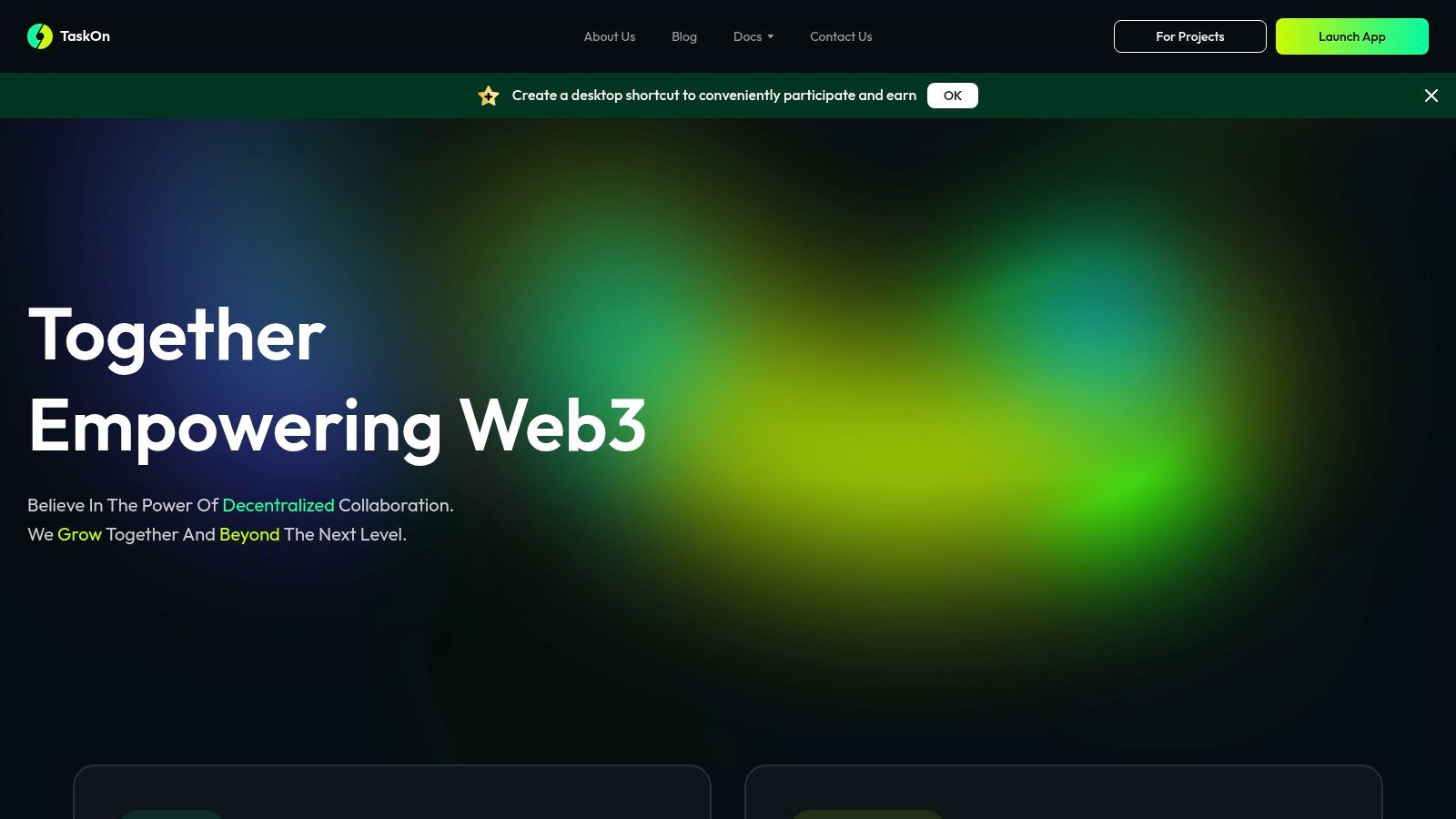
TaskOn positions itself as a versatile Galxe alternative that bridges the gap between quick, promotional quests and sustained, long-term community building. It empowers projects to launch campaigns with a mix of on-chain and social media tasks, verified automatically to ensure genuine participation. The platform is frequently used for collaborative partner events and seasonal campaigns, making it a hub for cross-community engagement.
A key draw for TaskOn is its clean user interface, which makes it incredibly simple for participants to discover and complete tasks. The platform's structure supports both one-off airdrop campaigns and the creation of dedicated community spaces with ongoing points systems and leaderboards, offering flexibility for different growth strategies. For projects, this means they can attract new users with prize pools while also nurturing a core group of dedicated followers over time.
Key Features & Use Cases
- Ideal Use Case: Running multi-project collaborative campaigns or building a long-term community hub with both short-term incentives and enduring loyalty mechanics.
- User Experience: Very straightforward for participants. The process of connecting a wallet, finding campaigns, and completing tasks is smooth and intuitive.
- Pricing Model: Free for users to join and participate in campaigns. Projects can launch campaigns with various models, often tying rewards to prize pools funded by the project itself.
- Unique Strength: The platform’s balance between short-term questing and long-term community infrastructure allows projects to capture initial hype and convert it into a sustainable following.
While TaskOn excels at user accessibility, campaign discovery can sometimes depend more on direct links or partner promotions rather than a centralized, powerful discovery engine. This means projects may need to put more effort into external marketing to drive traffic. However, for a platform that effectively handles both flash campaigns and community loyalty, it’s a strong contender.
Website: https://taskon.xyz
8. Guild.xyz
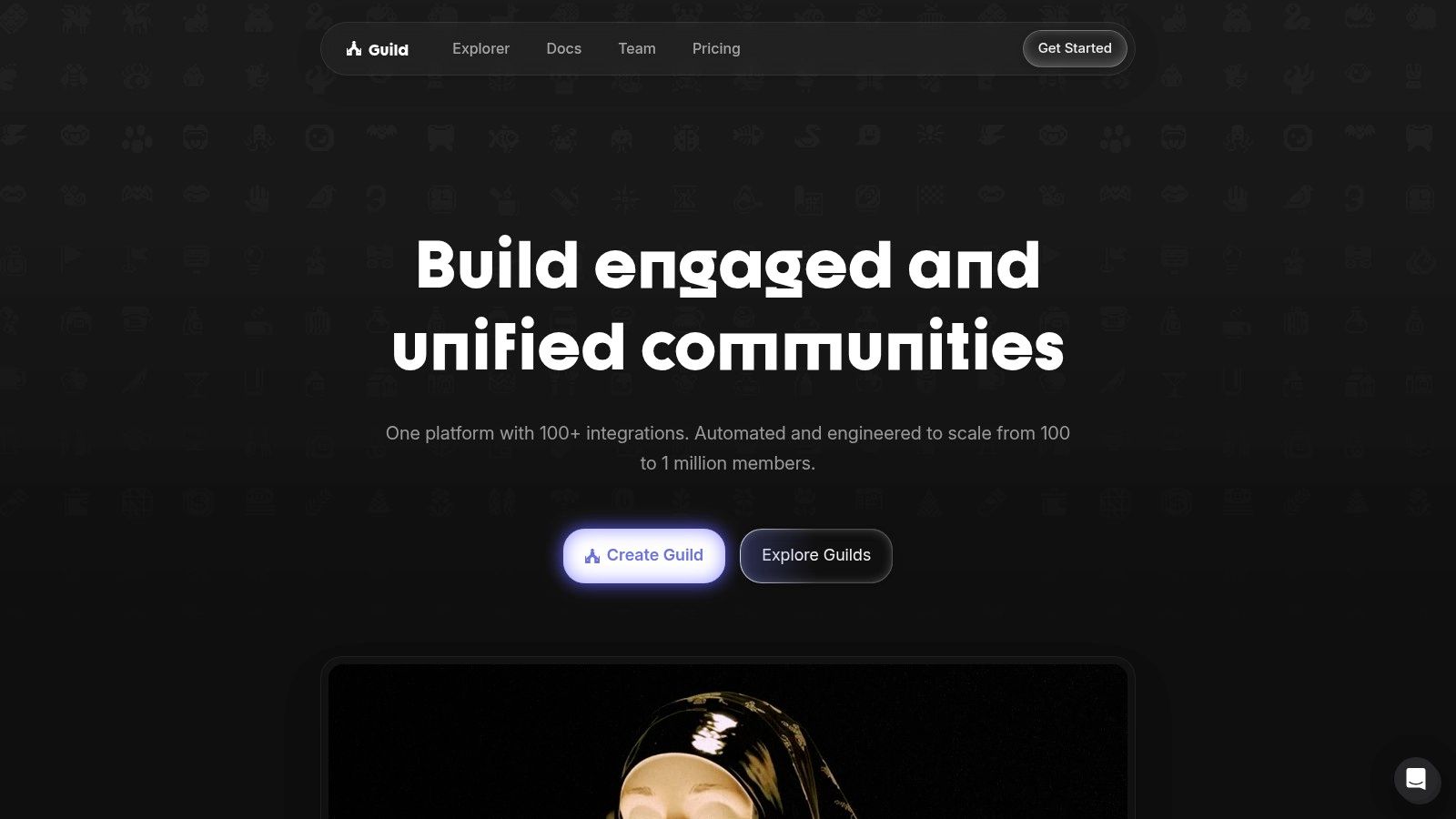
For projects focused on deep, long-term community building rather than just one-off campaigns, Guild.xyz is a powerful Galxe alternative. It specializes in creating holistic member journeys by tying on-chain actions and social tasks directly to roles and access within your core community hubs like Discord and Telegram. Instead of just completing quests for a single airdrop, users progress through community ranks, unlocking new channels and perks over time.
Guild’s strength lies in its robust token-gating and role management infrastructure. You can create intricate reward systems where members earn roles, NFTs, or special access by holding certain tokens, completing quests, or reaching milestones. This makes it perfect for fostering genuine loyalty and creating a clear progression path for your most dedicated supporters, moving them from passive observers to active contributors.
Key Features & Use Cases
- Ideal Use Case: Building sophisticated, ongoing loyalty programs with tiered roles and rewards that integrate deeply with your Discord or Telegram community.
- User Experience: The platform is clean and straightforward for both users and admins. Setting up a guild and its associated roles is intuitive, linking directly to your existing community servers.
- Pricing Model: Guild.xyz offers a generous free tier that covers many core features. Paid plans unlock advanced capabilities, more roles, and greater customization for growing communities.
- Unique Strength: Its unmatched integration with chat platforms like Discord and Telegram allows for automated role management based on on-chain data, creating a seamless link between a user's wallet activity and their community status.
The main consideration with Guild is that it's designed for continuous engagement, making it less suitable for short, explosive airdrop campaigns. However, for projects aiming to build a sustainable and deeply-integrated community with clear member progression, Guild.xyz provides a specialized and highly effective toolset.
Website: https://guild.xyz
9. DappRadar Quests
For projects prioritizing discovery above all else, integrating with DappRadar Quests is a compelling strategy. Instead of building an audience from scratch, you tap directly into the massive, high-intent user base of one of Web3's most established analytics and discovery platforms. This makes it an excellent Galxe alternative for getting your project in front of users actively searching for new dapps.
The platform centers around a seasonal Quests & Rewards system, where users complete a mix of on-chain and social tasks to earn XP and climb leaderboards for rewards. This structured, time-boxed format creates urgency and keeps engagement high. For projects, the process involves applying to have your quest featured, leveraging DappRadar's reach to drive traffic and user acquisition without needing to build your own questing infrastructure.
Key Features & Use Cases
- Ideal Use Case: Gaining exposure and driving user acquisition by tapping into a large, existing Web3 audience.
- User Experience: For users, it's a seamless part of the DappRadar ecosystem they already know. For projects, access is managed through an application process rather than being fully self-serve.
- Pricing Model: It's free for users to participate, though some quests offer exclusive benefits or access to DappRadar PRO members. Projects typically partner with DappRadar to be featured.
- Unique Strength: The ability to leverage DappRadar's immense organic traffic is its key differentiator, offering unparalleled discovery potential compared to standalone platforms.
The main consideration is that creator access isn't as open as on other platforms; you can't just sign up and launch a campaign. However, for projects that are accepted, the exposure can provide a significant boost in visibility and user engagement that is hard to replicate elsewhere.
Website: https://dappradar.com/quests
10. Magic Eden Rewards & Quests
For projects deeply embedded in the NFT ecosystem, especially on Solana, Polygon, and Bitcoin, Magic Eden's native rewards program presents a unique Galxe alternative. It's less of a standalone questing platform and more of an integrated loyalty and engagement engine built directly into a major marketplace. This system rewards users for on-platform activities like bidding, listing, and collecting, often combining these actions with partner-driven quests.
The primary advantage here is gaining exposure to an active, high-intent audience of NFT traders and collectors. Projects can partner with Magic Eden to create campaigns that directly incentivize marketplace interaction, driving volume and visibility. This is ideal for NFT launches, secondary market stimulation, or rewarding loyal holders through a framework that millions of users already engage with. The seasonal reward structure creates recurring hype cycles, keeping the community engaged over the long term.

Key Features & Use Cases
- Ideal Use Case: NFT projects looking to boost secondary market activity or reward their community for on-marketplace actions within the Magic Eden ecosystem.
- User Experience: The rewards hub is seamlessly integrated into the marketplace, making it easy for existing users to discover quests and track their progress. It feels like a natural part of the trading experience.
- Pricing Model: Participation is free for users. Projects typically engage through partnerships, with costs varying based on the campaign's scope and integration level.
- Unique Strength: Direct access and incentive alignment with one of the largest active NFT trader communities in Web3.
The main drawback is its closed-ecosystem nature; it’s primarily beneficial if your audience is already on or can be easily brought to Magic Eden. Additionally, rewards can sometimes depend on a combination of quest activity and staking the platform’s token, which can be a barrier for some users. However, for targeted NFT marketplace engagement, it’s a powerful, native solution.
Website: https://magiceden.io/rewards
11. PREMINT
For projects centered around NFT drops, PREMINT is a specialized Galxe alternative that has become the industry standard for managing allowlists. It's less about ongoing quests and more about creating a secure, fair, and organized system for granting collectors access to mint events. The platform excels at filtering out bots and ensuring that real community members get a chance to participate in high-demand launches.
PREMINT's core function is creating registration pages where users connect their wallets to prove they meet specific criteria, like holding a certain NFT or having a minimum ETH balance. This process is streamlined and trusted by a massive base of seasoned collectors. Projects use it to build hype, reward early supporters with guaranteed access, and run raffles for mint spots. Its focus on security, with wallet signing to prove ownership instead of requiring riskier transaction permissions, makes it a go-to tool for creator and collector safety.
Key Features & Use Cases
- Ideal Use Case: Managing allowlists, raffles, and guaranteed access spots for an upcoming NFT mint.
- User Experience: Simple and direct for both collectors and project managers. Collectors connect a wallet and register, while projects get a clean dashboard to set eligibility rules and export the final list.
- Pricing Model: Projects purchase a "Creator Key" to unlock features. There are different tiers based on project needs, while it remains free for collectors to register for lists.
- Unique Strength: Its established reputation and singular focus on anti-bot allowlist management have made it the most trusted platform for high-value NFT drops.
While PREMINT is unparalleled for its specific use case, it's not designed for the complex, multi-step campaigns that platforms like Galxe or Zealy facilitate. If your primary goal is creating a secure and verifiable access list for an NFT launch, PREMINT is the best in class.
Website: https://www.premint.xyz
12. Earn Alliance
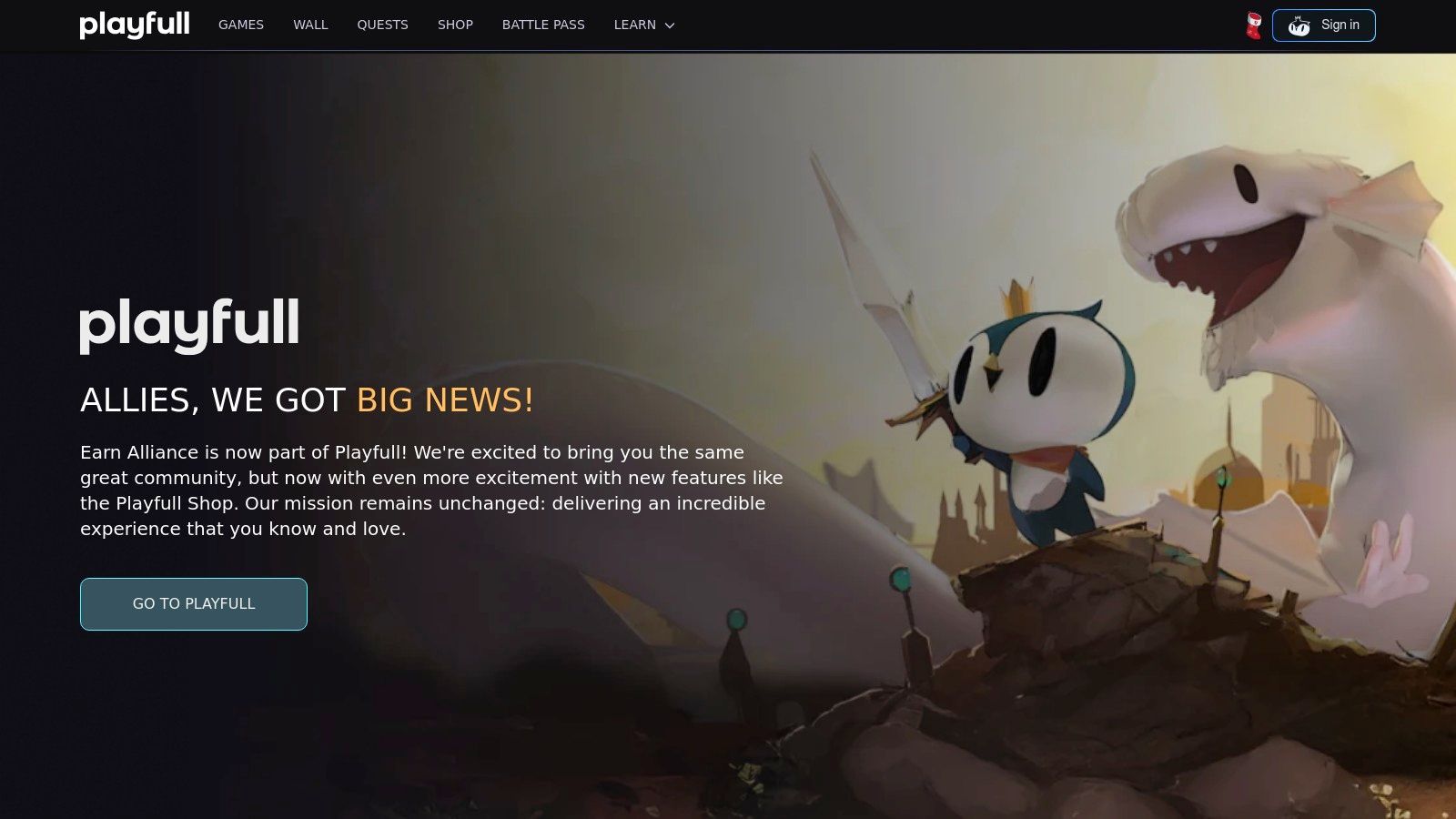
If your project lives and breathes Web3 gaming, Earn Alliance is a highly specialized Galxe alternative built for you. It functions as a game discovery platform and aggregator, pulling in gamers with quests, badges, and a seasonal "Ally Pass" that feels like a familiar battle-pass system. This platform is less about general protocol engagement and more about activating a dedicated gaming audience.
Projects can launch quests and mints directly within an ecosystem designed to attract and retain players. Its primary advantage is its massive, US-accessible user base that is specifically seeking new games to play and earn from. The platform’s mobile apps and cross-platform distribution further amplify reach, making it a powerful channel for game-centric campaigns that need to connect with an authentic player community.
Key Features & Use Cases
- Ideal Use Case: Launching game-specific quests, promoting NFT mints for game assets, or running a seasonal campaign to attract players.
- User Experience: The platform is heavily gamified and intuitive for players, featuring aggregated feeds and clear progression paths. For projects, it's a targeted environment for user acquisition.
- Pricing Model: Free for users to participate. Projects engage through partnerships, with campaign costs and structures varying based on scope and collaboration terms.
- Unique Strength: Its singular focus on the Web3 gaming niche. Unlike broader platforms, the audience here is pre-qualified and actively looking for gaming experiences.
The main drawback is its specialization; if your protocol isn't game-related, this platform won't be a good fit. Reward mechanics can also vary significantly between partner campaigns, which might affect user expectations. However, for Web3 games aiming for discovery and engagement from a core gaming demographic, Earn Alliance is an essential tool.
Website: https://earnalliance.com
Galxe Alternatives — Top 12 Feature Comparison
| Platform | Key features | UX & scale | USP / Value | Target audience | Pricing / access |
|---|---|---|---|---|---|
| Domino | 130+ quest templates; multi-frontend (Zealy, white-label, Telegram, Discord); cross-chain verification; AI submission review; 40+ integrations | 25M+ completed quests, 13K+ campaigns; fast no-code launches; AI reduces manual review | No-code, AI-powered verification + largest quest library; advanced on-chain checks & viral raid tools | Blockchain startups, NFT projects, DeFi protocols, DAOs, marketing teams | Custom pricing; demo/call required |
| Zealy (formerly Crew3) | Campaign hubs, XP, leaderboards, Web2 & Web3 tasks | Large user base and discovery; quick campaign setup | Strong discovery + fast, flexible missions | Projects seeking social discovery and community sprints | Self-serve; free for users (freemium) |
| Layer3 | Embeddable quest widgets; Quest API; multi-chain social activations | Polished UX; developer-friendly embeds and APIs | Embeds & API-first tooling for in-app quests | Teams needing developer tooling and embedable quests | Varies; some partner-only features |
| RabbitHole / Quest Protocol | Permissionless quest deployment; on-chain verification; Power Score; referrals | Infrastructure-first; good creator docs; frontend availability can vary | Permissionless on-chain verification with sybil-resistance tooling | Developers, protocols and creators focused on on-chain actions | On-chain claim fees and variable costs |
| Intract | Bot/sybil mitigation; proof-of-human flows; privacy-preserving on-chain claims | High-signal participant flows; anti-bot verification UX | Strong anti-sybil / proof-of-human & privacy-preserving verification | Projects needing high-signal users and privacy-preserving checks | Enterprise-focused; contact sales |
| QuestN (Quest3) | Quest templates; permissionless activities; growth analytics & cohorting; multi-chain | Analytics-first creator views; many live quests | Built-in analytics + permissionless quest creation | Projects wanting campaign analytics and cohorting | Varies; self-serve / app access |
| TaskOn | On-chain & social verification; community hubs; seasonal prize pools | Frequent partner/seasonal campaigns; simple participant UX | Easy participant experience for events and seasonal campaigns | Partner events, seasonal promotions, communities | Varies by campaign |
| Guild.xyz | Quests, scoring, leaderboards; NFT drops; deep Discord/Telegram integrations | Strong chat integrations; generous free tier; ongoing progression UX | Member journey tooling, token-gating and role-based rewards | Communities wanting loyalty tracks and gated access | Multiple pricing tiers; free tier available |
| DappRadar Quests | Seasonal quests, leaderboards, mix of on-chain & social tasks | Strong discovery from DappRadar traffic; seasonal cadence | High discovery and seasonal reward structures | Projects seeking dapp/marketplace discovery | Project application required; some PRO gates |
| Magic Eden Rewards & Quests | Marketplace-tied quests; staking $ME; seasonal leaderboards | Large marketplace exposure; frequent partner campaigns | Marketplace audience + $ME reward seasons | NFT projects wanting marketplace visibility and collectors | Staking + activity often required; seasonal rules |
| PREMINT | Allowlist creation; anti-bot measures; collector discovery | Trusted for mint access and allowlists | Proven anti-bot allowlists and collector reach | NFT projects requiring secure allowlists for mints | Varies by project; platform access options |
| Earn Alliance | Quest & badge campaigns; “Ally Pass” progression; mobile apps | Strong gaming niche UX; high gamer user counts | Game-focused progression and aggregated game feeds | Web3 games, gamer-targeted campaigns and mobile users | Varies; partner-based campaign terms |
Your Next Move: How to Choose and Migrate to a New Quest Platform
Alright, we’ve just navigated the packed landscape of Web3 questing platforms. From the all-in-one automation power of Domino to the gamified community vibes of Zealy and the DeFi-native deep dives on Layer3, it’s clear the world of Web3 growth is much bigger than a single tool. The key takeaway? There is no single "best" platform, only the best galxe alternative for your specific goals, budget, and community.
Choosing the right partner for your growth campaigns isn't just about features; it's a strategic decision that impacts your team's efficiency, your community's engagement, and ultimately, your project's bottom line. The right platform can transform manual, time-sucking tasks into a streamlined, automated engine for user acquisition and retention. The wrong one can lead to community burnout, engineering headaches, and wasted marketing spend.
The goal is to find a tool that feels less like a chore and more like a superpower for your team. So, how do you make the final call and ensure a smooth transition?
A Simple 3-Step Plan to Make Your Move
Switching platforms can feel daunting, but breaking it down into manageable steps makes it a breeze. Don't just jump ship; plan your voyage.
Audit Your Current Needs (And Pains): Before you even look at another dashboard, look inward. What are your primary goals right now? Are you trying to pump up your Discord numbers, drive on-chain transactions for a new feature, or qualify genuine users for an airdrop? Be brutally honest about what isn't working with your current setup. Is it the clunky UI? The lack of reliable verification? The high fees? Your answers will create a scorecard to measure each potential galxe alternative against.
Run a Small Pilot Campaign: Never commit to a full migration without a test drive. Pick your top contender (or two) and design a small, low-stakes quest. This could be a simple "Follow us on Twitter and join our Telegram" campaign. This pilot will reveal everything the feature list won't: the actual user experience, the admin workflow, how intuitive the quest builder is, and how responsive their support team is. It's a low-risk way to get high-value insights.
Communicate the "Why" to Your Community: Once you've chosen your new home, frame the move as an upgrade for your community. Don't just announce a new link; explain the benefits. "We're moving our quests to Platform X to bring you instant reward distribution!" or "Our new quests on Platform Y will have more exciting and diverse on-chain actions!" This transparency builds trust and gets your members excited for what’s next, ensuring they make the move with you.
Final Factors to Weigh Before You Leap
As you finalize your decision, keep a few critical factors in mind. Consider the total cost of ownership, not just the subscription price. Factor in the time your team will save with automation and better analytics. Beyond engagement metrics, a critical factor in platform selection is the overall efficiency in acquiring new users. Understanding your customer acquisition cost will help you evaluate if a platform's fees and features truly provide a positive return on investment.
Think about scalability. A tool that works for your first 1,000 users might buckle under the pressure of 100,000. Look for platforms like Domino that are built for growth, offering robust infrastructure and automation that can handle massive, multi-chain campaigns without breaking a sweat.
Ultimately, the Web3 growth stack is constantly evolving. The platforms we covered today are at the forefront of that evolution, giving projects unprecedented power to build, engage, and reward their communities. Stepping away from a familiar tool can be the catalyst for unlocking massive gains in efficiency and user loyalty. Now is the time to choose the right partner for your journey.
Ready to stop wrestling with clunky tools and start automating your growth? Domino is the powerful, no-code galxe alternative built for teams that value efficiency and robust, multi-chain verification. See how you can build, automate, and scale your quest campaigns in minutes by checking out Domino.