The 12 Best Customer Reward Program Software Options for 2026
Trying to turn one-time customers into loyal advocates? It’s a common challenge. In a competitive market, a killer rewards program is more than just a bonus feature; it's a core part of your growth strategy. But with a sea of options out there, from simple Shopify plugins to complex enterprise systems and emerging Web3 platforms, choosing the right customer reward program software can feel like a shot in the dark.
This guide is designed to give you clarity. We're cutting through the marketing jargon to give you a straightforward breakdown of the top 12 platforms available today. We'll dive deep into the tools that can truly move the needle for your business, whether you're in e-commerce, SaaS, or navigating the unique challenges of a Web3 project.
You won't find generic feature lists here. Instead, we're focusing on what really matters for implementation and results:
- Core reward mechanics: What can you actually build with it?
- Key integrations: Does it play nice with your existing tech stack (from Shopify to on-chain wallets)?
- Real-world use cases: Who is this platform really for?
- Honest pricing analysis: What will it actually cost you to get started and scale?
Each review includes direct links and screenshots to give you a clear picture of the user experience. By the end of this list, you'll have a clear understanding of which software fits your specific needs, helping you find the perfect engine to drive engagement and long-term customer loyalty. Let's get started.
1. Domino
Best for: No-Code Web3 Community Growth
Domino stands out as a powerful, no-code toolkit specifically engineered for Web3 marketers and community builders who need to launch sophisticated incentive programs without touching a line of code. It masterfully bridges on-chain and off-chain activities, allowing you to create comprehensive "quests" that reward users for genuine engagement. Imagine rewarding a user for holding a specific NFT, swapping a token on a DEX, and then sharing your project's announcement on X (formerly Twitter), all within a single, automated campaign.
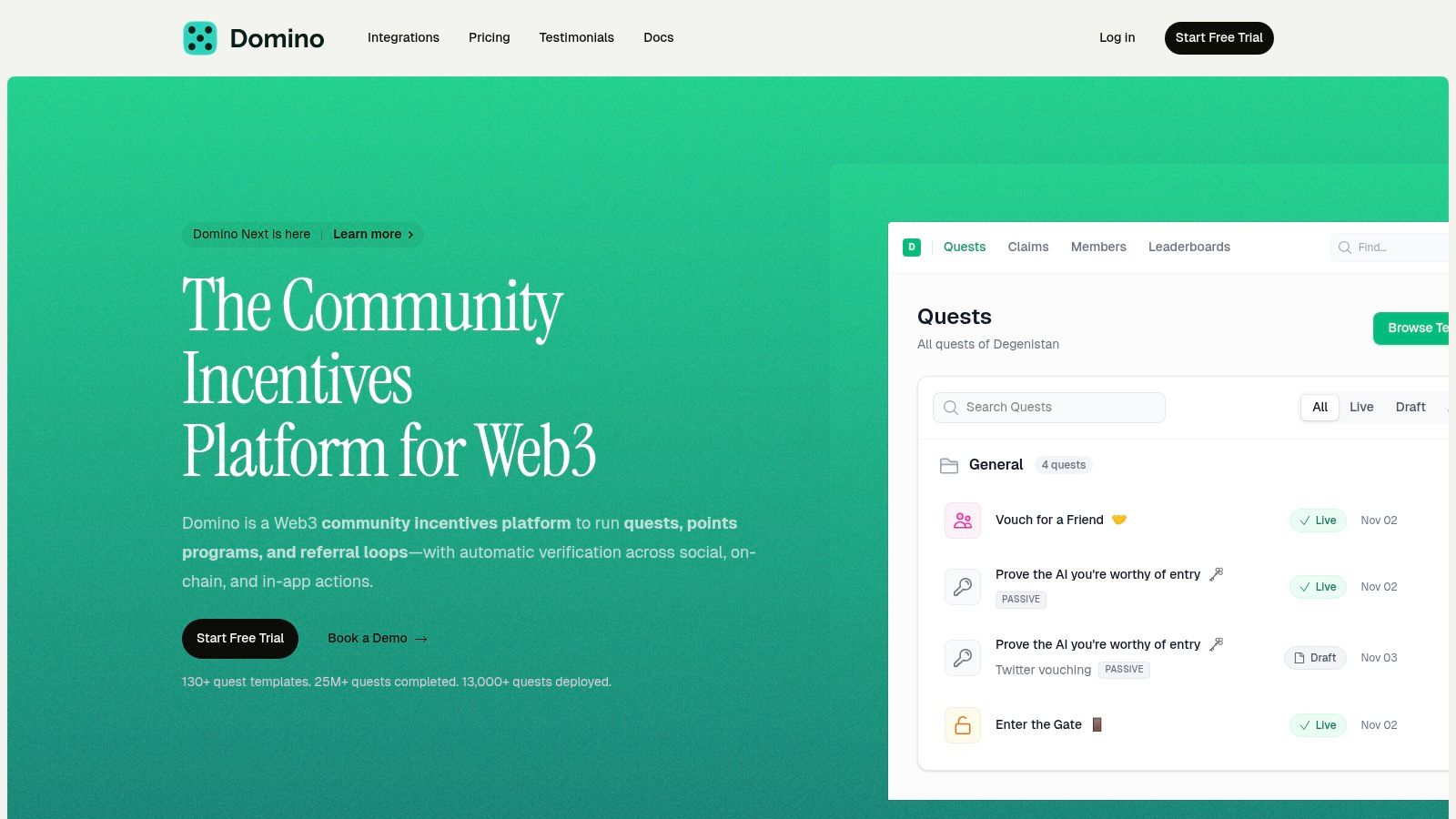
What sets Domino apart is its focus on automation and scalability, making it an exceptional piece of customer reward program software for the fast-paced Web3 ecosystem. Its AI-powered verification engine automatically confirms task completion across social platforms, wallet interactions, and even custom in-app actions via API. This eliminates the massive operational headache of manual review, reduces fraud, and ensures your community gets rewarded instantly.
Core Strengths and Use Cases
Domino's architecture is built for speed and flexibility. With over 130 quest templates, you can launch a campaign in minutes, not weeks. It supports multi-channel deployment, so you can embed your quests directly in a white-label portal, Zealy, Telegram, or Discord, meeting your community where they already are.
- Real-World Impact: Projects using Domino report significant lifts in key metrics. For example, Solflare achieved a +147% increase in user retention, while others commonly see 20-30% boosts in active users.
- Web3 Native: It offers native on-chain verification for EVM chains, Solana, and even newer ecosystems like Cosmos and Bitcoin, making it a truly chain-agnostic solution.
- Proven at Scale: The platform has processed over 25 million quests for top-tier projects like Solana ID and OmniEnterprise, handling peaks of 100,000+ completions a day with 99.9% uptime. This is enterprise-grade reliability for any project size.
Pricing and Key Considerations
Domino’s pricing is transparent and designed to grow with you. The Self-serve plan starts at a very accessible $99/month, which includes support for up to 500 Monthly Active Community Members (MACMs). As your program scales, Pro and Enterprise plans offer white-glove support, custom architecture, and higher MACM limits.
One key strategic choice is that Domino keeps points off-chain. This is a massive advantage for program flexibility, allowing you to tweak rewards and rules without costly smart contract redeployments. However, if your program absolutely requires points to be tokenized on-chain as the primary ledger, you may need a different solution.
- Pros:
- Rapid Deployment: Launch campaigns in minutes with 130+ templates.
- Automated Verification: AI-powered validation saves countless hours of manual work.
- Multi-Channel & Multi-Chain: Integrates with your existing community platforms and supports major blockchains.
- Built for Scale: Proven infrastructure that handles massive user volume.
- Cons:
- Off-Chain Points: Points are managed off-chain, which might not suit projects needing a token-native points system.
- Usage-Based Costs: Pricing scales with active community members, which could become a significant expense for very large communities.
Website: https://domino.run
2. Smile.io
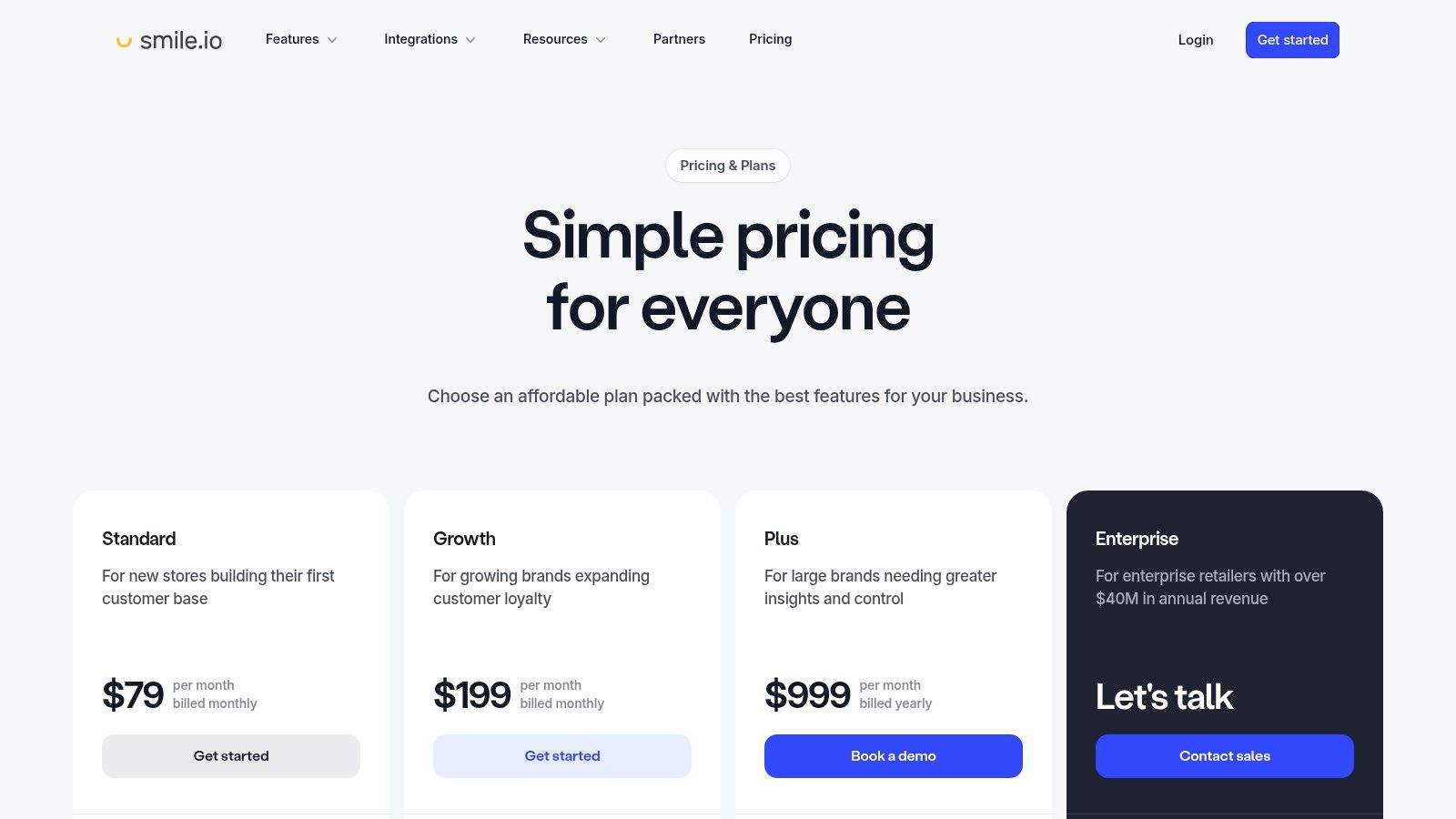
Smile.io is the go-to customer reward program software for direct-to-consumer (DTC) brands running on Shopify, BigCommerce, or Wix. Its biggest draw is speed. You can get a robust points, referral, and VIP program live in minutes, not weeks, thanks to its turnkey setup and clean on-site widgets. It’s built for ecommerce brands that need a quick, effective loyalty solution without a heavy technical lift.
For brands just starting out, Smile.io offers a free plan that supports up to 200 monthly orders, making it accessible for new stores. The platform’s user experience is incredibly straightforward, both for the merchant setting it up and the customer interacting with the loyalty widget on the storefront. This simplicity helps drive adoption and makes managing the program a breeze.
Core Features & Use Case
Smile.io focuses on three core loyalty pillars: points for purchases and actions, a referral program to drive word-of-mouth growth, and VIP tiers to reward your best customers. It excels at on-site engagement with "Nudges," which are pop-ups that remind customers of their points and rewards. While it doesn't have the on-chain capabilities of Web3-native platforms, it's a solid choice for adding simple gamification to your loyalty program.
Best for: DTC ecommerce brands on Shopify or BigCommerce looking for a fast, plug-and-play loyalty and referral system.
- Pros: Extremely easy to set up, transparent pricing with a free tier, and a huge ecosystem of app integrations.
- Cons: Pricing is tied to monthly order volume, which can get expensive as you scale. Advanced analytics and customizations are locked behind higher-priced plans.
- Website: Smile.io
3. LoyaltyLion
LoyaltyLion offers a powerful and data-driven customer reward program software primarily for fast-growing ecommerce merchants on Shopify, Shopify Plus, and BigCommerce. It stands out by going beyond basic points and rewards, focusing on building deeper emotional connections between customers and brands. The platform provides a more hands-on, consultative onboarding experience, helping you design a loyalty program that aligns perfectly with your marketing goals.
It’s designed for merchants who want to leverage loyalty data to personalize their marketing efforts across other channels. With deep integrations into email service providers like Klaviyo and SMS platforms like Attentive, LoyaltyLion enables you to trigger automated flows based on loyalty activities, such as a customer's VIP tier or points balance. This makes it a great tool for creating a more cohesive and engaging customer journey.
Core Features & Use Case
LoyaltyLion’s platform is built around points, referrals, and tiered VIP programs, but its strength lies in customization and data integration. You can create a fully branded, integrated loyalty page and widget that feels native to your store. It supports a wide range of earning rules, including on-site activities and social media engagement, and its support for Shopify POS makes it ideal for brands with both online and physical retail locations.
Best for: Scaling ecommerce brands that need a data-rich loyalty platform with robust integrations for email, SMS, and other marketing tools.
- Pros: Hands-on onboarding support, rich ecommerce integrations (especially Klaviyo), and multilingual support for global stores.
- Cons: Pricing becomes contact-sales for Advanced/Plus plans, and the cost is tied to monthly order volume, which can be a significant investment.
- Website: LoyaltyLion
4. Yotpo Loyalty & Referrals
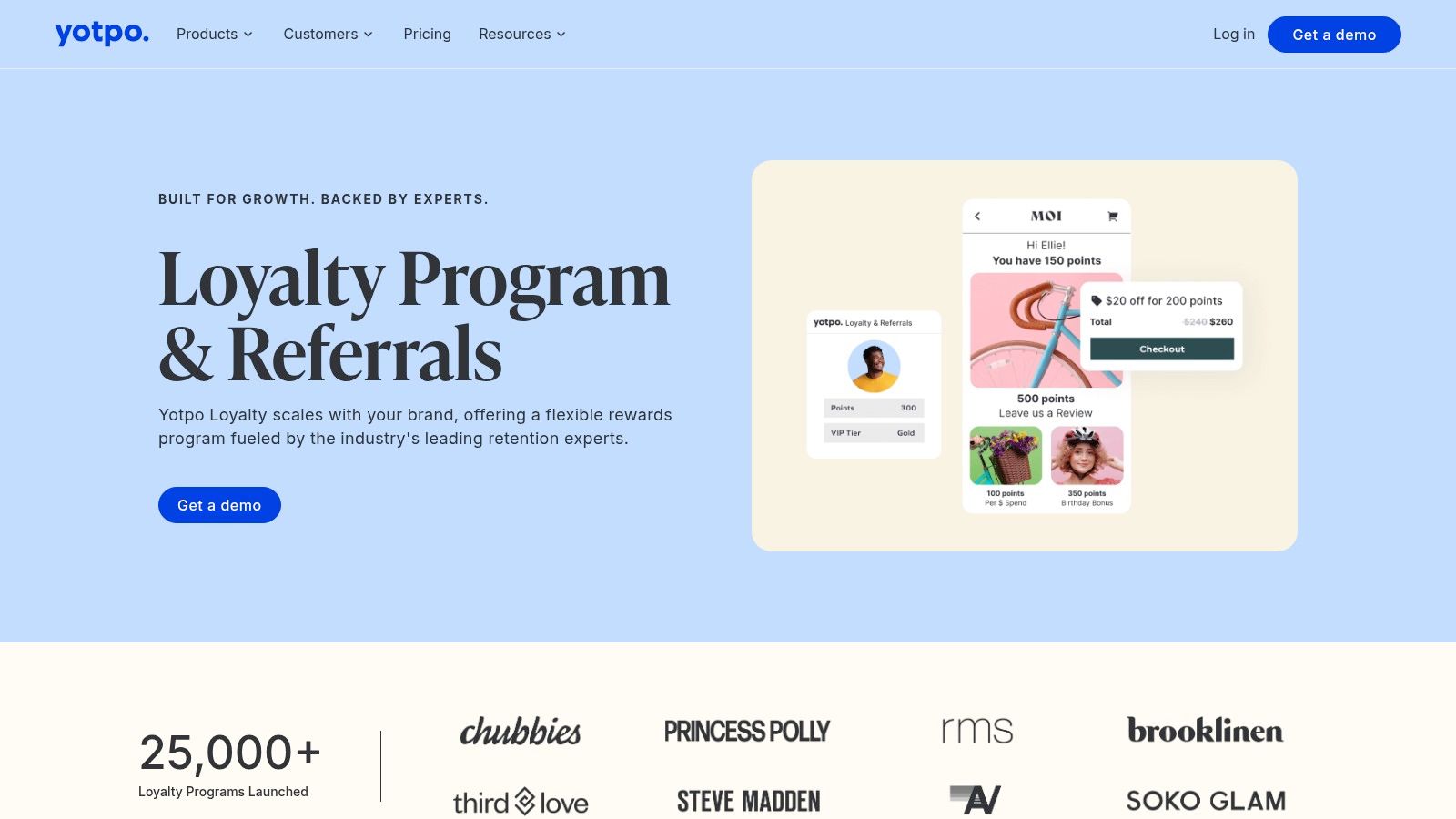
Yotpo Loyalty & Referrals positions itself as an integrated retention marketing platform, not just a standalone loyalty tool. Its strength lies in its deep connection to the broader Yotpo ecosystem, which includes Reviews, SMS/Email, and Subscriptions. For brands already using or considering Yotpo for other marketing functions, adding their customer reward program software creates a unified, data-rich environment for managing customer relationships and LTV. This is especially powerful for Shopify merchants looking to consolidate their tech stack under one roof.
Yotpo offers a free plan for stores with under 100 monthly orders, providing an accessible entry point. The platform's real value unlocks when you leverage its integrations; for instance, you can trigger a Shopify Flow based on a customer entering a new VIP tier or use its review data to segment and reward your most engaged advocates. This cross-module synergy is what sets it apart from more siloed loyalty solutions.
Core Features & Use Case
Yotpo’s program includes all the standard components: points for purchases, referrals to drive acquisition, and VIP tiers for exclusive perks. A standout feature for Shopify Plus merchants is the ability for customers to redeem points directly at checkout, creating a seamless user experience. With webhooks and a robust API, it offers extensibility, although it lacks the native Web3 capabilities seen in crypto-focused platforms. Its ecosystem approach allows for sophisticated segmentation and personalized campaigns across channels.
Best for: Shopify and BigCommerce brands that want an all-in-one retention platform for loyalty, reviews, and SMS marketing.
- Pros: One vendor for multiple retention tools, deep Shopify integration with Flow triggers, and a clear upgrade path from starter to enterprise plans.
- Cons: Costs can escalate quickly when bundling multiple Yotpo products, and pricing for larger plans often requires a sales call.
- Website: Yotpo Loyalty & Referrals
5. Stamped Loyalty
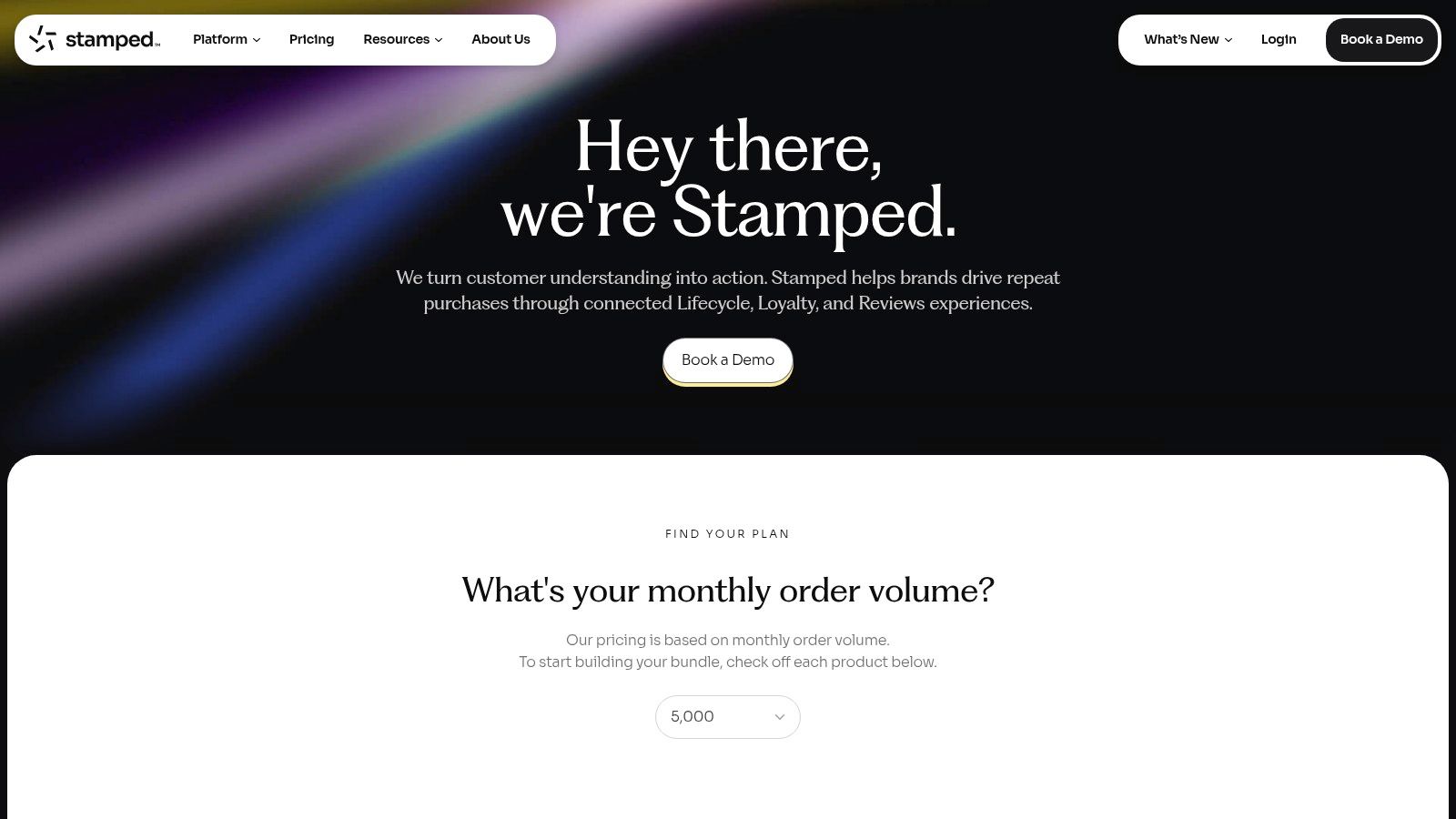
Stamped Loyalty is a compelling choice for ecommerce brands that want more than just a loyalty program; they want an integrated customer marketing suite. It bundles its loyalty and rewards features with its well-regarded Reviews & Ratings and Lifecycle Marketing products. The biggest differentiator is its pricing model. Unlike competitors that charge based on order volume, Stamped offers flat-rate plans with unlimited orders, making costs predictable for rapidly scaling stores.
For merchants migrating from another platform, Stamped offers dedicated onboarding and migration support, which is a huge plus. This approach positions Stamped as an all-in-one solution for user-generated content (UGC), loyalty, and email marketing, appealing to businesses looking to consolidate their tech stack and vendor relationships without fearing surprise overage fees.
Core Features & Use Case
Stamped Loyalty covers the essential pillars of a modern customer reward program software: points for purchases, a referral engine, and VIP tiers. Its real strength lies in the synergy with other Stamped products. For instance, you can automatically award loyalty points to customers who leave a review, creating a powerful feedback loop that drives both engagement and social proof. This makes it an effective tool for building a comprehensive community marketing engine.
Best for: Scaling Shopify or BigCommerce stores that want a bundled solution for reviews, loyalty, and email with predictable, flat-rate pricing.
- Pros: Predictable, unmetered pricing is great for high-volume stores. Bundling reviews and lifecycle email creates a unified marketing stack. Migration support is available.
- Cons: The integration marketplace is smaller than some competitors. It has fewer point-of-sale (POS) features, making it less ideal for businesses with a heavy brick-and-mortar presence.
- Website: stamped.io
6. Talon.One
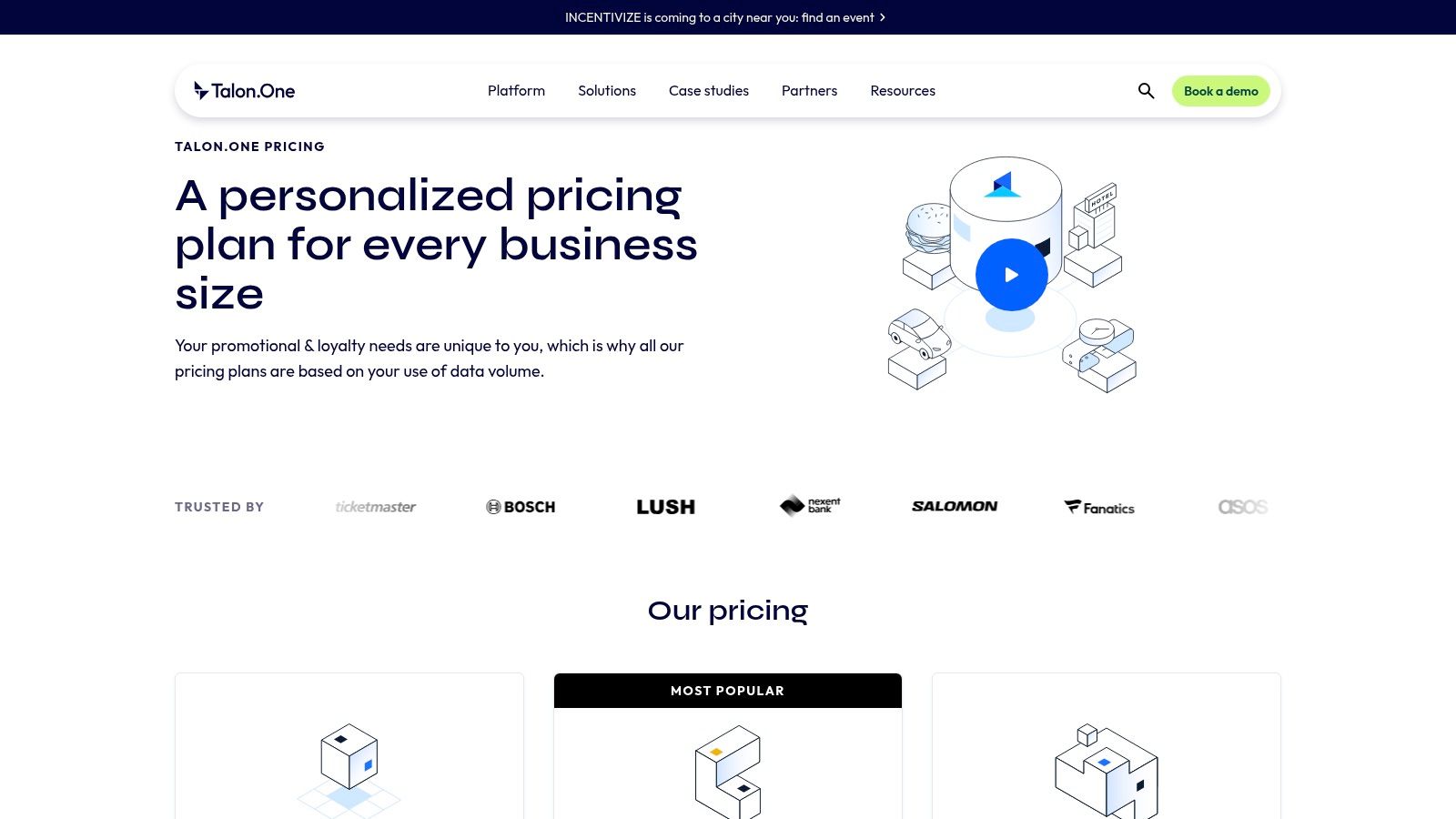
Talon.One is an enterprise-grade, API-first promotion and loyalty engine built for complex business logic. Unlike plug-and-play apps, it's a powerful, developer-centric platform that allows companies to build and manage highly customized coupon, discount, referral, and loyalty campaigns across any channel. It’s designed for large organizations with unique tech stacks or multi-brand, multi-region needs that require a flexible and scalable rules engine.
The platform provides a centralized hub to create intricate promotional rules without touching your core application code. This makes it a strong choice for businesses that need to run sophisticated, conditional promotions that a standard ecommerce app can't handle. The focus is on backend power and flexibility, empowering developers to integrate complex loyalty logic anywhere, from mobile apps to point-of-sale systems.
Core Features & Use Case
Talon.One excels at building a centralized rules engine for promotions, complete with SDKs, webhooks, and dedicated staging environments for safe testing. It offers robust governance features like role-based access and audit logs, which are critical for large teams. Its architecture is built to scale with massive data volume, ensuring performance isn't an issue as you grow. This platform is less a "program in a box" and more a powerful toolkit for building your own bespoke customer reward program software.
Best for: Large enterprises with custom tech stacks or multi-brand operations that need a highly flexible, API-driven loyalty and promotions engine.
- Pros: Extremely flexible for complex, multi-brand or multi-region setups. Strong developer tooling and governance controls.
- Cons: No public pricing; requires a sales-led process and is priced by data volume. Heavy reliance on engineering resources to implement and manage.
- Website: Talon.One
7. Annex Cloud
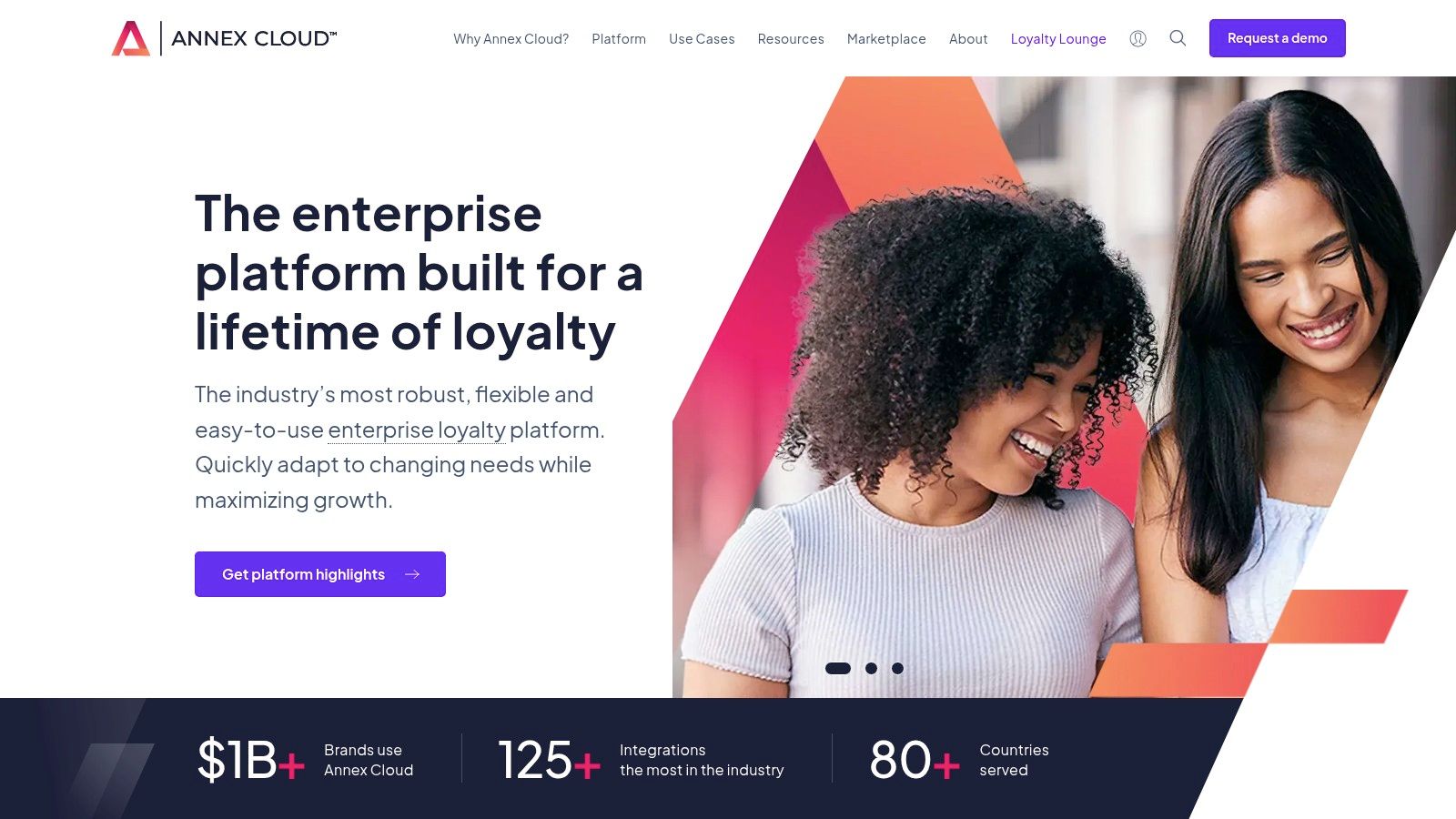
Annex Cloud is an enterprise-grade customer reward program software designed for large, global brands that need a comprehensive, omnichannel loyalty solution. It moves beyond simple points and referrals, offering a full suite of engagement tools, including user-generated content (UGC), surveys, and progressive profiling to capture valuable first-party data. This platform is built for complexity, handling intricate program logic and global compliance requirements that smaller tools can't manage.
Its strength lies in its ability to unify customer experiences across online, in-store, mobile, and social channels. For large organizations, Annex Cloud provides a robust infrastructure with marketer-friendly tooling that reduces reliance on IT teams for day-to-day program management. It's a powerhouse for brands looking to build sophisticated, data-driven loyalty strategies at scale. If you're weighing different options, you can learn more about how enterprise loyalty software compares.
Core Features & Use Case
Annex Cloud supports everything from tiered and paid loyalty programs to gamified experiences and social advocacy. Its standout feature is its focus on collecting zero-party and first-party data through loyalty interactions, which can then be used for advanced customer segmentation and personalization. The platform also offers a clear migration methodology and enterprise-grade security, making it a trusted choice for established brands.
Best for: Large, global enterprise brands needing a highly customizable, omnichannel loyalty and engagement platform.
- Pros: Built to handle complex, multinational programs, powerful data collection capabilities, and marketer-friendly tools that reduce IT dependency.
- Cons: Enterprise-level pricing is available only through sales consultation and is likely overkill for small businesses or single-storefront brands.
- Website: Annex Cloud
8. Paytronix
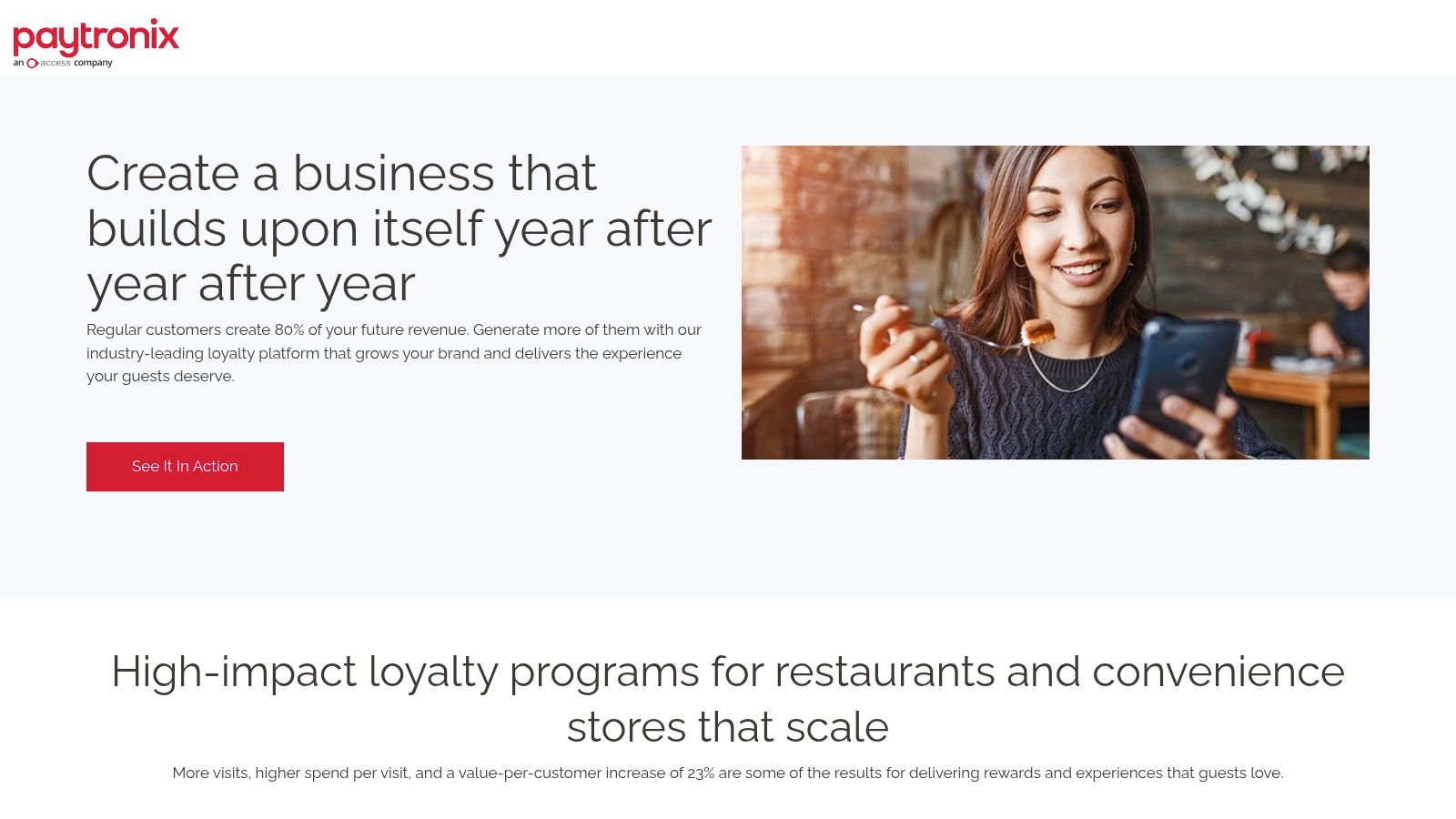
Paytronix is an enterprise-level customer engagement suite built specifically for restaurants and convenience stores. It goes far beyond a simple loyalty program, bundling CRM, online ordering, AI-driven marketing, and even payment processing into a single platform. Its core strength lies in its deep, vertical-specific integrations with over 450 point-of-sale (POS) and ordering systems, making it the go-to choice for multi-unit chains that need a unified view of guest behavior.
For these businesses, Paytronix acts as the central hub for all guest data, allowing for sophisticated, 1:1 triggered campaigns and journey-based rewards. The platform’s analytics are incredibly powerful, providing real-time ROI reporting and data insights that help operators understand customer lifetime value and visit frequency. While it's not a plug-and-play solution like others on this list, its domain expertise in the foodservice industry is unmatched.
Core Features & Use Case
The platform shines with its branded mobile apps and omnichannel enrollment capabilities, ensuring a seamless customer experience whether they're ordering online or paying in-store. Features like the guest journey builder and AI-powered recommendations enable highly personalized marketing automation that drives repeat visits. It's a complete customer reward program software solution for businesses that live and die by foot traffic and order frequency.
Best for: Multi-location restaurants, quick-service chains, and convenience stores that need an all-in-one loyalty, ordering, and marketing automation platform.
- Pros: Unparalleled expertise and integrations for the restaurant/c-store industry, powerful analytics and AI-driven personalization, and a comprehensive suite of engagement tools.
- Cons: Pricing is not public and requires a sales consultation. The platform is highly specialized and not a fit for businesses outside the foodservice or retail verticals.
- Website: Paytronix
9. PAR Punchh (Punchh)
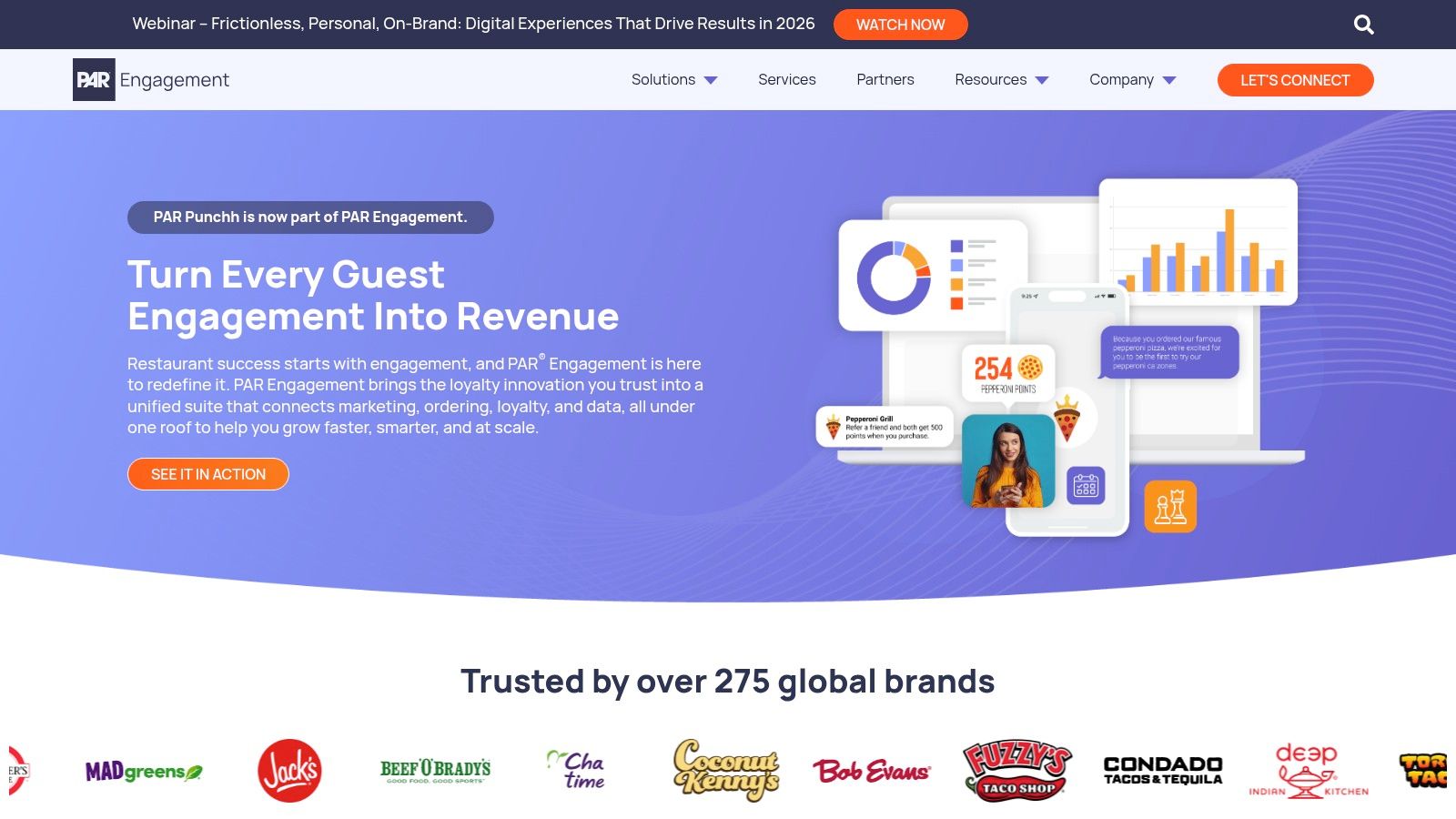
PAR Punchh is an enterprise-grade customer reward program software built specifically for large restaurant and convenience store chains. Its core strength lies in its ability to manage massive loyalty programs that integrate deeply with physical point-of-sale (POS) systems, online ordering, and mobile apps. This isn't a plug-and-play tool; it's a comprehensive guest engagement platform designed for brands with complex operational needs and a high volume of transactions.
The platform goes beyond standard points and tiers by offering sophisticated features like subscription-based loyalty programs, which are becoming a key differentiator in the food and beverage industry. For major brands, the ability to unify customer data from in-store visits, online orders, and app usage into a single profile is a game-changer for personalization and marketing automation.
Core Features & Use Case
Punchh offers powerful tools for large-scale member management, including points, tiers, and referral programs that can handle millions of users. A key feature is its support for subscription models, allowing brands to create recurring revenue streams through exclusive member perks. With open APIs and extensive integrations for POS and digital ordering systems, it connects every touchpoint of the customer journey. The platform also includes strategy services to help optimize program performance.
Best for: Large, multi-location restaurant, QSR, and convenience store brands that need a deeply integrated, scalable loyalty solution.
- Pros: Proven to work at an enterprise scale with major U.S. chains, offers powerful subscription capabilities, and features robust integrations.
- Cons: Strictly enterprise-focused, so pricing is only available via sales demo. Implementation is a significant project requiring IT and stakeholder alignment.
- Website: PAR Punchh (Punchh)
10. Thanx
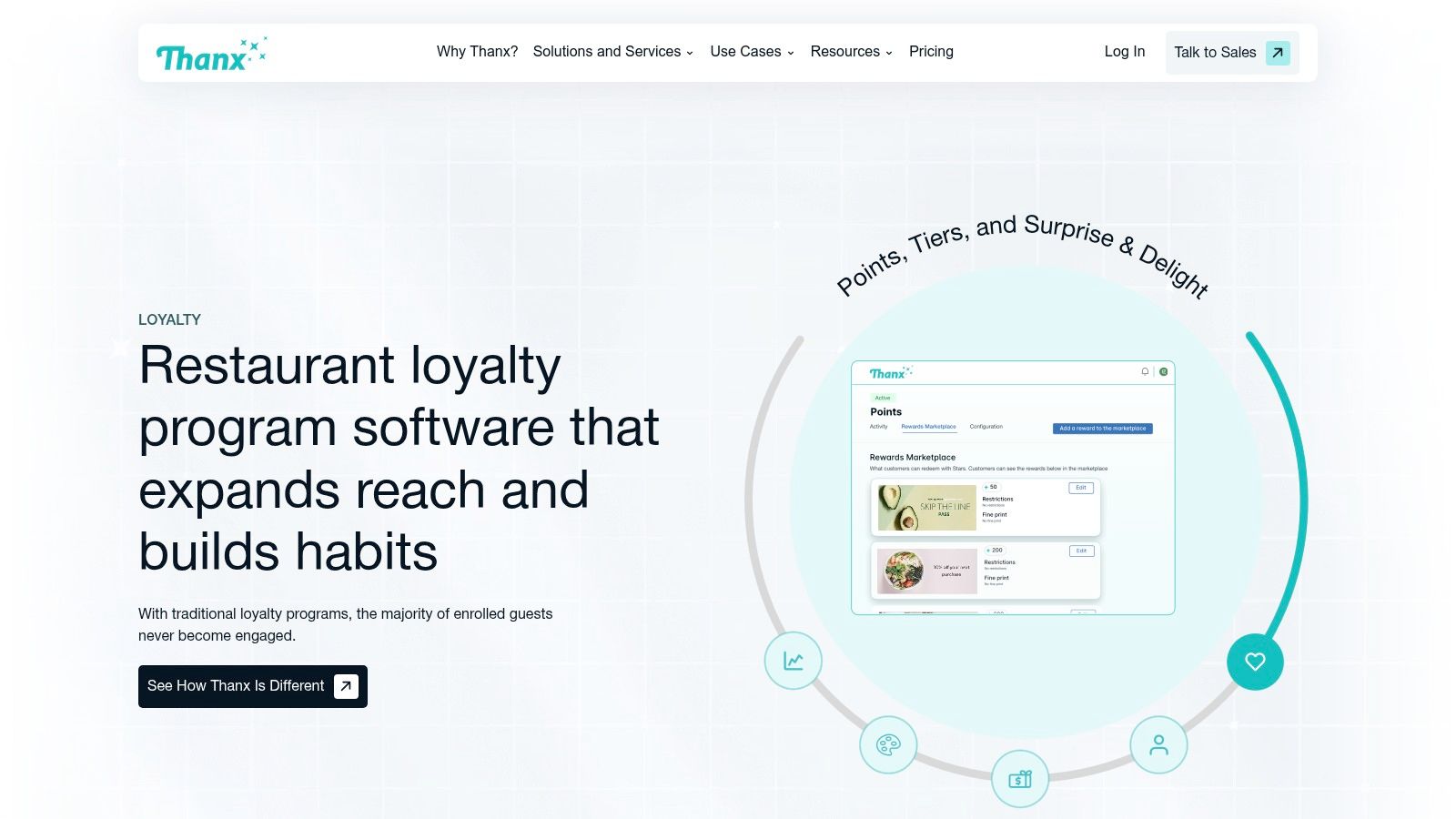
Thanx is a guest engagement and loyalty platform built specifically for restaurants and brick-and-mortar retail. It stands out by focusing on increasing visit frequency and customer lifetime value while minimizing the effective discount rate. Its system relies on seamless, low-friction enrollment methods like card-linked offers, QR codes, or SMS, avoiding the hassle of separate loyalty cards or app downloads for the customer.
The platform is designed to capture rich customer data without creating friction at the point of sale. This data powers its AI-driven segmentation and marketing automation, allowing businesses to run personalized campaigns, A/B test offers, and create lifecycle marketing flows. It’s a powerful piece of customer reward program software for businesses that need to connect digital marketing efforts with in-person transactions.
Core Features & Use Case
Thanx centers its platform on effortless data capture and automated, personalized engagement. It supports traditional points and tiers but also encourages experiential rewards beyond simple discounts. The core strength lies in its AI segmentation, which automatically groups customers based on behavior, enabling hyper-targeted promotions that drive specific outcomes, like winning back at-risk guests or encouraging menu exploration. The platform also offers robust reporting and data warehouse sync for deep business intelligence.
Best for: Multi-location restaurants and retail brands needing a data-driven loyalty solution that integrates deeply with POS and online ordering systems.
- Pros: Strong focus on lowering discount rates, flexible and easy participation for customers, and powerful AI-driven automation.
- Cons: Pricing is not public and requires a demo. Its focus on restaurants makes it less suitable for pure ecommerce or SaaS businesses.
- Website: Thanx
11. Galxe (Business+)
Galxe is less of a traditional customer reward program software and more of a Web3-native questing platform where projects can tap into a massive, crypto-savvy audience. Its main value proposition is enabling projects to create on-chain and off-chain campaigns that reward users for specific actions like social media follows, Discord engagement, or smart contract interactions. It’s built for Web3 projects that need to drive user acquisition and engagement through verifiable tasks.
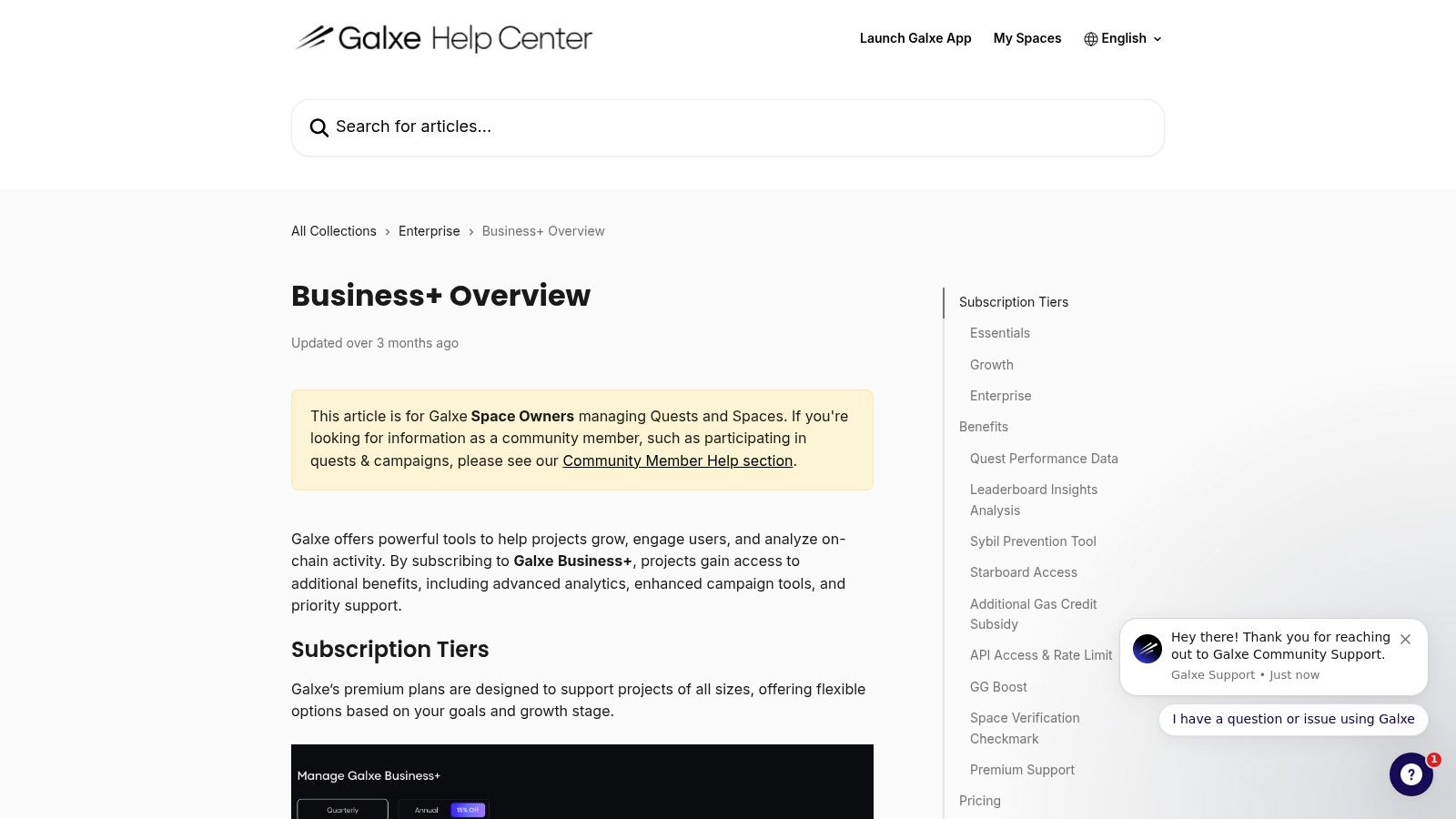
Galxe’s Business+ plan provides enhanced tools for campaign management, including built-in sybil resistance with its Galxe Passport and Galxe Score products. This ensures that rewards go to real, unique users rather than bots. The platform operates on a credit system for managing campaign costs and gas fees, with payments accepted in stablecoins, making it a truly crypto-native solution.
Core Features & Use Case
Galxe's core strength lies in its ability to verify user actions across dozens of blockchains and social platforms, making it a powerful tool for building a verifiable community reputation. It’s ideal for airdrop campaigns, NFT mint allowlists, and ongoing engagement programs where user participation needs to be tracked precisely. For those interested in how rewards are structured within specific digital ecosystems, you might explore how Bitget offers exclusive premium rewards within its VIP event program. To dive deeper into these strategies, you can explore more about building a Web3 loyalty program and its unique challenges.
Best for: Web3 projects and crypto protocols looking to acquire and engage a crypto-native audience through verifiable on-chain and off-chain quests.
- Pros: Massive built-in audience of active Web3 users, strong sybil-resistance tools, and extensive on-chain data integrations.
- Cons: The platform’s user experience is entirely Web3-focused, requiring wallet connections and on-chain literacy. Business+ pricing can be a significant investment for early-stage projects.
- Website: Galxe Business+ Overview
12. Zealy
Zealy is a no-code questing platform designed to turn your passive community members into active contributors, particularly in the Web3 space. It’s less about transactional loyalty and more about driving deep engagement through gamified tasks. Community managers can quickly build "questboards" that reward users for completing actions on social media, participating in Discord, or engaging with your product, making it a powerful tool for community-led growth.
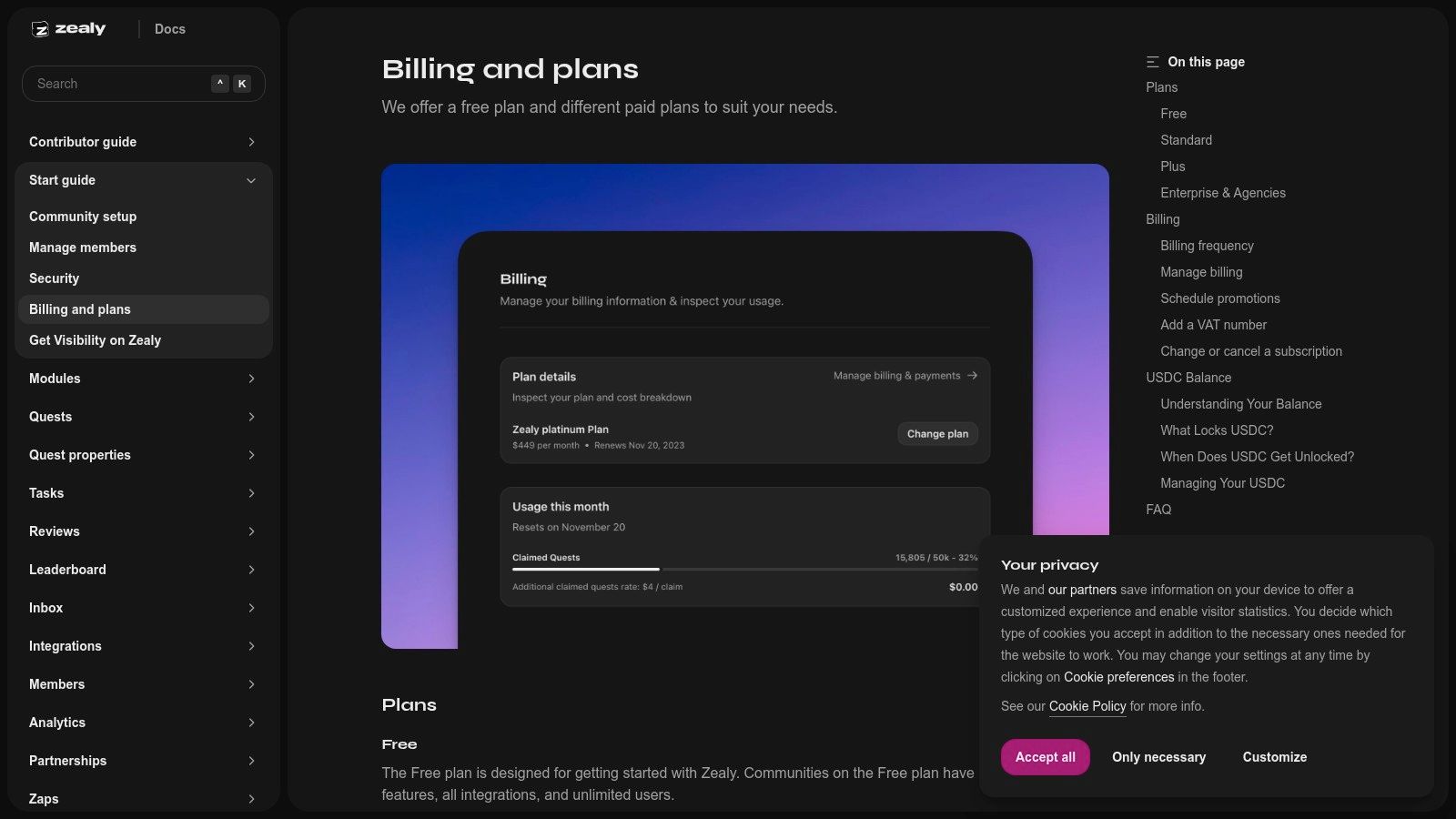
The platform's biggest advantage is its accessibility and focus on Web3 communities. Zealy offers a generous free plan that allows for unlimited community members, making it easy to get started without an upfront investment. Its interface is built around creating and managing quests, with leaderboards and XP systems that foster a competitive and fun environment. This approach is perfect for projects looking to build a strong, active user base before a product launch or token generation event.
Core Features & Use Case
Zealy's core is its no-code quest builder, which uses templates to automate task creation and verification for platforms like Discord, Twitter/X, and Telegram. Users earn XP for completing quests, climbing leaderboards, and unlocking roles or rewards. This system serves as a powerful customer reward program software for fostering genuine community participation rather than just rewarding purchases. While it's not a traditional retail loyalty tool, it excels at mobilizing a community for marketing, user feedback, and content creation.
Best for: Web3 projects, DAOs, and crypto communities that want to gamify engagement and reward active participation.
- Pros: Generous free plan with unlimited users, simple no-code quest builder, and a strong focus on Web3 community actions.
- Cons: Feature limits and quest claim quotas on paid plans can be restrictive. Better suited for engagement-based rewards than transactional retail loyalty.
- Website: Zealy
Top 12 Customer Rewards Program Software Comparison
| Product | Target audience | Core features / USP | Scalability & reliability | Pricing & tradeoffs |
|---|---|---|---|---|
| Domino (Recommended) | Web3 marketers, NFT/DeFi founders, DAOs | No-code on/off-chain quests, AI verification, 130+ templates, multi-frontend | Proven: 25M+ quests, 13k+ campaigns, 100k completions/day, 99.9% uptime | Self-serve from $99/mo (500 MACMs), usage-based scaling, Pro/Enterprise options |
| Smile.io | DTC ecommerce (Shopify, BigCommerce, Wix) | Points, referrals, VIP tiers, on-site widgets, POS support | Fast to launch, large integration ecosystem | Free tier, transparent pricing, plan limits tied to monthly orders |
| LoyaltyLion | Mid-market to enterprise ecommerce, Shopify/Plus | Points/referrals, branded loyalty page, Klaviyo & POS integrations | Strong onboarding, multilingual, robust ecommerce integrations | Contact-sales for advanced tiers, cost tied to order volume |
| Yotpo Loyalty & Referrals | Brands wanting consolidated retention (reviews, SMS, loyalty) | Loyalty + reviews/SMS ecosystem, checkout redemption, webhooks | Deep Shopify integration, Flow triggers | Free for <100 orders/mo, modular costs add up, sales-led pricing |
| Stamped Loyalty | Scaling DTC brands seeking predictable costs | Points/referrals, unlimited orders on paid plans, bundled reviews/lifecycle | Migration & onboarding support, predictable billing | Simple flat/unmetered pricing on paid plans, smaller integration marketplace |
| Talon.One | Enterprise, multi-brand & developer-heavy stacks | API-first promotions & rules engine, SDKs, staging, RBAC | Designed for high-volume, governed promotions | Sales-led pricing by data volume, requires engineering resources |
| Annex Cloud | Large, global brands with complex loyalty needs | Omnichannel loyalty, UGC, advanced segmentation, compliance | Enterprise services, marketer-friendly tooling | Enterprise pricing via sales, overkill for small stores |
| Paytronix | Multi-unit restaurants & convenience stores | Loyalty + ordering + CRM, branded apps, 450+ POS integrations | Deep vertical expertise, strong analytics & ROI reporting | Pricing via sales, focused on foodservice/retail verticals |
| PAR Punchh (Punchh) | Large restaurant brands & chains | Points/tiers, subscriptions, open APIs, program strategy | Proven at scale with major chains, extensive integrations | Enterprise sales pricing, implementation requires IT alignment |
| Thanx | Restaurants focused on frequency & margin | Card-linked/check-in, rewards marketplace, AI segmentation | Emphasis on lowering discount rate, solid POS integrations | Sales-led pricing, primarily restaurant-focused |
| Galxe (Business+) | Web3 projects needing on-chain engagement & sybil-resistance | Campaigns with Passport/Score, crypto-native audience, stablecoin payouts | Built-in anti-sybil tooling, large Web3 reach | Business+ is premium, on-chain literacy and wallet flows required |
| Zealy | Web3 community managers & agencies | No-code quests, leaderboards, Discord/Telegram integrations, templates | Free plan to start, clear quotas and upgrade paths | Clear published pricing, feature/quest quotas by plan |
Making the Right Call for Your Community
Whew, we've journeyed through a pretty dense landscape of customer reward program software. From the e-commerce powerhouses like Smile.io and LoyaltyLion to the enterprise-grade behemoths like Annex Cloud and Talon.One, it's clear there isn't a one-size-fits-all solution. Each platform is built with a specific user and a specific goal in mind.
The key takeaway? Your "best" choice is entirely dependent on your ecosystem. A Shopify store owner has fundamentally different needs than a multi-location restaurant chain, which in turn has vastly different engagement goals than a burgeoning NFT community. The traditional tools are exceptional at what they do: rewarding transactional behavior like purchases and sign-ups. But for our target audience of Web3 marketers and community builders, the game has changed.
From Transactions to Actions: The Web3 Shift
For Web3 projects, loyalty isn't just about repeat purchases. It’s about active, verifiable participation. It’s about growing a vibrant community that contributes to the ecosystem's success through a wide array of on-chain and off-chain activities. This is where the old guard of customer loyalty software starts to show its limitations.
You aren't just trying to get someone to buy another product; you’re trying to encourage them to:
- Vote on a DAO proposal.
- Mint a specific NFT or hold a token.
- Engage with your protocol on a testnet.
- Create and share user-generated content on X (formerly Twitter).
- Join a specific Discord channel and achieve a certain role.
These are nuanced, specific actions that require a platform built with the Web3 stack in mind. While tools like Zealy and Galxe have carved out a niche here, their focus can be narrow, often leaning heavily on social tasks or requiring more technical lift for deeper integrations.
Your Next Steps: A Practical Checklist
Feeling overwhelmed? Don't be. Choosing the right customer reward program software is a strategic decision. Use this simple framework to guide your choice.
- Define Your Core Objective: What is the single most important action you want to incentivize right now? Is it user acquisition, on-chain engagement, social media amplification, or something else entirely? Be specific.
- Assess Your Technical Resources: Do you have a dedicated developer ready to wrangle APIs, or do you need a completely no-code solution that your marketing team can run independently? An honest answer here will immediately narrow your options.
- Map Your User Journey: Where does your community live? Discord? X? A custom dApp? Your chosen tool must integrate seamlessly into these environments to reduce friction and drive adoption.
- Consider Your Reward Structure: Are you offering NFTs, allowlist spots, token airdrops, or exclusive content? Ensure the platform can automate the verification and distribution of these specific Web3-native rewards.
Ultimately, the goal is to find a tool that doesn't just track points but actively helps you build and mobilize your community. For Web3 projects, this means finding a solution that offers flexibility, deep integration capabilities, and a user experience that feels native to the space. This is precisely why a platform like Domino stands out. It's purpose-built for the complex, action-oriented campaigns that define modern community growth, bridging the gap between social engagement and verifiable on-chain activity without demanding a line of code.
Ready to move beyond basic points and build a truly engaged Web3 community? Domino provides the no-code, AI-powered toolkit you need to create, automate, and scale on-chain and off-chain quests. Launch your first growth campaign in minutes by exploring what Domino can do for your project.