Master Your CoinMarketCap Watch List With This Guide
So, what exactly is a CoinMarketCap watch list? Think of it as your personal, curated dashboard for the crypto world. Instead of getting lost in the sea of thousands of different coins, you can hand-pick the ones that matter to you and track their price, volume, and other vital stats all in one clean space. It's a must-have for any serious investor or marketer in this space.
Your Watch List Is More Than Just a Price Tracker
Let's be honest, the crypto market is beautifully chaotic. A CoinMarketCap watch list isn't just some neat feature; it’s your command center in the middle of the storm. This is how you cut through the deafening noise, spot genuine trends before they go viral, and turn a mountain of messy data into something you can actually act on.
It’s your personalized filter on the entire crypto ecosystem. Without one, you’re basically trying to drink from a firehose, constantly reacting to whatever the market throws at you. A well-built list lets you focus, saves a ton of time, and keeps you from chasing every shiny new token that pops up.
Turning Data Into Strategic Intelligence
The whole point of a watch list is to make raw data useful. CoinMarketCap rolled this out to help people track specific coins and tokens from their massive database—we're talking over 9,000 assets. It gives you live price updates, 24-hour percentage changes, and all the detailed stats you need to see what’s really going on, without having to dig through everything. If you really want to go deep, you can explore the full range of CoinMarketCap charts.
This dashboard is where the magic happens, giving you a bird's-eye view of your chosen assets.
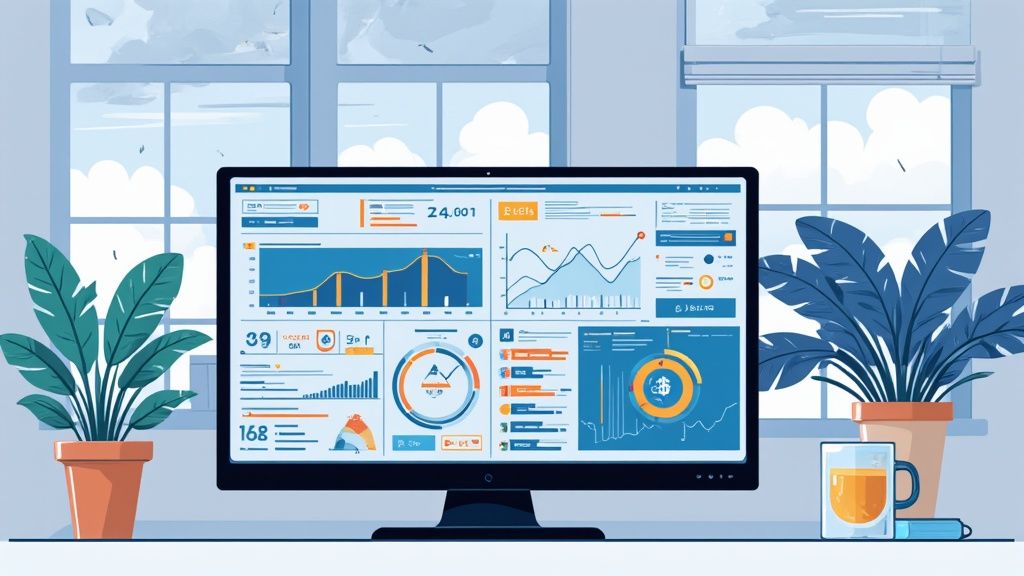
See how clean that is? Price, percentage change, market cap, and volume are all laid out, making it easy to compare and analyze on the fly.
By organizing your research, you stop being a reactive participant and become a strategic observer. Your watch list becomes the first place you look to gauge market sentiment, identify outliers, and form a data-backed opinion on where things are headed.
Here's a quick look at the essential tools inside your watch list and how you can use them to your advantage.
Core Watch List Features and What They Mean for You
| Feature | What It Does For You | Why It Matters |
|---|---|---|
| Real-Time Price Tracking | Displays live prices for your selected cryptocurrencies. | You can react instantly to market movements without delays. |
| 24-Hour % Change | Shows the percentage gain or loss over the last 24 hours. | This is your go-to for quickly gauging daily performance and volatility. |
| Market Cap & Volume | Provides data on the total market value and trading volume. | Helps you understand the asset's overall size and liquidity. |
| Custom Alerts | Lets you set notifications for specific price points. | You don't have to watch the charts all day; get notified when it's time to act. |
| Multiple Watch Lists | Allows you to create and manage several separate lists. | Perfect for organizing by category, like "DeFi," "L1s," or "Competitors." |
These features work together to give you a powerful, customized lens on the market.
Key Benefits of a Curated Watch List
A well-tended watch list does a lot more than just show you numbers. It's an analytical tool that genuinely sharpens your perspective.
- Noise Reduction: It’s your ultimate filter. You can ignore the thousands of irrelevant projects and focus only on the assets that fit your strategy or marketing campaign.
- Early Trend Spotting: When you’re watching a specific group of coins, it’s much easier to spot correlated moves. You'll notice when one asset starts outperforming its peers, which can often signal a wider shift in the market narrative.
- Enhanced Decision-Making: With all your critical data in one place, you can make smarter decisions, faster. No more juggling a dozen browser tabs and apps to piece everything together.
How to Build a Purpose-Driven Watchlist
Alright, let's get into building your first CoinMarketCap watchlist. The real magic isn't just smashing the 'Add to Watchlist' button on every coin that pops up on Twitter. The secret is building a focused, organized dashboard where every single asset has a reason for being there.
Forget dumping everything into one giant, chaotic list. The pro move is to create several specialized lists, each one built for a specific goal. This simple shift turns your watchlist from a glorified price ticker into a powerful strategic tool.
You can finally separate your long-term holds from your degen research plays, or even keep tabs on competitor tokens if you're a Web3 marketer. The whole point is to create clarity, not more noise.
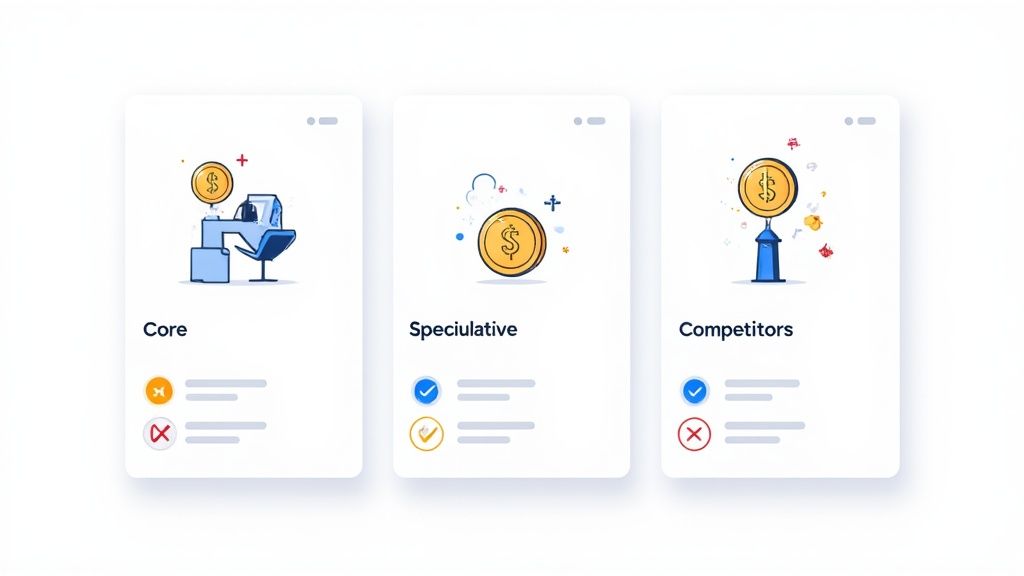
Think of it like this: each list has its own job, helping you focus on a specific piece of the crypto puzzle.
Segmenting Your Crypto Universe
First things first, start thinking in categories. Your crypto interests aren't all the same, so why would you treat them that way in a single list? Splitting things up is the key to staying focused and making sharp, informed decisions on the fly.
Here are a few practical ways you could organize your assets:
- Core Holdings: This one's simple—it's for the assets you actually own. This list becomes your go-to performance dashboard for your main portfolio, cutting out the distraction from coins you're just kicking the tires on.
- DeFi Blue Chips: Set up a list dedicated to the heavy hitters in DeFi, like Uniswap, Aave, and Lido. It's a fantastic way to keep a pulse on the overall health of the DeFi ecosystem.
- New Layer 1 Contenders: Got your eye on the next potential "Ethereum killer"? Create a dedicated space for projects like Sui, Aptos, or Sei to compare their performance side-by-side.
- Speculative Bets: This is your research lab. Your playground. Add all the new, high-risk, high-reward altcoins here. Keeping them siloed off stops you from making emotional decisions that could mess with your core portfolio strategy.
A purpose-driven watchlist forces you to ask "why" before you add a single token. That one simple question is what separates an organized research hub from a digital junk drawer full of random tickers.
A Practical Example for Marketers
Let's say you're the marketing lead for a new GameFi project. A well-built CoinMarketCap watchlist can be one of your best competitive intelligence tools, period. You can create a "Competitor Watchlist" to track key metrics for projects in your space.
Your list could break down like this:
- Direct Competitors: Other games that are playing in your sandbox.
- Ecosystem Tokens: The native token of the blockchain your game is on (think IMX or RON).
- Infrastructure Plays: Tokens for related services, like gaming guilds or launchpads that are getting hot.
By keeping an eye on this curated group, you can spot trends before they go mainstream, see which tokens are getting real traction, and time your marketing campaigns to ride the wave of broader market narratives. For those looking to connect community engagement with market performance, you can even find templates to help review your CoinMarketCap watchlist alongside Zealy quest data for a more complete picture.
While we're talking crypto here, the core principles are universal. Learning how to create a stock watchlist shows how these same strategies apply in traditional finance. At the end of the day, it's all about organizing information to give yourself an edge.
Reading the Market Through Your Watchlist
A well-built CoinMarketCap watchlist is so much more than a price ticker. I like to think of it as my personal market barometer. By keeping an eye on the big dogs—Bitcoin and Ethereum—you get a solid baseline for where the entire market is headed. When they move, everyone else usually follows suit.
This baseline gives you critical context. For example, if BTC is on a tear but your altcoin list is just sitting there, it probably means big money hasn't started trickling down to the smaller projects yet. On the flip side, if Bitcoin is crabbing sideways but a specific category on your list—say, AI or DePIN tokens—is lighting up, you're seeing a narrative-driven rally unfold right before your eyes.
Gauging Market Conviction
Don't just look at price. Metrics like 24-hour volume and market cap dominance within your list tell you where the real conviction is. A coin pumping on thin air (low volume) is a red flag, but a steady climb with volume to back it up? That shows genuine buyer interest and a belief that the project is going somewhere.
Let's say you're watching a token on your "New Layer 1 Contenders" list. It suddenly rips 30% higher, and you see a corresponding 200% spike in volume. That's a signal you absolutely have to investigate. It means real capital is moving in, not just a bunch of retail traders getting lucky.
Your watchlist turns abstract market data into a story you can actually read. It helps you connect the dots between how one coin is doing and what's happening in the bigger picture, letting you see the 'why' behind the price action.
This is how you get a real feel for market dynamics. In late 2025, for instance, the global crypto market cap was hovering around $3.12 trillion, with Bitcoin claiming about 58.8% of that pie. Smart traders build watchlists with these key assets to put numbers like that into perspective and get a quick read on the market's health. You can dig into these trends yourself using the historical crypto data on CoinMarketCap.
Spotting Capital Rotations
One of the slickest tricks you can pull off with a curated list is spotting capital rotations—the flow of money from one corner of the crypto world to another.
- BTC to Alts: You'll see this classic move all the time. After a big run, Bitcoin’s price cools off. Traders start taking profits and hunting for the next 10x, so they pour that money into higher-risk altcoins. On your watchlist, this looks like Bitcoin's dominance number starting to drop while your altcoin list starts waking up.
- Sector-Specific Shifts: Maybe money is flowing out of DeFi and into GameFi this week. By having separate, themed watchlists for these categories, these shifts become glaringly obvious. It’s a simple way to stay ahead of the latest narrative.
If you consistently watch these little trends play out across your lists, you’ll start to develop a gut feeling for the market's pulse. It's the difference between just reacting to what happened yesterday and actually anticipating where things might be going next.
Sneaky-Good Tactics for Web3 Pros
Alright, let's move past the basics. For anyone working in Web3—marketers, builders, community managers—a CoinMarketCap watchlist is way more than just a portfolio tracker. It's a competitive intelligence goldmine, hiding in plain sight.
You're not just tracking your bags anymore. You're building a radar system to monitor the entire ecosystem, spot trends before they pop, and find your strategic edge. It’s about turning all that public data into a real marketing weapon that sharpens your every move.
Turn Market Buzz into Your Next Big Move
One of the most powerful, and frankly, most overlooked features is reading the room. I'm talking about public sentiment. The "Most Viewed" pages on CoinMarketCap are a raw, unfiltered feed of what the market is paying attention to right now. When a random token spikes onto that list, it’s a massive flare signaling a surge of interest you can absolutely jump on.
And this isn't just a hunch; the data backs it up. There's a clear link between a coin showing up on a bunch of watchlists and what happens next with its price and trading volume. Tokens that crack the "Most Visited" page often see a big jump in market cap and daily volume. It's almost like collective attention is a leading indicator. You can see this play out yourself by checking out the most viewed crypto pages on CoinMarketCap.
For a marketer, this is pure gold. You see a competitor climbing the ranks? That's your cue to dive into their socials. Did they just drop a huge announcement? A new partnership? Kick off a massive airdrop campaign? This signal lets you react fast instead of getting blindsided.
A pro marketer doesn't just watch prices; they watch attention. Your watchlist is one of the best tools out there for seeing where that attention is flowing in real-time. In a market that moves this fast, that’s a game-changing advantage.
Building Your "Mission Control" Dashboard
First thing's first: create a dedicated "Competitor Watchlist." But don't just dump your direct rivals in there and call it a day. A truly useful list gives you the full picture of your corner of the crypto world.
Let's imagine you're on the marketing team for a new DeFi protocol. Here’s how you could structure your watchlist:
- Direct Competitors: Obvious, but essential. List the top 3-5 projects that do what you do.
- Ecosystem Health Check: Add the major tokens from the blockchain you're building on (like SOL, AVAX, or OP). Their price action is often a barometer for the entire ecosystem's health.
- Narrative Trackers: Toss in the tokens leading whatever narrative is hot at the moment—RWA, DePIN, AI, you name it. This helps you gauge if your project's story is hitting the right notes with the market.
Keeping an eye on these different buckets helps you put your own project's performance in context. Let's say your token is down 5%, which feels bad. But if your "Ecosystem Health Check" list is down 15%, you're actually crushing it. That's a powerful piece of information for stakeholder updates and planning your next move.
This kind of intel can even shape your community-building efforts. A lot of projects are leaning into quest platforms to get users engaged. If you're figuring out how to reward your community, understanding market sentiment can make your campaigns far more effective. For teams exploring this, it's worth digging into how to build a crypto points program that hooks into what the market is already excited about.
Put Your Crypto Tracking on Autopilot
Manually refreshing your CoinMarketCap watch list is fine, but if you want to get serious, you need to set things on autopilot. This is where you go from passively watching a list to building an active intelligence system that works for you. It’s about getting the right intel at the right time, without being chained to your screen.
The first, and most obvious, step is to get comfortable with custom price alerts. Instead of seeing a market move and then reacting, you can get in front of it. Say you're eyeing a token and have a specific entry price in mind. An alert lets you know the second it hits your target. You can act instantly instead of kicking yourself later for missing the dip.
Beyond Basic Price Pings
Price targets are just the beginning, though. The real magic happens when you get more strategic.
Think about setting alerts for big percentage swings. A sudden 10% jump (or crash) in a competitor's token isn't just noise—it often signals a big announcement, a partnership, or a major shift in market sentiment. These alerts are your early warning system, telling you it's time to dig in and find out why it’s moving.
The next level is connecting these alerts to the tools you and your team live in every day. Using simple integrations, you can push these notifications directly into your workflow. It's all about creating a seamless process to move from observation to action.
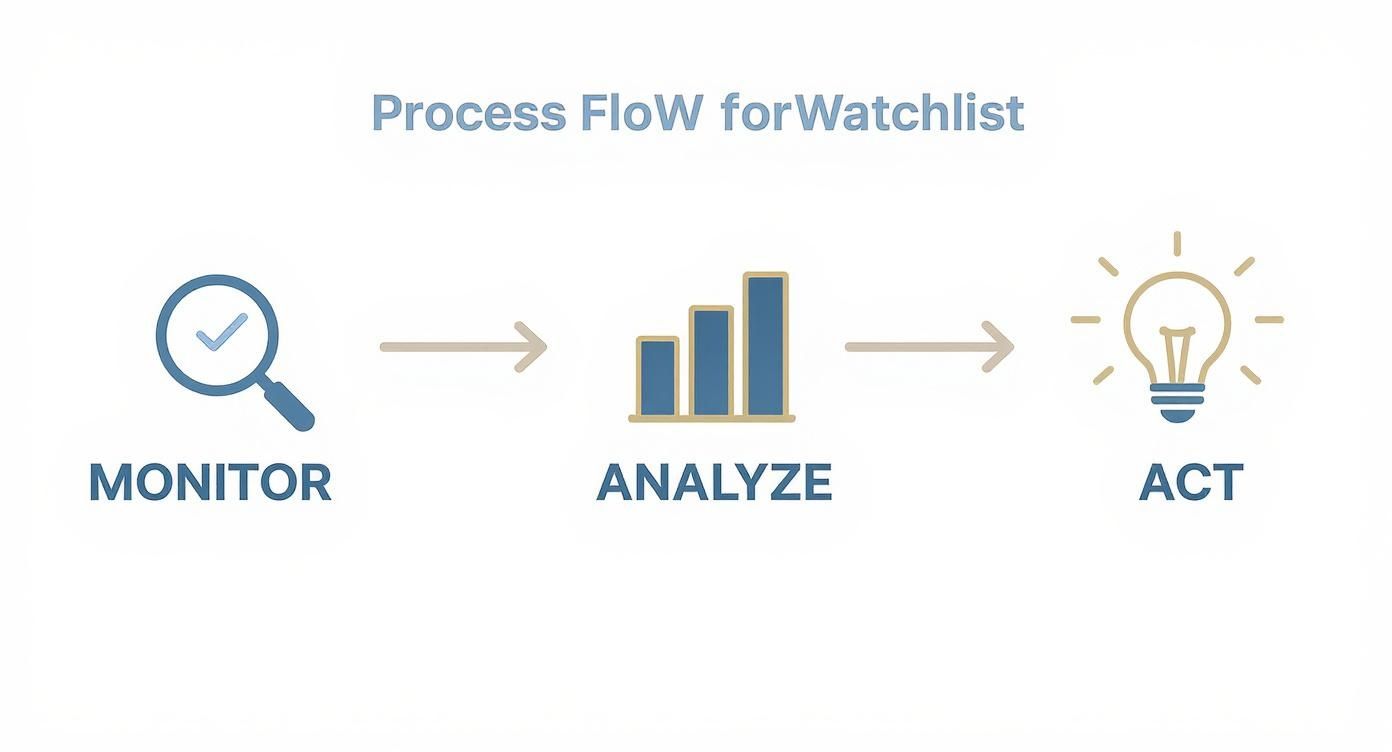
This really is the core idea: automated monitoring leads to quick analysis, which lets you make a decisive, strategic move. You're building a system, not just staring at a list.
Alerts are not one-size-fits-all. The right alert depends entirely on what you're trying to achieve. Here’s a quick breakdown of how to think about them.
Choosing the Right Alert for Your Goal
| Alert Type | Use It For | Real-World Example |
|---|---|---|
| Price Target | Acting on specific entry or exit points. | Get a notification when ETH drops to your $2,800 buy-in price. |
| Percentage Change | Spotting unusual volatility or big news. | Set an alert if a competitor’s token jumps more than 15% in 24 hours. |
| Market Cap Alert | Tracking project growth and milestone achievements. | Get an alert when a project you're watching crosses the $100 million market cap. |
| Volume Spike | Identifying sudden surges in trading activity. | Get notified if daily trading volume for a token doubles, signaling high interest. |
By tailoring your alerts, you filter out the noise and only get the pings that genuinely matter to your strategy.
Connecting Your Watch List to Your Workflow
Imagine getting an instant notification in Slack or Telegram the moment a key token on your watch list has a massive volume spike. That’s powerful. It pulls critical intel right into your team's conversations, eliminating the need to constantly check a website. For anyone looking to build out more complex systems, there are great resources out there, like this step-by-step guide to automate crypto trading with AI.
These integrations turn simple data points into real-time strategy sessions for your team. You can get really granular with specific triggers, like:
- Competitor Movement: A ping pops up in your "#intel" Slack channel when a rival's token moves more than 5%.
- Buy/Sell Signals: You get a direct message when a token you’re personally invested in hits a key support or resistance level.
By automating your tracking, you stop hunting for information and let the information find you. This frees up mental energy to focus on strategy and execution, which is where the real value is created.
If you’re using Discord to manage a community, you can take it even further. Automated market event notifications can be an amazing tool for keeping your members engaged and informed. You can even find ready-made templates for things like copy trade notifications for Discord, which use the same core idea of automated alerts.
Making this small shift puts your crypto tracking on autopilot, ensuring you never miss a market-moving event again.
Got Questions About Your Watchlist?
Let's clear up a few things that often trip people up when they first start using a CoinMarketCap watchlist. Nailing these details will save you a ton of guesswork and help you get the most out of it.
So, How Many Watchlists Can I Actually Make?
As of right now, you get one main watchlist per account. You can stuff it with hundreds of different cryptos, which is great, but you can't create multiple, separate lists like "DeFi Bets" or "Gaming Coins" under one login.
But here’s a little trick that plenty of people use: just create a couple of different free accounts. It's a simple way to keep things tidy. You could have one for your personal holdings and another for tracking competitor tokens for a marketing campaign. Easy.
Is My Watchlist Private?
Yep, by default, it's all yours. No one else can see it unless you decide to share it.
And that brings us to one of the coolest, most overlooked features: you can make your list public. When you do, CoinMarketCap gives you a unique link you can share with anyone.
This is a game-changer for a few reasons:
- For Influencers: You can share a curated list of tokens you’re bullish on directly with your audience.
- For Project Teams: Got a whole ecosystem of tokens? Create a public list to help new community members get the lay of the land.
- For Educators: You can build a watchlist for a specific lesson on market trends or a particular crypto niche.
Sharing your list is a fantastic way to give back and position yourself as a go-to resource.
Quick heads-up: The watchlist and portfolio tracker are completely different tools. Mixing them up is a classic rookie mistake that leads to messy tracking. The watchlist is for discovery; the portfolio is for tracking what you actually own.
Wait, Isn't This the Same as the Portfolio Tracker?
This question comes up all the time. The short answer is no, they're built for totally different jobs.
Think of your watchlist as your research lab. It's where you keep an eye on coins you find interesting but haven't bought yet. You use it to monitor prices and spot opportunities without mixing in your personal transaction data.
The Portfolio tracker, on the other hand, is all about your money. It’s where you log your actual buys and sells—what you bought, at what price, and when. It does the math to show your real profit and loss (P&L) based on your specific trades.
How Fast Does the Data Refresh?
The data you see is about as close to real-time as you can get. Updates typically roll in every few seconds, though it can sometimes stretch to a minute depending on how crazy the market is at that moment.
CoinMarketCap pulls its data from hundreds of exchanges across the globe, so the prices you see are a solid aggregate of the entire market. You can be confident the information is fresh enough to act on.
Ready to build a smarter, more engaged Web3 community? With Domino, you can launch reward-based quests in minutes without writing a single line of code. Automate on-chain and off-chain tasks, from social shares to NFT staking, and watch your user base grow. Start your first quest campaign today at Domino.