Your Guide to Building a Powerful B2B Rewards Program
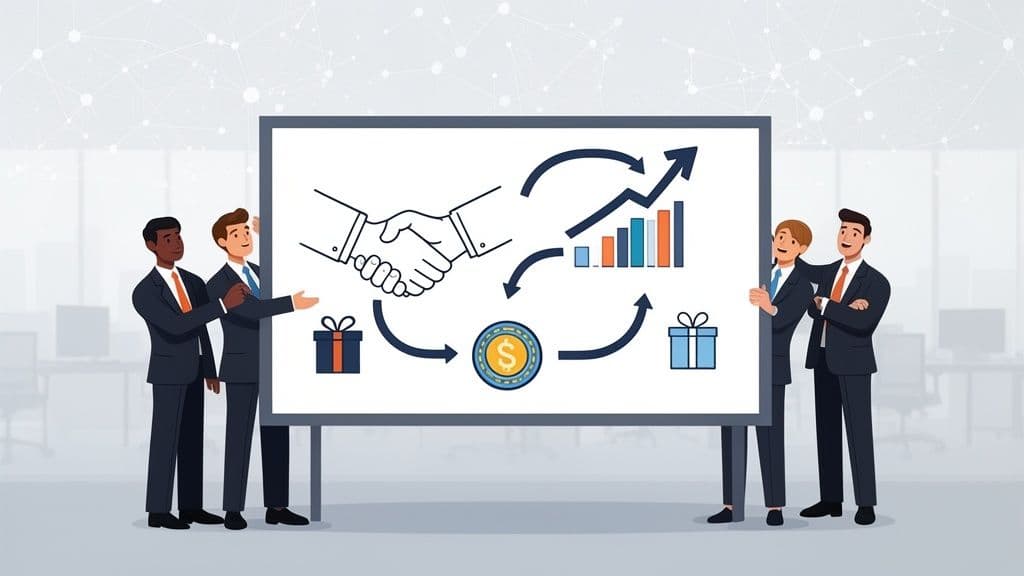
So, what exactly is a B2B rewards program? At its core, it's a structured way to encourage and strengthen relationships with your business partners—think distributors, resellers, developers, and integrators. This isn't your typical consumer loyalty program that rewards small, frequent purchases. Instead, B2B programs are all about incentivizing high-value actions that fuel long-term growth and a healthier business ecosystem.
Getting to the Heart of B2B Rewards
Ever used a coffee shop punch card? You buy nine coffees, you get the tenth free. That’s the classic consumer (B2C) model—simple, repetitive, transactional. A B2B rewards program is a completely different beast.
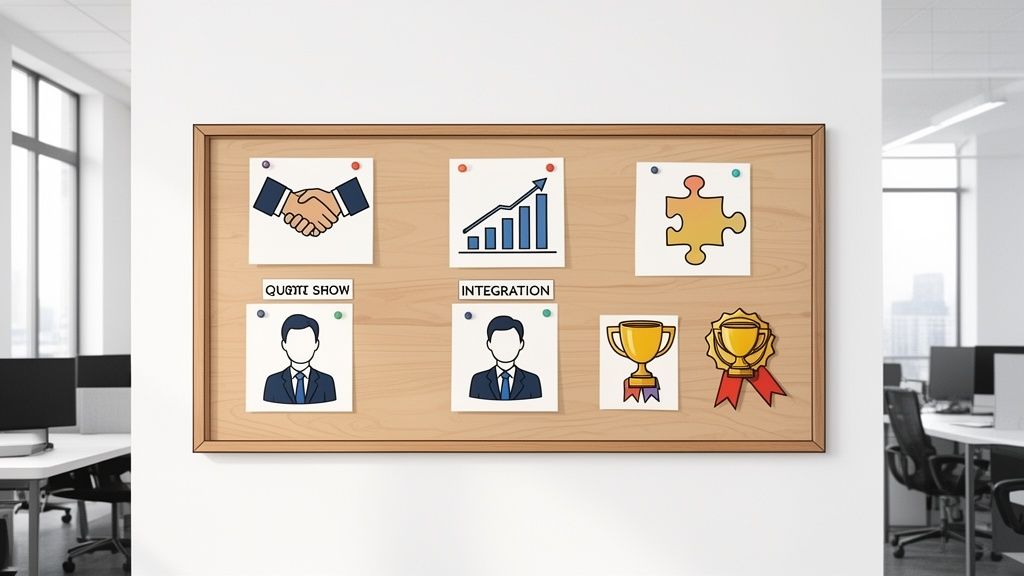
It's less like a punch card and more like a strategic alliance or a quest board in a video game. The goal isn't just to get partners to buy something; it's to motivate them to complete complex, high-impact "quests" that are vital to your company's bigger picture. These quests might be anything from integrating a new protocol to co-hosting a webinar.
This is the key difference. B2C programs give individuals discounts and freebies. A B2B program, on the other hand, engages an entire organization with meaningful business accelerators, not just transactional perks.
From Transactions to True Partnerships
The real magic of a well-designed B2B rewards program is its ability to shift a simple vendor-client dynamic into a genuine partnership. You're creating a system where everyone is invested in each other's success. This is especially critical in the Web3 world, where collaboration isn't just a nice-to-have—it's essential for survival and growth.
What are you actually trying to achieve? The goals usually boil down to a few key areas:
- Fueling Sales Growth: Giving resellers a reason to hit ambitious targets or break into new territories.
- Driving Product Adoption: Rewarding partners for actually building on your platform or integrating your protocol into their stack.
- Supercharging Marketing: Offering incentives for co-hosting events, publishing case studies, or bringing in qualified leads.
- Deepening Partner Engagement: Building a thriving community where partners don’t just sit on the sidelines but actively share feedback and contribute.
B2C vs B2B Rewards Programs at a Glance
To really nail down the concept, it helps to see the two models side-by-side. The table below breaks down the fundamental differences in their goals, rewards, and the very nature of the relationships they create.
| Feature | B2C Rewards Program (Consumer) | B2B Rewards Program (Business) |
|---|---|---|
| Primary Goal | Encourage repeat purchases and build brand affinity. | Drive strategic partner behaviors and foster long-term loyalty. |
| Target Audience | Individual consumers. | Entire organizations (resellers, distributors, partners). |
| Reward Type | Discounts, free products, points for small purchases. | Co-marketing funds, exclusive training, sales leads, tiered benefits. |
| Relationship | Transactional and often short-term. | Relational, consultative, and built on long-term value. |
| Value Proposition | Save money on future purchases. | Grow your business and gain a competitive edge. |
As you can see, we're talking about two very different playbooks. One is about quick, simple transactions, while the other is about building deep, mutually beneficial business relationships that last.
Why B2B Rewards Programs Drive Serious Growth
Thinking about a B2B rewards program as just another expense is a mistake. It’s a direct investment in your company's growth, plain and simple. These programs are powerful engines for turning casual partners into genuine champions who are financially and emotionally bought into your success. They also build a strong competitive moat, making it way more appealing for partners to stick with you instead of jumping ship.
The idea is pretty straightforward: what gets rewarded, gets repeated. When you create clear incentives for the actions you value most—like hitting sales targets, integrating your protocol, or bringing in qualified leads—you’re basically building a system that encourages the very things that make you grow. It flips the partnership from a purely transactional relationship into a real collaboration where everyone is pulling in the same direction.
The Profitability of Partnership
The real magic of a B2B rewards program shows up on the balance sheet. This isn't about warm and fuzzy feelings; it's about generating cold, hard revenue. Partners who are truly engaged don't just sell more. They get to know your products inside and out, provide better support to their own customers, and give you priceless feedback that helps you level up your offerings.
This is especially true in the Web3 world. Constantly chasing new users is an expensive, soul-crushing grind. A smart rewards program lets you shift your focus from the endless hunt for newbies to nurturing a core group of high-value builders and partners. It’s far cheaper—and more effective—to keep a great partner happy than to find a new one.
"Investing in your business partners isn't just about loyalty; it’s about creating a predictable revenue stream. When your success becomes their success, growth is a natural outcome."
This kind of strategic alignment delivers some pretty impressive financial results. The data doesn't lie: companies with strong loyalty initiatives consistently see a major lift in sales and customer spending. The proof is in the pudding when you compare the performance of program members to those who aren't part of it.
For example, members of a loyalty program can generate between 12-18% more revenue growth each year than non-members. That’s not a rounding error; it’s a significant boost that goes straight to the bottom line. On top of that, the best B2B loyalty programs can lift overall sales by 15-25% annually, with participants spending about 20% more on average. You can dig into more of these B2B loyalty statistics to see the full picture.
Building a Defensible Ecosystem
Beyond the immediate cash benefits, a B2B rewards program helps you build a resilient ecosystem that’s tough for anyone else to copy. When you reward partners with exclusive perks—think early access to new features, co-marketing funds, or a direct line to your best tech support—you’re creating a value proposition that your competitors can't easily match.
These non-financial rewards make the relationship stickier and weave your solution deeper into your partners' day-to-day operations. Here's how to think about it:
- Increased Switching Costs: The more a partner gets out of your exclusive resources and community, the bigger the headache it would be for them to leave.
- Enhanced Brand Advocacy: A happy, engaged partner becomes your best salesperson. They’ll naturally recommend you to their own network, creating a powerful word-of-mouth engine.
- Improved Product-Market Fit: Who better to get feedback from than your most committed partners? Their insights are gold for refining your product to meet real market needs.
At the end of the day, a B2B rewards program is about more than just handing out freebies. It’s a strategic framework for building a coalition of advocates who are actively invested in your growth because they know it’ll fuel their own.
Designing a Web3 B2B Rewards Program That Actually Works
Alright, let's get practical. Moving from theory to a real-world B2B rewards program takes a bit of strategic thinking. You're not just throwing points around; you're building a system that nudges partners toward actions that help you grow. Think of it like a game where the rules and rewards are all designed to make your partners win—which means you win, too.
The foundation of any good program is getting inside your partner's head. A 10% discount might excite a regular customer, but it barely registers for a B2B partner. They’re playing a different game. They want to boost revenue, get a leg up on the competition, or tap into resources they can't build themselves. Your program has to plug directly into those core business goals.
Choosing Your Program Model
Before you start brainstorming rewards, you need a structure. Most B2B rewards programs fit into a few common buckets, and the trick is picking one that matches your partners' journey and where your project is at.
- Points-Based Systems: This is the classic, straightforward approach. Partners earn points for doing specific things—integrating your API, referring a new partner, or publishing a case study. They can cash these points in for cool stuff. It's flexible, easy to grasp, and gets the job done.
- Tiered Programs: This model gamifies the whole experience by creating levels of partnership (think: Bronze, Silver, Gold). As partners do more valuable things and show more commitment, they "level up." Each new tier unlocks better rewards, which is a huge motivator for them to stick around and do more.
- Hybrid Models: Honestly, the best programs usually mix and match. A partner might rack up points for daily activities while also working their way up to a higher tier that grants them exclusive, high-value perks.
A well-structured program does more than just reward behavior; it creates a clear pathway for partners to grow alongside you. It turns a simple transactional relationship into a developmental journey.
This tiered approach is especially powerful in Web3. It lets you give basic support to new builders in your ecosystem while saving your absolute best resources—like co-marketing budgets or dedicated engineering help—for the partners who are truly all-in.
Crafting Incentives That Actually Motivate
This is where so many programs fall flat. The rewards you offer are the heart and soul of the system. If they don't hit the mark, your partners just won't care. Generic rewards are forgettable, but incentives that solve a real business problem? That’s how you create real loyalty.
Forget token-gated access to yet another Discord channel. Think bigger.
High-Value B2B Reward Examples:
- Co-Marketing Funds: Offer to match a partner's marketing spend for a joint campaign. This directly helps them find new customers.
- Dedicated Technical Support: Give your top-tier partners a direct line to your best engineers. This helps them build faster and with fewer headaches.
- Early Access to New Protocols: Let your most committed partners play with new features before anyone else, giving them a serious first-mover advantage.
- Qualified Sales Leads: Pass along leads that come through your own marketing funnels. This is a direct injection into their sales pipeline.
- Exclusive Strategy Sessions: Offer one-on-one time with your leadership team to help them map out their go-to-market strategy.
Rewards like these are incredibly sticky because they deliver tangible business value that a competitor can’t just copy. They prove you're invested in your partners' success, not just your own. To see how the nuts and bolts of a points system can be structured, you can learn more about building a Web3 points program.
Aligning Actions with Quests
The final piece of the puzzle is connecting these killer rewards to specific, measurable actions. This is where a quest-based system, which is super easy to manage with no-code tools like Domino, really shines. Instead of a vague list of rules, you create a "quest board" of activities for partners to complete.
This approach breaks down your big goals into clear, bite-sized steps.
- Objective: Increase protocol integrations.
- Quest: Integrate our mainnet API. Reward: 500 points + a "Verified Builder" badge.
- Objective: Generate more marketing content.
- Quest: Publish a technical tutorial about our platform. Reward: Co-marketing funds for promotion.
- Objective: Grow the community.
- Quest: Co-host a community AMA on Twitter Spaces. Reward: Priority access to your next beta launch.
By structuring your B2B rewards program this way, you make it dead simple for partners to see exactly what they need to do to earn rewards. It kills the ambiguity and turns your program from a passive benefits list into an active, engaging system that pushes your most important business goals forward.
How to Launch Your Program Without Writing Code
The thought of building a rewards program from the ground up can feel pretty overwhelming. You’re probably picturing months of dev cycles, tricky smart contracts, and basically commandeering your entire engineering team. But here’s the good news: launching a sophisticated B2B rewards program is faster and easier than ever, all thanks to no-code platforms.
These tools do the heavy lifting for you, letting you design, launch, and run a full program through a simple, visual interface. This means Web3 marketers and community managers can get a program live in days—not months—without touching a single line of code. You get to focus on strategy and building great partner relationships instead of getting bogged down in technical details.
The process usually boils down to a simple flow: choose your model, set the right incentives, and connect them to the specific actions you want partners to take.
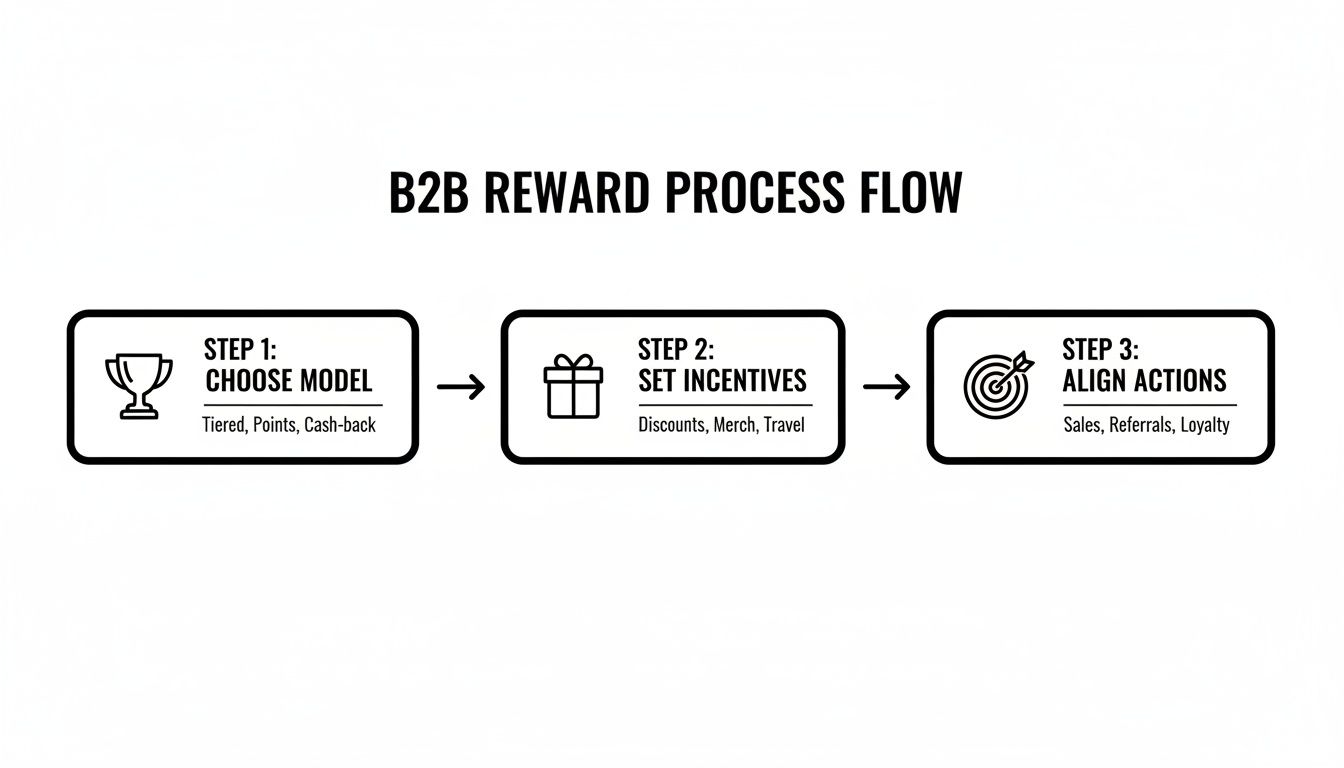
This diagram nails the core strategy. You decide how the program is structured, pick rewards that actually motivate people, and then tie it all back to your business goals.
Setting Up Your Partner Quest Board
First things first, you need a central hub for your partners. Think of it like a dedicated quest board where they can find all the available tasks and see what they get for completing them. With a platform like Domino, you can whip this up in no time using templates built for common B2B goals.
A good quest board offers a mix of activities for partners at every stage of their journey. A brand-new partner might start with a few easy wins, while a long-time collaborator can jump into more challenging, high-value quests.
Example Quest Structure:
- Onboarding Quests: Simple stuff like joining a private partner Discord or finishing a quick product training. These build early momentum.
- Engagement Quests: Things like co-hosting a Twitter Space, sharing your latest announcement, or giving product feedback.
- Growth Quests: These are the heavy hitters—integrating your protocol, referring a new partner, or bringing in a qualified sales lead.
This tiered approach makes sure there’s always a relevant and rewarding next step for every partner, keeping them active and in the loop for the long haul.
Automating Task Verification and Distribution
Here's where the real magic happens: automation. Manually checking if a partner completed every single task is a logistical nightmare that just doesn't scale. Modern platforms plug directly into the tools your partners are already using, which makes verifying tasks instant and totally painless.
Let’s say you create a quest asking partners to tweet about your new feature. Instead of you scrolling through Twitter, the system uses an API to automatically confirm the post and immediately sends the promised points or rewards. It’s a massive time-saver.
By getting rid of the manual busywork, you free up your team to focus on what really matters—building strong, personal relationships with your most valuable partners.
This automation works for both on-chain and off-chain activities. You can set up quests that automatically check for actions like:
- Social Engagement: Confirming likes, retweets, or follows on platforms like Twitter.
- Community Participation: Tracking messages or reactions in specific Discord or Telegram channels.
- On-Chain Actions: Verifying wallet interactions, like staking a token or holding a certain NFT.
- API-Driven Tasks: Validating custom actions from your own product or another third-party app.
The best part is that you can manage everything from one central dashboard. For anyone curious about how these platforms work under the hood, this guide to what no-code development is breaks down how it empowers non-technical teams.
Integrating With Your Existing Tools
A great B2B rewards program doesn't live on an island. It needs to fit right into the communication and project management tools your team and partners use every day. This is another spot where no-code platforms shine, offering plug-and-play integrations that make everything feel connected.
For example, you can have a bot announce new quests directly in your partner Telegram or a private Discord. When a partner finishes a big quest, a notification can pop up in your team's Slack, giving you a heads-up to reach out personally. It creates a smooth, professional vibe for your partners while keeping your team in the loop.
This mindset is a lot like setting up a traditional affiliate network. If you want to understand the fundamentals, checking out a guide on how to start an affiliate program can be super helpful. The core ideas are the same: clear communication, automated tracking, and valuable incentives. By using these integrations, your rewards program becomes a natural part of how you already manage partners, not just another platform for them to check.
Measuring Success and Optimizing Your Program
Launching a B2B rewards program without a way to measure its impact is like flying blind. You’re just hoping for the best. If you can't see what's working and what isn't, you have no real way to improve it and justify the investment.
The trick is to look past the surface-level stuff—the vanity metrics—and zero in on the Key Performance Indicators (KPIs) that prove your program is actually adding value to your business. It's not just about tracking how many quests get done; it's about connecting that activity to tangible results. Are your partners selling more? Are they bringing in better leads? Answering these questions means having a solid measurement plan from day one.
Defining Your Core KPIs
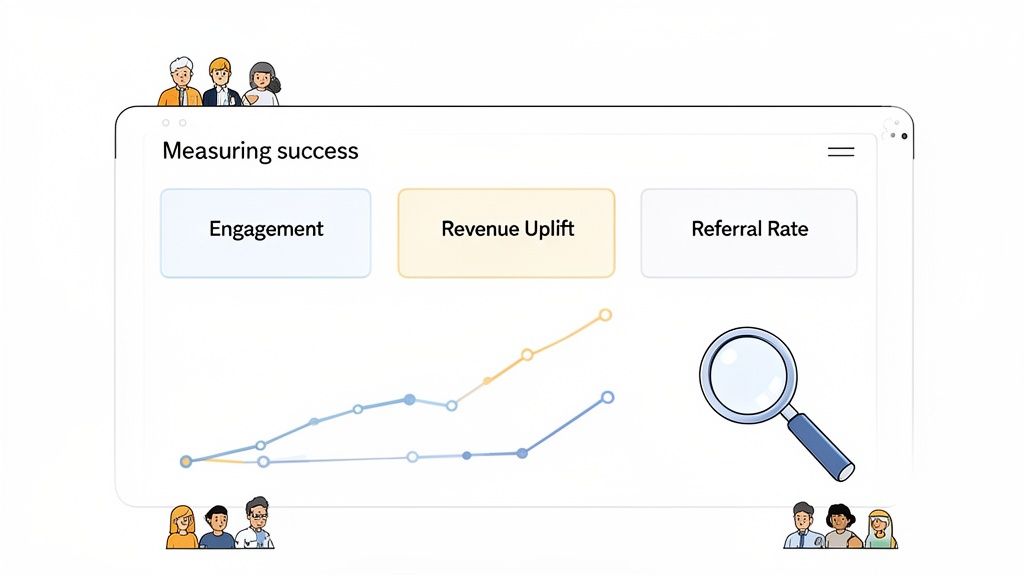
Before you start tracking anything, you have to decide what "success" actually looks like for you. Your KPIs should be a direct reflection of the business goals you’re trying to hit. While every program is a bit different, a few core metrics will give you a powerful snapshot of performance.
- Partner Engagement Rate: This is more than just sign-ups. You want to track the percentage of enrolled partners who are actively completing quests each month. A high rate tells you the incentives are actually motivating people.
- Sales Uplift: This one is huge. Compare the revenue generated by partners who are in the program to those who aren't. A noticeable lift here is the kind of hard proof that gets everyone excited.
- Referral Conversion Rate: If you’re trying to grow your ecosystem, this is key. Track how many referred partners sign up and, more importantly, how many of them stick around and become active contributors.
- Program ROI: At the end of the day, you have to prove the program is a smart investment. You can get into the nitty-gritty of how to calculate the return on investment for your marketing in our detailed guide.
A well-measured program doesn't just justify its own existence—it becomes a strategic asset that informs your entire growth strategy. The data you collect is a goldmine for understanding what truly motivates your partners.
This data-first approach is becoming non-negotiable. The B2B loyalty market is projected to explode from $8.6 billion in 2023 to over $18.2 billion by 2026, largely because new tech is making it so much easier to run these programs. You see the same trend in Web3, where tools like Domino have automated over 25 million quests—proof that rewards can scale engagement massively. Companies with solid programs often see a 10-20% annual bump in profits, because engaged partners tend to spend 20% more. You can dig deeper into the growth of B2B loyalty programs and why it matters.
Using Data to Optimize and Iterate
Tracking KPIs is just step one. The real magic happens when you use that data to constantly fine-tune your program. Think of it as a feedback loop—you listen to what the numbers are telling you and make smart adjustments.
For example, if you see a specific quest has a really low completion rate, that’s a signal. Maybe the instructions are confusing, or maybe the reward just isn't worth the effort. That's your cue to tweak the incentive or clarify what people need to do.
Actionable Optimization Strategies:
- A/B Test Rewards: Not sure what motivates people most? Try offering different rewards for the same quest and see which one gets more action.
- Survey Your Partners: Data is great, but don't forget to just ask! Send out a quick survey to your partners to see what they value and what they’d like more of.
- Adjust Quest Difficulty: Make sure you have a good mix of easy wins to keep newcomers hooked and more challenging, high-value quests for your top performers.
- Refine Your Tiers: If you have a tiered system, look at the data. Is there a big enough incentive for partners to climb the ladder to the next level?
When you treat your program like a living, evolving system, you ensure it stays relevant, engaging, and locked on your business goals. This constant cycle of improvement is what turns a good program into a great one that delivers results year after year.
Common B2B Program Mistakes and How to Avoid Them
It’s easy to get excited about launching a B2B rewards program, but even the best intentions can lead to a program that falls completely flat. I've seen it happen. You end up with something that just drains resources instead of delivering real results.
The good news? Most of these mistakes are incredibly common and totally preventable if you know what to look for.
The single biggest mistake is offering the wrong incentives. Think about it: handing out generic discounts or cheap swag to a serious business partner is like giving a five-star chef a McDonald's gift card. It's not just a bad reward; it sends the message that you don't actually understand what they value. And what they value is anything that helps them grow their business.
Another classic blunder is making the rules way too complicated. If your partners need to pull out a flowchart just to figure out how to earn something, they're not going to participate. It's that simple. Complexity is the ultimate engagement killer. Your program should feel like a game they want to win, not a tax form they have to fill out.
Sidestepping Critical Program Flaws
Avoiding these issues really boils down to thoughtful planning and crystal-clear communication. Your partners are busy people. The value of joining your program has to be obvious from the get-go, and the path to rewards needs to be dead simple. A poorly designed program can actually do more harm than good, creating resentment where you wanted loyalty.
So, how do you keep your program from going off the rails? Focus on these fixes:
- Wrong Incentives? Offer Real Business Value. Ditch the discounts. Instead, offer co-marketing funds, high-quality sales leads, or priority access to your technical support team. These are things that directly impact their bottom line.
- Confusing Rules? Simplify Everything. A quest-based system works wonders here. Give them clear, actionable steps. They should know exactly what to do and what they’ll get for doing it. No guesswork.
- Poor Communication? Automate and Engage. Use tools to push notifications about new quests right into the Discord or Telegram channels you already share. Consistent updates keep your program from being forgotten.
- Manual Overload? Automate the Heck Out of Verification. Don't bury yourself in spreadsheets trying to track everything. Use a no-code platform to automatically verify when tasks are done and send out the rewards. This frees you up to actually talk to your partners and build relationships.
A successful B2B rewards program isn’t just a list of perks; it’s a well-oiled machine designed to make your partners’ lives easier and more profitable. When their success is your primary goal, your own success will follow.
By focusing on genuine value, radical simplicity, and smart automation, you can dodge the bullets that take down most programs. This turns your B2B rewards program from a potential money pit into a powerful engine for growth, forging the kind of strong, lasting partnerships that give you a real edge. It's all about building on a foundation of mutual benefit from day one.
Got Questions About B2B Rewards? We've Got Answers.
Jumping into a B2B rewards program, especially in Web3, is bound to bring up a few questions. We've gathered some of the most common ones we hear to give you quick, clear answers so you can start building with confidence.
How Do I Actually Calculate the ROI on This Thing?
Figuring out the Return on Investment (ROI) is key to proving your program is worth the effort. While you can go deep into the analytics, a simple formula is all you need to get a solid snapshot of its financial impact.
The basic formula is: (Gain from Investment - Cost of Investment) / Cost of Investment.
- Gain from Investment: This is the extra revenue your program members bring in. An easy way to track this is to compare the average revenue from partners who are in the program versus those who aren't.
- Cost of Investment: Add up the value of the rewards you’re giving away, plus any platform fees or administrative costs needed to keep the program running smoothly.
Let's say your partners in the program generated an extra $50,000 in revenue, and it cost $10,000 to run the whole thing. Your ROI would be a very healthy 400%. This simple math gives you a powerful way to show the program's value.
What Are the Best Non-Token Rewards for a Web3 B2B Program?
Tokens are great, but the rewards that truly create loyalty are often the ones that provide real business value money can't buy. These non-financial perks are what make your ecosystem sticky and keep partners from jumping ship.
The best B2B rewards don't just feel valuable—they actively help your partners grow their own businesses. This alignment is the secret to building deep, lasting loyalty that a competitor can't replicate with a simple discount.
Think about offering high-impact benefits that solve genuine problems for your partners:
- Co-Marketing Opportunities: Feature them in your newsletter, host a joint webinar, or even offer a dedicated marketing budget for a campaign you run together.
- Priority Technical Support: Give your top partners a direct line to your best engineers. Helping them build faster is a reward that pays for itself.
- Exclusive Strategy Sessions: Offer some one-on-one time with your leadership team to help them sharpen their go-to-market strategy.
- Qualified Sales Leads: When you get relevant leads through your own channels, pass them along. You’ll be directly fueling their sales pipeline.
How Fast Can We Realistically Launch a Program With a No-Code Tool?
This is where no-code platforms really shine. Instead of getting bogged down in a months-long development cycle, you can get a B2B rewards program up and running in just a few days.
With tools that have pre-built templates and automated verification, you could have a basic quest board live within a week. A more customized, deeply integrated program might take a couple of weeks to get just right. This speed means you can start delivering value and gathering data almost immediately.
Ready to build a B2B rewards program that drives real growth without the technical headache? With Domino, you can design, launch, and automate powerful partner quests in minutes. Start building your program today!