A Guide to Launching High-Impact B2B Rewards Programs
Forget what you think you know about perks. B2B rewards programs aren't about handing out freebies; they're a serious engine for driving revenue, locking in partner loyalty, and carving out a real competitive advantage. When done right, these programs turn your business partners into your most powerful advocates, generating tangible growth that you can actually measure.
A well-designed program isn't a cost center—it's a profit center.
Why B2B Rewards Programs Actually Drive Growth

In the B2B space, everything comes down to relationships. We’re not talking about the quick, often emotional buys you see in the consumer world. B2B partnerships are built for the long haul on a foundation of trust, shared value, and mutual success. This is exactly where a smart rewards program can make all the difference.
Think less about a free cup of coffee and more about providing genuine value that helps your partners’ businesses thrive. The entire point is to get your partners' goals perfectly aligned with your own. When they win, you win. A rewards program just formalizes that symbiotic relationship, transforming passive resellers, developers, or distributors into proactive champions for your brand.
The Real-World Business Impact
So, let's talk about what this actually looks like on the balance sheet. This isn't just theory; the data consistently shows a powerful return on investment.
Well-executed programs have been shown to boost total revenue by an impressive 32% and grow market share by 30%. Take Lenovo's Expert Achievers Program (LEAP), for example. It was a complete game-changer, with participants generating a staggering 16 times more revenue on incentivized products than non-participants.
Then there's IBM’s VIP Rewards program, which saw a 40% jump in partner engagement simply by gamifying contributions. These aren't isolated incidents. When you consider that it costs 75% more to land a new client than to keep an existing one, investing in your partners just makes sound financial sense.
The best B2B rewards programs I've ever seen are self-funded. The extra revenue brought in by fired-up partners more than pays for the rewards themselves, creating a virtuous cycle of growth and reinvestment.
The impact really boils down to a few key areas:
- More Sales, More Revenue: Tying incentives directly to the sale of specific products or services gives you an immediate top-line lift.
- Stronger Partner Loyalty: Meaningful rewards make your partners sticky. They’ll think twice before even looking at a competitor.
- Deeper Product Knowledge: When you build training and educational content into the program, your partners become better equipped to sell your stuff effectively.
- Wider Market Reach: A motivated partner is far more likely to push your products into new territories or untapped customer segments.
To see how top brands are pulling this off, you can check out these real-world results from leading B2B loyalty programs.
It’s All About the Relationship, Not the Transaction
The ultimate goal here is to move beyond a purely transactional dynamic. A simple discount might help you close a single deal, but a rewards program that offers exclusive access to beta features, co-marketing funds, or dedicated support builds a partnership that lasts.
This creates a protective moat around your business, giving you a competitive edge that’s incredibly difficult for anyone else to copy. By investing in your partners' success through a thoughtfully designed rewards program, you're directly investing in your own long-term, sustainable growth. In today's market, that’s not just a nice-to-have; it's a strategic must.
First Things First: Your Program Blueprint and Goals
A truly great B2B rewards program doesn’t just materialize out of thin air. It’s carefully engineered, built on a rock-solid plan, a deep understanding of who you're talking to, and goals that actually move the needle for your business. Before you even start daydreaming about cool rewards or quests, you need to put on your architect hat.
Honestly, this planning phase is what separates a revenue-driving machine from a fun-but-ultimately-pointless gimmick. It all comes down to asking the right questions upfront, making sure every single piece of your program has a clear job to do.
What's the Real Goal Here?
Let’s get specific. What are you actually trying to achieve? "Engagement" is way too fuzzy. You need concrete, measurable goals that hook directly into your company's bigger picture. Think of your rewards program as a powerful tool—you need to know exactly what you’re building with it.
So, what's the primary objective? Are you trying to:
- Boost Partner Sales? This is a classic. You're incentivizing resellers or distributors to sell more of your stuff. A clear metric here could be aiming for a 15% increase in sales from program members in the next six months.
- Drive Product Adoption? Maybe you just launched a killer new feature. Your goal might be to get 500 partners to integrate a new API or start using a specific module within the quarter.
- Ignite Your Community? This is a huge one, especially for Web3 projects. Success could look like a 25% jump in active Discord members or hitting a certain number of meaningful contributions on a community forum.
- Generate High-Quality Leads? Your partners can be a goldmine for new business. You could set a target to generate 100 qualified leads through partner referrals each quarter.
When you tie your program to a clear business outcome, you create a North Star. It guides every decision you make from here on out and makes it a heck of a lot easier to prove the program's ROI to your boss later.
Know Your Audience, Map Their World
Here’s a hard truth: not all partners are the same. Lumping your resellers, developer advocates, and agency partners into one big bucket is a surefire way to fail. Each of these groups has totally different motivations, daily struggles, and ideas about what's "valuable." The best b2b rewards programs are built on razor-sharp audience segmentation.
Get to know your partner personas:
- The Reseller: They're driven by dollars and cents. They want financial incentives and tools that make it easier to close deals. Their world revolves around sales cycles and profit margins.
- The Developer: They crave early access to new tech, top-tier technical support, and getting recognized by their peers. Their journey is all about building, testing, and making your product work seamlessly with theirs.
- The Agency Partner: They’re thinking about co-marketing, getting good leads, and building case studies that help them land their next client. Their success is tied to delivering amazing results for their own customers.
Once you’ve got your segments, literally map out their journey with your company. Pinpoint the key moments and the frustrating friction points. Where do they get stuck? Where do they wish they had more support? Those are your golden opportunities to drop in a reward or an incentive. A well-timed reward can flip a moment of frustration into one of genuine loyalty.
Brainstorm Rewards That People Actually Want
This is your chance to avoid the trap of boring, generic swag. Please, no more branded coffee mugs. For a B2B audience, rewards need to deliver real business value or offer exclusive access they just can't get anywhere else.
The most effective B2B rewards aren't just transactional; they're relationship-builders. They show your partners you understand their business and are invested in their success, not just your own sales numbers.
Here are a few ideas that actually resonate with professionals:
- Exclusive Access: Give them a sneak peek at your product roadmap, beta access to new features, or an invite to a private, high-level developer workshop.
- Co-Marketing Opportunities: Offer to fund a joint marketing campaign, feature them in a case study on your blog, or give them a speaking slot at your next big webinar.
- Data and Insights: Share exclusive industry reports, market trend data, or performance benchmarks that give them a competitive edge.
- VIP Support: Hook them up with a dedicated account manager, priority tech support, or even direct access to your product team for feedback.
Pick a Structure That Makes Sense
Finally, you need a framework to hang all this on. The structure of your program should feel like a natural fit for your goals and the specific behaviors you want to see.
| Program Type | Best For | Example Use Case |
|---|---|---|
| Tiered System | Encouraging long-term loyalty and rewarding your top performers. | A partner levels up from "Silver" to "Gold" after hitting a sales target, unlocking better margins and co-op marketing funds. |
| Points-Based Model | Motivating a whole range of actions beyond just making a sale. | Partners earn points for things like completing training, referring leads, and writing reviews, which they can cash in for rewards. |
| Project-Based Quests | Driving specific, time-sensitive actions. This is perfect for Web3. | A campaign where developers earn a token bonus for deploying a smart contract on your testnet within a 30-day window. |
By taking the time to build this blueprint first, you're setting your b2b rewards program up for success. You’ll have a clear path forward, a genuine understanding of your audience, and a solid structure designed to deliver results you can actually measure.
Designing Rewards and Quests People Actually Want
Alright, this is where the fun begins. Your blueprint is set, but it’s the rewards and quests that will get people off the sidelines and into the game. We're not just giving stuff away here; we're building a system of compelling tasks that nudge people toward actions that genuinely help your project grow.
Forget just asking for a simple follow or retweet. The real magic in modern b2b rewards programs, especially in Web3, happens when you mix on-chain and off-chain activities. This creates a much richer experience and makes sure you're engaging everyone—from the crypto-curious newcomer to the hardcore degen who’s already aped into your protocol.
Here’s a simple way to visualize how all these pieces fit together. It’s a flow that takes you from your big-picture goals right down to the specific rewards that will get you there.
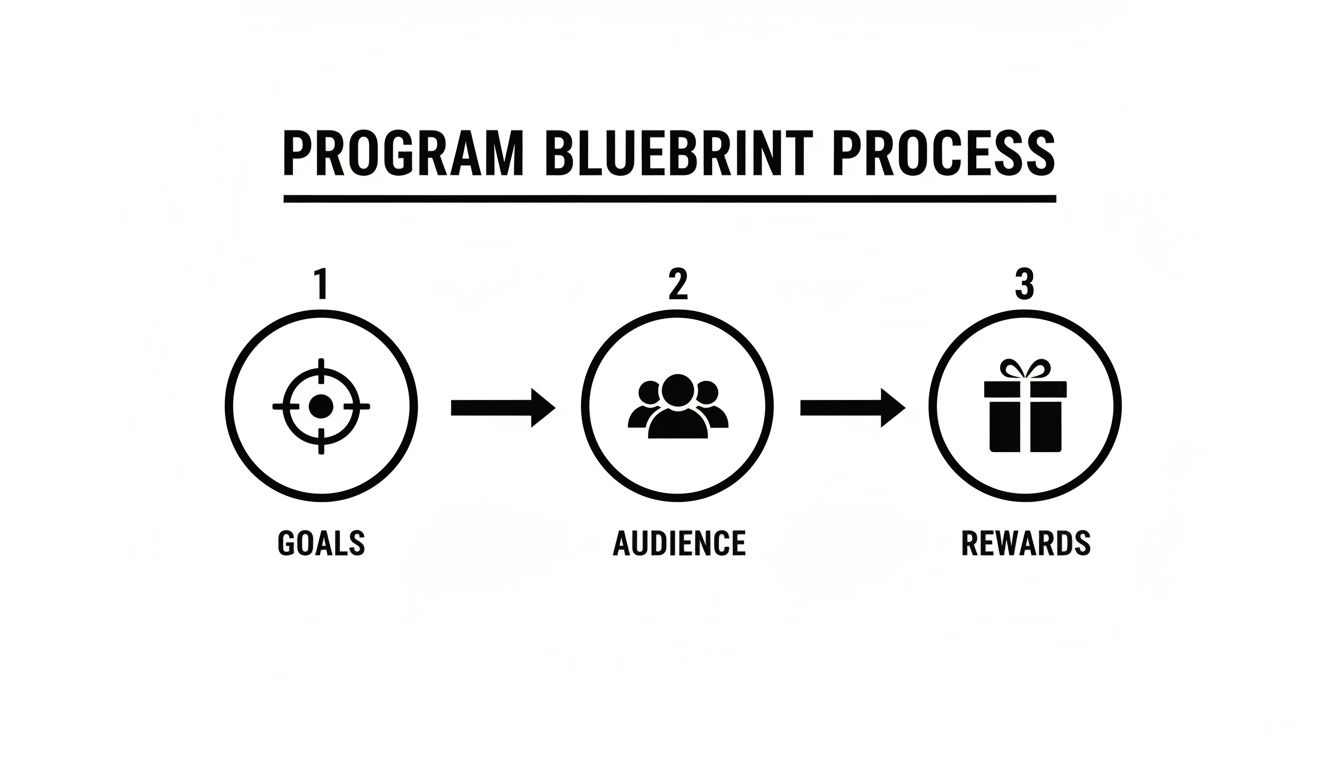
The logic is straightforward: your strategy determines your target audience, and knowing that audience tells you what kind of rewards will actually get them to act.
Crafting On-Chain Quests That Matter
For any Web3 project, on-chain actions are your bread and butter. They’re transparent, easy to verify, and directly pump life into your ecosystem. To really nail these tokenized incentives, it helps to have a solid grasp of understanding blockchain technology.
Think about tasks that show real skin in the game:
- Smart Contract Interaction: Get partners to call a specific function on your new smart contract. It’s a brilliant way to drive first-time usage and find bugs before everyone else does.
- Liquidity Provision: Reward people for adding liquidity to a key pool on a DEX. This is a direct injection of health for your token’s market.
- NFT Staking or Holding: Give partners a reason to hold or stake your project’s NFT. This can help stabilize the floor price and reward your true believers.
- On-Chain Governance: Encourage voting on a new proposal. This isn’t just about engagement; it’s about building a truly decentralized community that has a say in its own future.
The best part about on-chain quests? They are completely trustless. The blockchain is the ultimate source of truth, providing definitive proof that an action happened. This makes distributing rewards automatic, fair, and scalable.
You get to skip all the manual checks and headaches that come with traditional programs. It just works.
Don't Overlook High-Value Off-Chain Actions
As critical as on-chain activity is, it’s not the whole picture. Your partners are building businesses, creating content, and talking to customers in the real world. Their off-chain contributions can be incredibly valuable. The key is to design tasks that are meaningful and, whenever possible, can be verified automatically.
Here are a few ideas for high-impact off-chain quests:
- API-Verified In-App Actions: Reward a partner for hitting a specific milestone in your app or completing a crucial setup step. This is a direct line to driving product adoption.
- Partner-Generated Content: Offer a bounty for creating a high-quality video tutorial, a detailed case study, or a blog post that showcases your product. You get amazing marketing assets, and they get rewarded.
- Active Community Participation: Reward the people who show up. This could be for asking a great question in a Discord AMA, dropping a thoughtful comment on a forum, or helping a new user in Telegram. This is how you cultivate a strong, self-sustaining community.
The potential here is enormous. The global loyalty market is on a rocket ship, projected to hit US$214.7 billion by 2028, with B2B programs driving a huge chunk of that growth. We’re seeing data that shows B2B companies can boost retention by 20-40% and increase revenue by 15-30% with well-designed programs. In Web3, platforms are already running millions of quests for thousands of campaigns, automating rewards for everything from tweets to NFT stakes and proving just how powerful this model is at scale.
Getting Your Reward Economy Right
Last but definitely not least, you need to think about your rewards. They have to be exciting enough to motivate people but sustainable enough that you don't go broke. Handing out your entire token supply on day one is not a long-term strategy.
A balanced reward economy is everything.
The smartest play is to mix different reward types to appeal to different people. You can explore a wide range of quest ideas to see what might fit your community.
Here’s a sample of what that mix could look like:
| Reward Type | Target Audience | Example |
|---|---|---|
| Token Airdrops | Early Adopters & Power Users | Airdrop tokens to wallets that interacted with your protocol before a specific date. |
| Exclusive NFTs | Community & Brand Advocates | Award a unique, non-transferable NFT for completing a difficult multi-step quest. |
| Co-Marketing Funds | Agency & Channel Partners | Offer a financial grant for a joint webinar or marketing campaign. |
| Beta Access | Developers & Tech Partners | Grant early access to an upcoming API or testnet feature. |
By blending financial incentives with status-based rewards like exclusive access, you create a much more dynamic and engaging program. The core principle is always to match the reward's value to the effort required. Keep it fair, keep it exciting, and you’ll build a program that people genuinely want to be a part of.
Choosing Your Tech Stack to Automate Everything
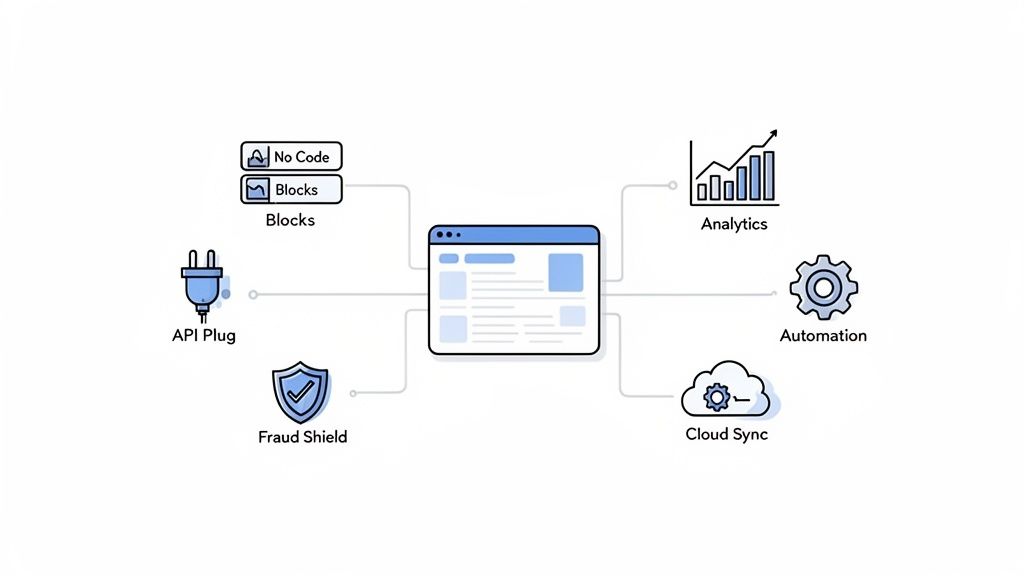
Let’s be honest: messy spreadsheets and manual tracking are where great B2B rewards programs go to die. All the momentum you build during launch can evaporate if you're suddenly drowning in administrative work. This is the moment to engineer a scalable, automated rewards engine that practically runs itself.
The right tech isn't just a "nice-to-have"—it's the central nervous system of your entire program. It’s what lets you launch fast, verify actions without losing your mind, and scale your program without pulling your hair out. Your goal is to create a frictionless experience so you can focus on strategy, not soul-crushing admin tasks.
The Core Components of Your Rewards Engine
Putting together an automated program means getting a few key pieces to work in harmony. Think of it like assembling the ultimate toolkit for community growth. You don't have to build it all from scratch, but you absolutely need to make sure these jobs are getting done.
Your tech stack needs to handle a few critical functions:
- A User-Friendly Portal: This is the front door to your program. It has to be a clean, simple place where partners can see available quests, check their progress, and grab their rewards without needing a user manual.
- Back-End Automation: Here’s where the magic happens. This is the system that automatically verifies when a partner completes a task, whether that’s an on-chain transaction or sharing a post on X.
- Seamless Integrations: Your rewards program doesn’t exist in a bubble. It needs to talk to your other tools—your CRM, social platforms like Discord and Telegram, and even your own app through APIs.
The most powerful setup is one where your on-chain data and off-chain marketing tools are seamlessly connected. This creates a complete view of partner activity and allows you to reward the full spectrum of valuable contributions.
Getting your systems to communicate is everything. An integrated approach using CRM, ERP, and website automation can take a massive load off your team, freeing you up for more important work. When your tech talks, you kill manual data entry and make the whole operation run smoother.
Why No-Code Platforms Are a Game Changer
For most teams—especially in the fast-paced Web3 world—building a custom rewards platform from the ground up is a colossal waste of time and engineering resources. This is where no-code solutions become your secret weapon. They give you the infrastructure and flexibility to get a program live in days, not months.
A platform like Domino can act as the central hub, connecting all the moving parts. It lets you design and launch quests using pre-built templates, meaning you can react to market shifts and spin up new campaigns in minutes. That kind of speed is a massive competitive advantage.
For example, imagine you want to reward developers for testing a new feature on your testnet over a weekend. A no-code tool can handle the announcement, track the on-chain activity, and automatically send out the rewards, all without your dev team writing a single line of code. You can even explore different https://domino.run/explore/apps to connect the tools you’re already using.
Must-Have Features for Security and Scale
As your program takes off, two major headaches will appear: verifying subjective tasks and dealing with bad actors. Your tech stack needs a solid plan for both. Manually reviewing every single submission just isn't going to fly if you want to scale.
Here are two non-negotiable features for any serious B2B rewards program:
- AI-Powered Content Review: What about creative quests, like asking partners to make a video tutorial or write a blog post? This is where AI steps in. Modern platforms can use AI to scan submissions for relevance, quality, and originality, automatically flagging spammy or low-effort content. This can easily save you hundreds of hours of manual review.
- Robust Fraud Prevention: Rewards programs are a magnet for bots and Sybil attackers. A good platform needs a built-in fraud shield that analyzes user behavior, wallet history, and other signals to identify and block these bad actors before they can drain your rewards pool. This protects your program's integrity and makes sure rewards go to genuine partners who are actually adding value.
Ultimately, picking the right tech stack is about empowering your team. It’s about giving yourself the tools to build a sophisticated, engaging, and secure B2B rewards program without needing a huge engineering department. When you automate the grunt work, you’re free to do what really matters: build relationships and drive real growth.
Getting Your Program Off the Ground and Scaling It Right
You've done the hard work and designed a killer program. Now for the moment of truth: getting people to actually use it. A great launch is more than just flipping a switch; it's a carefully orchestrated push that builds excitement and makes it ridiculously easy for your partners to jump in. This is your game plan for rolling out your B2B rewards program so it makes a real splash.
Honestly, your launch sets the entire tone. A sloppy, confusing rollout can kill your momentum before you even get started. On the other hand, a sharp, well-communicated launch can create a wave of early adopters that fuels your growth for months to come.
Building the Pre-Launch Hype
The best launches I've seen always start weeks before the actual "go-live" date. The goal here is to build genuine anticipation. You want your most valuable partners practically lining up at the virtual door, ready to go on day one. Think of it as a teaser campaign for your inner circle.
Start dropping hints and sharing sneak peeks across all your channels. A few tactics that work really well are:
- Email Teasers: Drip out a series of emails to your partner list. Hint at a new initiative coming soon that's all about rewarding their loyalty and contributions. Keep it a little mysterious, but make the value prop clear.
- Social Media Countdown: Fire up your X (formerly Twitter), Discord, and Telegram. Post countdowns, share little snippets of the rewards, or tease some of the quests people will be able to complete.
- Exclusive Previews: This one is gold. Give a small, hand-picked group of your top partners or community mods early access. Not only will they give you invaluable feedback, but they'll become your biggest champions when you launch to everyone else.
This isn't just about marketing fluff. It's about making your partners feel like insiders. When they feel like they're part of the process, they become way more invested in making the program a success.
Nailing the First Five Minutes: The Onboarding Experience
Once you're live, your entire focus needs to shift to making the onboarding process buttery smooth. Those first few minutes a new partner spends in your program are everything. If it's confusing or they can't figure out what to do next, they’ll bounce. And they probably won't come back.
Your onboarding materials need to be crystal clear and push them toward taking action. Don't just throw a wall of text at them. Instead, guide them by the hand through their first few steps.
- Create a Simple "Welcome" Quest: Build an easy, multi-step quest that has them do the basics: connect their wallet, follow you on X, join the Discord. This gives them an immediate win and teaches them the mechanics of how everything works.
- Film a Quickstart Video: A short, two-minute video that explains why this program is awesome and how to complete their first task is often way more effective than a long-winded guide.
- Build an Accessible FAQ: Get ahead of the questions. Have a clear, concise FAQ that answers the obvious stuff right away. Where do I see my points? How do I get my rewards? What should I do first?
A great onboarding experience reduces friction to zero. The goal is for a brand-new partner to sign up and earn their first reward within five minutes. That immediate dopamine hit of accomplishment is what gets people hooked.
Measuring What Actually Matters
Okay, so the program is up and running. Now you need to know if it's actually working. Forget vanity metrics like total sign-ups—they look nice on a chart but don't tell you much. You need to zero in on the KPIs that measure real engagement and, most importantly, impact your business goals.
Tracking the right metrics is the only way to know if you're on the right path. It helps you stop guessing and start making smart, data-backed decisions to improve your program over time.
B2B Rewards Program KPI Dashboard
Here's a look at the essential metrics I always recommend keeping a close eye on. This dashboard breaks down what to track and, more importantly, why it matters.
| Category | Key Performance Indicator (KPI) | What It Tells You |
|---|---|---|
| Engagement | Partner Activation Rate | The percentage of signed-up partners who complete at least one quest. This is a direct measure of how effective your onboarding is. |
| Velocity | Quest Completion Velocity | How quickly are new quests being completed? This tells you if your rewards are compelling and if the tasks are clear enough. |
| Business Impact | Reward-Influenced Revenue | The amount of revenue generated by partners who are active in sales-focused quests. This is your direct, hard-dollar ROI. |
| Community Health | Discord/Telegram Activity Lift | The change in active users or messages in your community channels after launching engagement-focused quests. A great pulse check. |
These KPIs give you a real story. A low activation rate? Your welcome quest might be too complicated. Slow quest velocity? Maybe your rewards aren't exciting enough. By constantly tracking, getting feedback, and iterating, you can scale your program from a simple pilot into a core piece of your company's growth engine.
Answering Your Burning Questions About B2B Rewards Programs
Even with a solid plan, questions are going to pop up as you bring your program to life. That’s just part of the process, especially when you're building something for B2B in the Web3 space. Let's tackle some of the most common hurdles and questions we see teams wrestling with all the time.
Think of this as your go-to cheat sheet for making the right call when you hit a fork in the road.
How Much Should We Actually Budget for Rewards?
This is the big one, isn't it? The honest-to-goodness answer is that it really depends on what you're trying to achieve. There’s no magic formula, but a great way to start is by working backward from the value of whatever it is you're asking people to do.
Let's say a referral from a partner brings in a lead that's worth $1,000 to your business. In that case, tossing them a $50 reward for a qualified intro is a pretty easy decision. You want to get to a point where the program essentially pays for itself, with the value your partners generate blowing the cost of the rewards out of the water.
Here are a few ways to think about your budget:
- A Slice of the Pie: Earmark a small cut, maybe 1-2%, of the revenue that comes directly from your program members and put it right back into the rewards pool.
- Campaign-Specific Funds: For short-term pushes, like a big product launch quest, just set a hard cap on the budget. Simple and clean.
- The Token Stash: If you're a Web3 project, this is common. You might allocate a specific chunk of your total token supply to fuel partner and community rewards over the next few years.
My advice? Start small. Prove the model works and delivers a real return, and then you'll have all the ammo you need to ask for a bigger budget as the program gains steam.
How Do We Prove This Thing Is Actually Working?
Showing that your program is worth the investment is all about connecting its activities to the metrics that matter to the business. Sure, "total members" is a nice number to look at, but it’s not going to move the needle with your leadership. You have to draw a straight line from quests to revenue.
The whole game is about tracking the right KPIs. Are the partners who finish your new sales training quests closing deals that are 25% larger? Are the developers who play around with your testnet quests converting to paid customers more often? That's the stuff that matters.
The most convincing way to prove ROI is to compare your active program members against a control group of people who aren't participating. If your engaged partners have a customer lifetime value that's 25% higher, that’s it. That's the undeniable proof that this is working.
This kind of direct comparison cuts right through any ambiguity and shows the real, tangible impact your rewards program is having.
What If People Try to Cheat?
Look, fraud is a real thing, but it's totally manageable. Anytime you put value up for grabs, you're going to attract some bad actors—bots, Sybil attackers, you name it. This is where your tech platform has to be your first line of defense.
A solid, modern rewards platform should come with some built-in fraud prevention tools that can do the heavy lifting for you. It should be able to:
- Dig into Wallet History: Automatically flag brand-new wallets that have zero transaction history.
- Spot Weird Behavior: Identify accounts that are flying through quests at a speed no human ever could.
- Use IP and Device Fingerprinting: Block a flood of accounts all coming from the same place.
The best defense is a mix of these automated systems, some good old-fashioned manual spot-checks, and crystal-clear terms of service. Be upfront about your rules and don't be afraid to bring down the ban hammer. Kicking out the cheaters protects the integrity of the program for the real partners who are adding genuine value.
Ready to automate your growth and build a thriving partner community without the headaches? With Domino, you can launch and scale powerful B2B rewards programs in minutes, not months. Start building your first quest today.